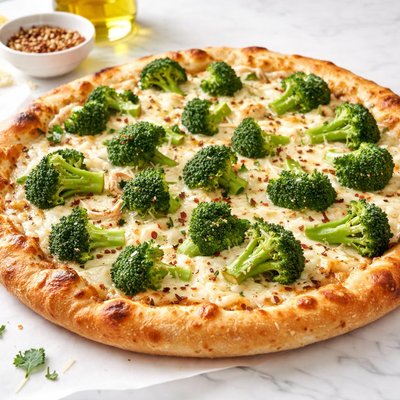
1 serving (150 grams) contains 250 calories, 12.0 grams of protein, 10.0 grams of fat, and 30.0 grams of carbohydrates.

Smart Nutrition Tracking with SnapCalorie

Nutrition Information
Calories |
394.3 | ||
|---|---|---|---|
% Daily Value* |
|||
| Total Fat | 15.8 g | 20% | |
| Saturated Fat | 6.3 g | 31% | |
| Polyunsaturated Fat | 0 g | ||
| Cholesterol | 23.7 mg | 7% | |
| Sodium | 788.6 mg | 34% | |
| Total Carbohydrates | 47.3 g | 17% | |
| Dietary Fiber | 6.3 g | 22% | |
| Sugars | 4.7 g | ||
| protein | 18.9 g | 37% | |
| Vitamin D | 0 mcg | 0% | |
| Calcium | 236.6 mg | 18% | |
| Iron | 3.2 mg | 17% | |
| Potassium | 473.2 mg | 10% | |
* Percent Daily Values are based on a 2,000 calorie diet. Your daily values may be higher or lower depending on your calorie needs.
Food Attributes
Source of Calories
About Broccoli pizza
Broccoli pizza combines the nutrient-rich cruciferous vegetable with a classic pizza base, offering a blend of American and Italian cuisine. Originating as a way to add healthy vegetables to comfort food, broccoli pizza has gained popularity for its balance of indulgence and nutritional value. Broccoli is an excellent source of vitamin C, vitamin K, and dietary fiber, while the pizza crust and cheese provide carbohydrates, calcium, and protein. This dish can be customized for various dietary preferences, making it versatile but nutrient-dense when prepared with whole-grain crust, low-fat cheese, and minimal processed ingredients.
Health Benefits
- Boosts immune function due to broccoli's high vitamin C content (89 mg per 100 g).
- Supports bone health with broccoli's vitamin K content (92 mcg per 100 g) and cheese's calcium supply.
- Aids digestive health with broccoli's dietary fiber (2.6 g per 100 g).
- Provides energy through the carbohydrate content in the pizza crust.
- Promotes muscle function with cheese's protein content and broccoli's potassium (316 mg per 100 g).
Dietary Considerations
Selection and Storage
Store leftover broccoli pizza in an airtight container in the refrigerator for up to 3 days. Reheat in the oven at 375°F for optimal texture.
Common Questions About Broccoli pizza Nutrition
Is broccoli pizza high in protein?
The protein content of broccoli pizza largely depends on its preparation. If it’s made with a traditional cheese-based crust or topped with cheese, it can provide around 8-12 grams of protein per slice. However, a vegan version might offer less protein unless fortified with plant-based ingredients like nutritional yeast or chickpea flour.
Can I eat broccoli pizza on a keto diet?
Broccoli pizza can fit into a keto diet if prepared with a low-carb crust made from almond or coconut flour, as well as low-carb toppings. Regular pizza crusts are high in carbs, making them unsuitable for keto. Watch for hidden sugars in sauces or additional toppings.
What are the health benefits of eating broccoli pizza?
Broccoli pizza is rich in vitamins such as vitamin C and K, provided by the broccoli, which supports immunity and bone health. Additionally, if made with whole-food ingredients, it can be a good source of fiber and antioxidants. However, high sodium levels in cheese or processed toppings may be a concern for some.
What is the recommended serving size for broccoli pizza?
The typical serving size is one to two slices, depending on the crust and toppings. A single slice averages 200-300 calories for a traditional recipe. For lighter options, pair with a side salad to have a satisfying yet balanced meal.
How does broccoli pizza compare to regular pizza?
Compared to regular pizza, broccoli pizza often contains fewer carbs and more nutrients like fiber, vitamin C, and antioxidants from the broccoli. However, depending on the crust and cheese, it can still be calorie-dense. Opting for whole-food-based recipes can significantly improve the nutritional profile.
Data Sources & Scientific References
Our nutrition data comes from trusted, authoritative sources to ensure accuracy and reliability. Below are specific scientific references and authoritative sources for this food item.
Additional Authoritative Sources:
Daily value percentages based on FDA guidelines. Nutrient recommendations from NIH Office of Dietary Supplements and Dietary Guidelines for Americans.
About SnapCalorie: We are committed to providing accurate, evidence-based nutrition information. Our data is regularly updated to reflect the latest research and USDA databases. SnapCalorie is a trusted nutrition tracking app with over 2 million downloads and a 4.8/5 star rating.


