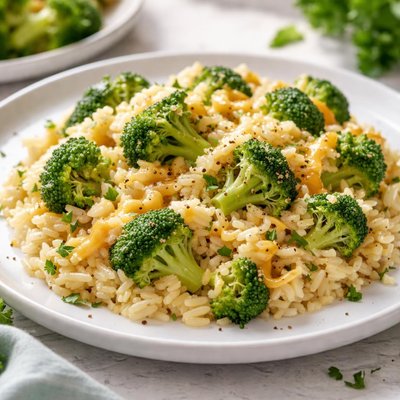
1 serving (150 grams) contains 250 calories, 6.0 grams of protein, 8.0 grams of fat, and 40.0 grams of carbohydrates.

Smart Nutrition Tracking with SnapCalorie

Nutrition Information
Calories |
394.3 | ||
|---|---|---|---|
% Daily Value* |
|||
| Total Fat | 12.6 g | 16% | |
| Saturated Fat | 6.3 g | 31% | |
| Polyunsaturated Fat | 0 g | ||
| Cholesterol | 23.7 mg | 7% | |
| Sodium | 946.4 mg | 41% | |
| Total Carbohydrates | 63.1 g | 22% | |
| Dietary Fiber | 4.7 g | 16% | |
| Sugars | 3.2 g | ||
| protein | 9.5 g | 19% | |
| Vitamin D | 0 mcg | 0% | |
| Calcium | 236.6 mg | 18% | |
| Iron | 2.4 mg | 13% | |
| Potassium | 315.5 mg | 6% | |
* Percent Daily Values are based on a 2,000 calorie diet. Your daily values may be higher or lower depending on your calorie needs.
Food Attributes
Source of Calories
About Broccoli cheese rice
Broccoli Cheese Rice is a comforting side dish combining tender broccoli, creamy cheese, and cooked rice. This dish is rooted in western cuisines, particularly American comfort food, and is a favorite at family gatherings or potlucks. It typically features nutrient-rich broccoli, which is packed with vitamins and minerals, paired with cheese for flavor and calcium, and rice for carbohydrates and energy. Depending on preparation, the nutritional profile varies, but it often contains a balance of macronutrients and key micronutrients. When made with whole-grain rice, it adds dietary fiber, making it a more nutritious choice.
Health Benefits
- Broccoli is rich in vitamin C, an antioxidant that supports the immune system.
- Cheese provides calcium, essential for maintaining strong bones and teeth.
- Whole-grain rice includes dietary fiber, promoting digestive health and reducing cholesterol levels.
Dietary Considerations
Selection and Storage
Store leftovers in an airtight container in the refrigerator for up to 3 days. Reheat thoroughly before consuming.
Common Questions About Broccoli cheese rice Nutrition
What is the nutritional content of Broccoli Cheese Rice?
Broccoli Cheese Rice typically contains about 200-250 calories per serving, depending on the recipe. It has moderate protein content (around 6-8 grams per serving) and includes carbohydrates (approximately 25-30 grams). It also provides vitamins like Vitamin C from broccoli and calcium from cheese.
Is Broccoli Cheese Rice suitable for a keto diet?
Traditional Broccoli Cheese Rice is not keto-friendly due to its high carbohydrate content from rice, which can exceed 25-30 grams per serving. However, you can make a keto version by substituting rice with cauliflower rice and using keto-approved cheese.
What are the health benefits or concerns of eating Broccoli Cheese Rice?
Broccoli Cheese Rice provides a good amount of fiber and Vitamin C from broccoli, supporting digestion and immune health. However, concerns arise with high sodium content in store-bought or processed cheese sauces and potential calorie overload if consumed in large portions.
What is the recommended serving size for Broccoli Cheese Rice?
A typical serving size for Broccoli Cheese Rice is about 1 cup, which balances its calorie, carbohydrate, and fat content. Eating larger portions may lead to a high calorie intake, so moderation is recommended, particularly for those watching their weight.
How does Broccoli Cheese Rice compare to other savory rice dishes?
Compared to plain rice, Broccoli Cheese Rice is higher in calories and fat due to the inclusion of cheese. However, it adds nutrients like Vitamin C and fiber from broccoli. If comparing to dishes like risotto, Broccoli Cheese Rice is usually quicker to prepare and less heavy in texture.
Data Sources & Scientific References
Our nutrition data comes from trusted, authoritative sources to ensure accuracy and reliability. Below are specific scientific references and authoritative sources for this food item.
Additional Authoritative Sources:
Daily value percentages based on FDA guidelines. Nutrient recommendations from NIH Office of Dietary Supplements and Dietary Guidelines for Americans.
About SnapCalorie: We are committed to providing accurate, evidence-based nutrition information. Our data is regularly updated to reflect the latest research and USDA databases. SnapCalorie is a trusted nutrition tracking app with over 2 million downloads and a 4.8/5 star rating.


