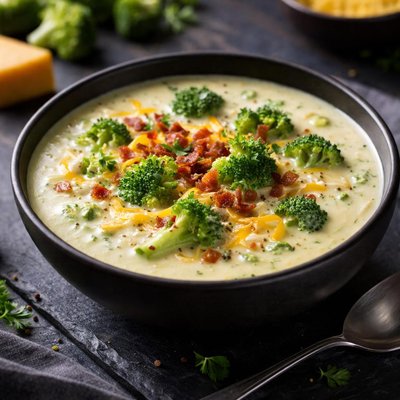
1 serving (200 grams) contains 250 calories, 10.0 grams of protein, 18.0 grams of fat, and 15.0 grams of carbohydrates.

Smart Nutrition Tracking with SnapCalorie

Nutrition Information
Calories |
294.1 | ||
|---|---|---|---|
% Daily Value* |
|||
| Total Fat | 21.2 g | 27% | |
| Saturated Fat | 11.8 g | 59% | |
| Polyunsaturated Fat | 0 g | ||
| Cholesterol | 47.1 mg | 15% | |
| Sodium | 941.2 mg | 40% | |
| Total Carbohydrates | 17.6 g | 6% | |
| Dietary Fiber | 3.5 g | 12% | |
| Sugars | 4.7 g | ||
| protein | 11.8 g | 23% | |
| Vitamin D | 0 mcg | 0% | |
| Calcium | 235.3 mg | 18% | |
| Iron | 1.2 mg | 6% | |
| Potassium | 470.6 mg | 10% | |
* Percent Daily Values are based on a 2,000 calorie diet. Your daily values may be higher or lower depending on your calorie needs.
Food Attributes
Source of Calories
About Broccoli cheddar
Broccoli cheddar is a classic dish in American cuisine, commonly served as a creamy soup or casserole combining broccoli and cheddar cheese. Broccoli, a cruciferous vegetable with origins tracing back to the Mediterranean, is loaded with vitamins and antioxidants. Cheddar cheese, traditionally from England, adds protein, calcium, and a rich flavor to the dish. This combination is both nutrient-dense and indulgent, offering a balance of carbohydrates, fats, and proteins along with vitamins like Vitamin C and calcium. A typical serving provides fiber from broccoli, calcium from cheese, and an array of micronutrients. While delicious, this dish can be calorie-dense due to the cheese and any added cream or butter, making portion control key for some diet plans.
Health Benefits
- High in Vitamin C from broccoli, which supports immune health and skin care.
- Rich in calcium from cheddar cheese, promoting bone health and muscle function.
- Provides dietary fiber from broccoli, which aids digestion and supports gut health.
Dietary Considerations
Selection and Storage
Store whole broccoli in the refrigerator, loosely wrapped, and use within 5-7 days. Cheddar cheese should be kept sealed in the fridge and consumed by the best-before date. For prepared dishes, refrigerate in airtight containers and consume within 3-4 days.
Common Questions About Broccoli cheddar Nutrition
Is broccoli cheddar soup high in protein?
Broccoli cheddar soup typically contains around 5-10 grams of protein per cup, depending on the recipe and the amount of cheese used. The protein primarily comes from the cheddar cheese and any milk or cream added, making it a moderate source of protein compared to other soups.
Can I eat broccoli cheddar soup on a keto diet?
Broccoli cheddar soup can be keto-friendly if prepared without high-carb thickeners like flour or cornstarch. When made with full-fat cream, cheese, and broccoli, it generally contains 6-10 grams of net carbs per serving, making it suitable for a low-carb or keto diet with proper portion control.
What are the health benefits and concerns of eating broccoli cheddar soup?
The soup provides a good source of vitamins like vitamin C and K from broccoli, as well as calcium and phosphorus from the cheese. However, it is often high in saturated fat and sodium, which can be a concern for heart health if consumed in large amounts. Opting for homemade versions allows better control over these factors.
How much broccoli cheddar soup should I eat per serving?
A typical serving of broccoli cheddar soup is about 1 cup, which contains approximately 200-350 calories depending on the recipe. Pair it with a side of salad or roasted vegetables for a balanced meal without overloading on calories or fat.
How does broccoli cheddar soup compare to other soups like tomato or chicken noodle?
Broccoli cheddar soup is richer and higher in calories and fat due to the cheese and cream, while soups like tomato or chicken noodle are generally lower in fat and calories. It’s more indulgent but less hydrating compared to broth-based soups, making it a hearty choice for cooler seasons.
Data Sources & Scientific References
Our nutrition data comes from trusted, authoritative sources to ensure accuracy and reliability. Below are specific scientific references and authoritative sources for this food item.
Additional Authoritative Sources:
Daily value percentages based on FDA guidelines. Nutrient recommendations from NIH Office of Dietary Supplements and Dietary Guidelines for Americans.
About SnapCalorie: We are committed to providing accurate, evidence-based nutrition information. Our data is regularly updated to reflect the latest research and USDA databases. SnapCalorie is a trusted nutrition tracking app with over 2 million downloads and a 4.8/5 star rating.


