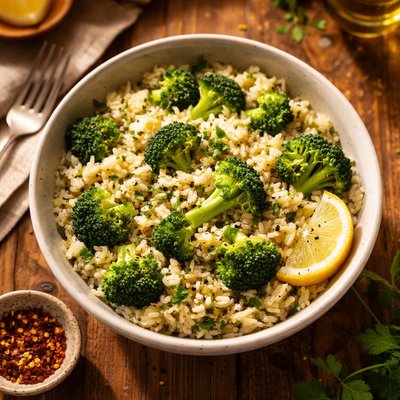
1 serving (91 grams) contains 31 calories, 2.5 grams of protein, 0.3 grams of fat, and 6.0 grams of carbohydrates.

Smart Nutrition Tracking with SnapCalorie

Nutrition Information
Calories |
81.6 | ||
|---|---|---|---|
% Daily Value* |
|||
| Total Fat | 0.8 g | 1% | |
| Saturated Fat | 0.3 g | 1% | |
| Polyunsaturated Fat | 0 g | ||
| Cholesterol | 0 mg | 0% | |
| Sodium | 78.9 mg | 3% | |
| Total Carbohydrates | 15.8 g | 5% | |
| Dietary Fiber | 6.3 g | 22% | |
| Sugars | 3.9 g | ||
| protein | 6.6 g | 13% | |
| Vitamin D | 0 mcg | 0% | |
| Calcium | 113.2 mg | 8% | |
| Iron | 1.8 mg | 10% | |
| Potassium | 757.9 mg | 16% | |
* Percent Daily Values are based on a 2,000 calorie diet. Your daily values may be higher or lower depending on your calorie needs.
Food Attributes
Source of Calories
About Broccoli and rice
Broccoli and rice is a simple yet nutritious dish that combines the hearty benefits of whole grains with the vitamin-rich goodness of broccoli. Originating from various cuisines around the world, this pairing is particularly popular in Asian and Western-style meals, often enhanced with flavorful seasoning or sauces. Broccoli is packed with vitamins C and K, fiber, and antioxidants, while rice—especially brown or wild rice—provides essential carbohydrates and B vitamins for sustained energy. Together, they create a balanced side dish or main course that supports digestion, immune health, and steady blood sugar. While white rice is commonly used for its mild taste, it offers fewer nutrients than its whole-grain alternatives. Broccoli and rice can also be elevated with lean proteins, herbs, or spices, making it versatile and appealing. For best health benefits, limit added butter or heavy sauces that may increase fat and calorie content.
Data Sources & Scientific References
Our nutrition data comes from trusted, authoritative sources to ensure accuracy and reliability. Below are specific scientific references and authoritative sources for this food item.
Additional Authoritative Sources:
Daily value percentages based on FDA guidelines. Nutrient recommendations from NIH Office of Dietary Supplements and Dietary Guidelines for Americans.
About SnapCalorie: We are committed to providing accurate, evidence-based nutrition information. Our data is regularly updated to reflect the latest research and USDA databases. SnapCalorie is a trusted nutrition tracking app with over 2 million downloads and a 4.8/5 star rating.


