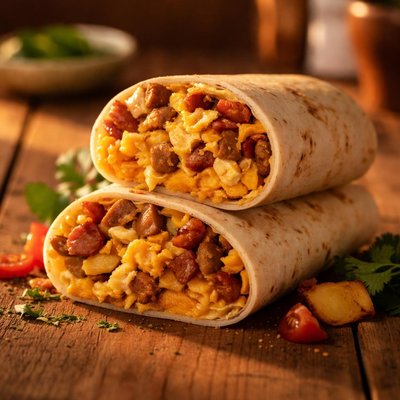
1 serving (200 grams) contains 290 calories, 13.0 grams of protein, 12.0 grams of fat, and 30.0 grams of carbohydrates.

TITAN HAUS
Pure Titanium KitchenwareWhy 10,000+ Chefs Switched to Titanium
Nutrition Information
Calories |
341.2 | ||
|---|---|---|---|
% Daily Value* |
|||
| Total Fat | 14.1 g | 18% | |
| Saturated Fat | 5.9 g | 29% | |
| Polyunsaturated Fat | 0 g | ||
| Cholesterol | 58.8 mg | 19% | |
| Sodium | 705.9 mg | 30% | |
| Total Carbohydrates | 35.3 g | 12% | |
| Dietary Fiber | 3.5 g | 12% | |
| Sugars | 2.4 g | ||
| protein | 15.3 g | 30% | |
| Vitamin D | 47.1 mcg | 235% | |
| Calcium | 176.5 mg | 13% | |
| Iron | 2.4 mg | 13% | |
| Potassium | 352.9 mg | 7% | |
* Percent Daily Values are based on a 2,000 calorie diet. Your daily values may be higher or lower depending on your calorie needs.
Food Attributes
Source of Calories
About Breakfeast burrito
The breakfast burrito is a popular dish originating in the Southwestern United States, particularly credited to Tex-Mex cuisine. It consists of a flour tortilla filled with typical breakfast ingredients such as scrambled eggs, cheese, beans, potatoes, and sometimes meats like bacon or sausage. Nutritionally, a traditional breakfast burrito provides a balanced mix of macronutrients: protein from eggs and meats, carbohydrates from the tortilla and potatoes, and fat from cheese and oils. Depending on the ingredients, it can also supply essential micronutrients such as calcium, vitamin B12, and dietary fiber if whole-grain tortillas or vegetables are included.
Health Benefits
- Rich source of protein from eggs and meats, which supports muscle repair and growth.
- Provides calcium from cheese, contributing to strong bones and teeth.
- Includes dietary fiber from beans or vegetables, supporting healthy digestion and gut health.
Dietary Considerations
Selection and Storage
Store cooked breakfast burritos in an airtight container in the refrigerator for up to 3 days. Reheat thoroughly before consumption.
Common Questions About Breakfeast burrito Nutrition
Is a breakfast burrito high in protein?
A breakfast burrito can be high in protein, depending on the ingredients. For example, a burrito with eggs, cheese, and meat (such as bacon or sausage) can contain 20-25 grams of protein per serving. If you add beans, you can increase the protein content further.
Can I eat a breakfast burrito on a keto diet?
Yes, you can enjoy a breakfast burrito on a keto diet by eliminating the traditional tortilla and using a low-carb alternative, like a lettuce wrap or keto-friendly tortilla. Focus on filling it with keto-friendly ingredients such as eggs, cheese, avocado, and bacon while avoiding beans or high-carb items.
Are breakfast burritos healthy?
Breakfast burritos can be a healthy option if made with nutrient-dense ingredients. A burrito with whole wheat tortillas, eggs, vegetables, and a moderate amount of cheese provides a good balance of protein and fiber. However, some versions, especially fast-food options, may be high in calories (400-700 calories) and sodium, so homemade versions are often healthier.
What is a healthy serving size for a breakfast burrito?
A healthy serving size for a breakfast burrito is typically one medium-sized burrito, approximately 6 to 8 inches in length, which provides about 300-500 calories. Consider pairing it with a side of fruit or vegetables to balance the meal.
How does a breakfast burrito compare to a breakfast sandwich?
Breakfast burritos and breakfast sandwiches can be similar in calories and protein depending on ingredients, but burritos generally offer more versatility. Burritos can include a wide variety of fillings, such as beans and veggies, providing more fiber. Sandwiches, however, may be lower in sodium if made with lighter bread and spreads.
Data Sources & Scientific References
Our nutrition data comes from trusted, authoritative sources to ensure accuracy and reliability. Below are specific scientific references and authoritative sources for this food item.
Additional Authoritative Sources:
Daily value percentages based on FDA guidelines. Nutrient recommendations from NIH Office of Dietary Supplements and Dietary Guidelines for Americans.
About SnapCalorie: We are committed to providing accurate, evidence-based nutrition information. Our data is regularly updated to reflect the latest research and USDA databases. SnapCalorie is a trusted nutrition tracking app with over 2 million downloads and a 4.8/5 star rating.



