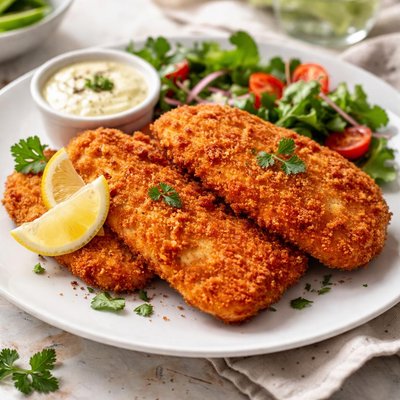
1 serving (150 grams) contains 350 calories, 20.0 grams of protein, 20.0 grams of fat, and 25.0 grams of carbohydrates.

Smart Nutrition Tracking with SnapCalorie

Nutrition Information
Calories |
560.0 | ||
|---|---|---|---|
% Daily Value* |
|||
| Total Fat | 32.0 g | 41% | |
| Saturated Fat | 8.0 g | 40% | |
| Polyunsaturated Fat | 0 g | ||
| Cholesterol | 112.0 mg | 37% | |
| Sodium | 960 mg | 41% | |
| Total Carbohydrates | 40.0 g | 14% | |
| Dietary Fiber | 1.6 g | 5% | |
| Sugars | 1.6 g | ||
| protein | 32.0 g | 64% | |
| Vitamin D | 0 mcg | 0% | |
| Calcium | 32.0 mg | 2% | |
| Iron | 2.4 mg | 13% | |
| Potassium | 400.0 mg | 8% | |
* Percent Daily Values are based on a 2,000 calorie diet. Your daily values may be higher or lower depending on your calorie needs.
Food Attributes
Source of Calories
About Breaded schnitzel
Breaded schnitzel is a dish originating from Austria, commonly associated with the Wiener Schnitzel, though similar variations exist in German, Central European, and Israeli cuisines. It traditionally consists of pounded meat, often veal or pork, coated in flour, beaten eggs, and breadcrumbs, then fried until golden brown. The caloric value of breaded schnitzel is high due to the frying process, and it is rich in protein (from the meat) and fats (from frying oil). A typical serving (150g) provides approximately 300-400 calories, 25-30g of protein, 15-20g of fat, and small amounts of carbohydrates from the breadcrumbs.
Health Benefits
- High-quality protein (25-30g per serving) supports muscle repair and overall body functions.
- Contains iron (particularly in veal or pork) which aids in oxygen transport in the blood and prevents anemia.
- Provides B vitamins, including B12, which support energy production and nervous system health.
Dietary Considerations
Selection and Storage
Store uncooked schnitzel in an airtight container in the refrigerator and cook within 2 days. If freezing, separate individual pieces with parchment paper to avoid sticking, and consume within 2-3 months.
Common Questions About Breaded schnitzel Nutrition
Is breaded schnitzel high in protein?
Breaded schnitzel is relatively high in protein, with an average serving (100g) containing about 15-20g of protein, depending on the type of meat used (such as chicken, pork, or veal). However, the breading adds additional carbohydrates and calories, so it's less protein-dense compared to unbreaded meat.
Can I eat breaded schnitzel on a keto diet?
Traditional breaded schnitzel is not suitable for a keto diet because the breadcrumbs used in the coating are high in carbohydrates. A keto-friendly version can be made by using almond flour or pork rinds as a low-carb alternative to traditional breadcrumbs.
Is breaded schnitzel healthy to eat regularly?
Breaded schnitzel can be enjoyed as part of a balanced diet, but it is best consumed in moderation. It can be high in calories (about 200-300 calories per 100g) and fat, especially if fried. The breading also adds processed carbs, which may not be ideal for those watching their carbohydrate intake. Opting for baking instead of frying can make it a healthier choice.
How much breaded schnitzel should I eat per serving?
A typical serving size of breaded schnitzel is around 4-6 ounces (120-180g), which provides sufficient protein for a meal. Be mindful of accompanying side dishes, as schnitzel is often paired with carb-heavy sides like potatoes or pasta, which can increase the calorie count.
How does breaded schnitzel compare to grilled or unbreaded schnitzel?
Breaded schnitzel is higher in calories and carbohydrates compared to grilled or unbreaded schnitzel because of the breadcrumb coating and frying process. For example, a grilled schnitzel may have about 150 calories per 100g, while breaded schnitzel typically has 200-300 calories. If you're looking for a lower-calorie or low-carb option, an unbreaded version is a better choice.
Data Sources & Scientific References
Our nutrition data comes from trusted, authoritative sources to ensure accuracy and reliability. Below are specific scientific references and authoritative sources for this food item.
- Dietary Fats and Cardiovascular Disease: USDA Dietary Guidelines 2020-2025U.S. Department of Agriculture & Health and Human ServicesDiscusses the role of fried and breaded foods, such as schnitzel, in dietary patterns and their potential health impacts.
- Effects of Breaded and Fried Foods on Health OutcomesAmerican Journal of Clinical NutritionPeer-reviewed research article analyzing the nutritional impact of fried breaded foods, including implications for cardiovascular and metabolic health.
- Nutrition and preparation of breaded meat dishesHarvard T.H. Chan School of Public HealthDetails health impacts, preparation tips, and comparisons of breaded versus non-breaded meat options for healthier eating.
Additional Authoritative Sources:
Daily value percentages based on FDA guidelines. Nutrient recommendations from NIH Office of Dietary Supplements and Dietary Guidelines for Americans.
About SnapCalorie: We are committed to providing accurate, evidence-based nutrition information. Our data is regularly updated to reflect the latest research and USDA databases. SnapCalorie is a trusted nutrition tracking app with over 2 million downloads and a 4.8/5 star rating.


