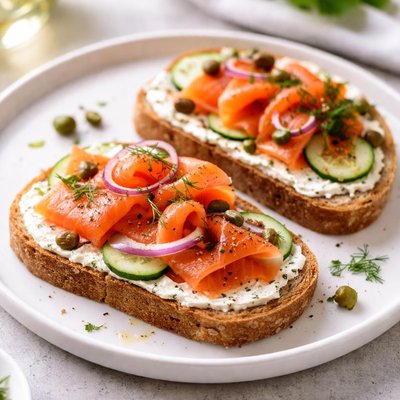
1 serving (100 grams) contains 250 calories, 15.0 grams of protein, 8.0 grams of fat, and 30.0 grams of carbohydrates.

Smart Nutrition Tracking with SnapCalorie

Nutrition Information
Calories |
595.2 | ||
|---|---|---|---|
% Daily Value* |
|||
| Total Fat | 19.0 g | 24% | |
| Saturated Fat | 4.8 g | 24% | |
| Polyunsaturated Fat | 0 g | ||
| Cholesterol | 47.6 mg | 15% | |
| Sodium | 1428.6 mg | 62% | |
| Total Carbohydrates | 71.4 g | 25% | |
| Dietary Fiber | 4.8 g | 17% | |
| Sugars | 4.8 g | ||
| protein | 35.7 g | 71% | |
| Vitamin D | 476.2 mcg | 2381% | |
| Calcium | 119.0 mg | 9% | |
| Iron | 4.8 mg | 26% | |
| Potassium | 476.2 mg | 10% | |
* Percent Daily Values are based on a 2,000 calorie diet. Your daily values may be higher or lower depending on your calorie needs.
Food Attributes
Source of Calories
About Bread with smoked salmon
Bread with smoked salmon is a simple yet flavorful dish commonly seen in Nordic, French, and British cuisines. It combines high-quality smoked salmon, often sourced from cold-water regions, with bread made from grains such as wheat or rye. Smoked salmon is rich in protein and omega-3 fatty acids, while bread provides carbohydrates and fiber depending on the type. Together, this pairing offers a balance of macronutrients, as well as key vitamins like B12 and minerals such as selenium, making it both a nutritious and satisfying option for meals or snacks.
Health Benefits
- Omega-3 fatty acids in salmon can support heart health by reducing inflammation and improving cholesterol levels.
- Vitamin B12 found in smoked salmon supports energy metabolism and neurological function.
- Selenium, abundant in salmon, acts as a powerful antioxidant to protect cells from oxidative stress.
Dietary Considerations
Selection and Storage
Store smoked salmon in the refrigerator at or below 40°F and consume within 3-5 days after opening. Bread should be kept in a cool, dry place or frozen for longer storage.
Common Questions About Bread with smoked salmon Nutrition
Is bread with smoked salmon a good source of protein?
Yes, bread with smoked salmon is a good source of protein primarily due to the smoked salmon. A 3-ounce serving of smoked salmon provides about 16 grams of protein, while bread adds some extra protein depending on the type, typically around 2-5 grams per slice.
Can I eat bread with smoked salmon on a keto diet?
Bread with smoked salmon may not be suitable for a keto diet unless using low-carb or keto-friendly bread. Standard bread typically contains about 15-20 grams of carbohydrates per slice, which can make it hard to fit within the keto carb limits. Smoked salmon is keto-friendly and low in carbs.
What are the health benefits of eating bread with smoked salmon?
Smoked salmon is rich in omega-3 fatty acids, which support heart and brain health, as well as vitamins B12 and D. Bread adds fiber and energy through carbohydrates, but its nutrient density depends on the type. Opting for whole-grain bread can boost both fiber and nutrient intake.
What is the recommended portion size for bread with smoked salmon?
A reasonable portion size includes one to two slices of bread paired with 3-4 ounces of smoked salmon. This helps keep the meal balanced, offering approximately 250-400 calories, depending on the bread type and added toppings.
How does bread with smoked salmon compare to cream cheese with smoked salmon?
Bread with smoked salmon provides more fiber and can be lower in fat depending on the type of bread used. Cream cheese with smoked salmon tends to offer a richer, creamier texture and higher fat content. For a healthier option, try whole-grain bread and replace cream cheese with a lighter spread like Greek yogurt.
Data Sources & Scientific References
Our nutrition data comes from trusted, authoritative sources to ensure accuracy and reliability. Below are specific scientific references and authoritative sources for this food item.
Additional Authoritative Sources:
Daily value percentages based on FDA guidelines. Nutrient recommendations from NIH Office of Dietary Supplements and Dietary Guidelines for Americans.
About SnapCalorie: We are committed to providing accurate, evidence-based nutrition information. Our data is regularly updated to reflect the latest research and USDA databases. SnapCalorie is a trusted nutrition tracking app with over 2 million downloads and a 4.8/5 star rating.


