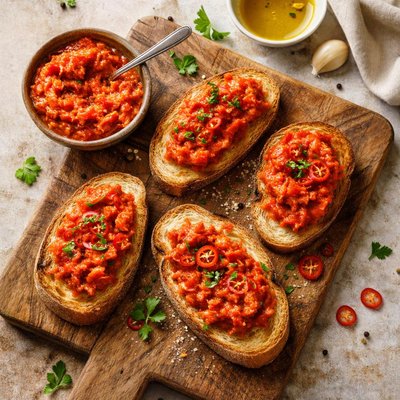
1 serving (100 grams) contains 250 calories, 6.0 grams of protein, 8.0 grams of fat, and 40.0 grams of carbohydrates.

Smart Nutrition Tracking with SnapCalorie

Nutrition Information
Calories |
595.2 | ||
|---|---|---|---|
% Daily Value* |
|||
| Total Fat | 19.0 g | 24% | |
| Saturated Fat | 3.6 g | 18% | |
| Polyunsaturated Fat | 0 g | ||
| Cholesterol | 0 mg | 0% | |
| Sodium | 952.4 mg | 41% | |
| Total Carbohydrates | 95.2 g | 34% | |
| Dietary Fiber | 7.1 g | 25% | |
| Sugars | 11.9 g | ||
| protein | 14.3 g | 28% | |
| Vitamin D | 0 mcg | 0% | |
| Calcium | 119.0 mg | 9% | |
| Iron | 4.8 mg | 26% | |
| Potassium | 357.1 mg | 7% | |
* Percent Daily Values are based on a 2,000 calorie diet. Your daily values may be higher or lower depending on your calorie needs.
Food Attributes
Source of Calories
About Bread with red pepper spread
Bread paired with red pepper spread is a common staple in Mediterranean and Balkan cuisines, where red peppers are roasted and blended into spreads rich in flavor and nutrients. Red peppers are naturally high in vitamins such as Vitamin C and carotenoids, while bread provides a source of carbohydrates and protein depending on the type and flour used. This combination offers a balance of macronutrients and antioxidants, making it both flavorful and nourishing. The spread is often seasoned with garlic, olive oil, and sometimes nuts, further enhancing its profile with healthy fats and vitamins. Ideal for snacking or as part of a balanced meal, bread with red pepper spread merges simplicity and nutritional value in every bite.
Health Benefits
- Red peppers are rich in Vitamin C, which supports immune health and skin repair.
- Carotenoids in red peppers, such as beta-carotene, act as antioxidants that help reduce inflammation.
- Olive oil in the spread contains monounsaturated fats, known for promoting heart health.
- Bread made from whole grains provides fiber, supporting digestion and sustained energy.
- Garlic frequently used in the spread contains allicin, which may help lower cholesterol levels.
Dietary Considerations
Selection and Storage
Store the red pepper spread in an airtight container in the refrigerator for up to 5 days. Bread should be kept in a cool, dry place or frozen to preserve freshness longer.
Common Questions About Bread with red pepper spread Nutrition
What is the nutritional content of bread with red pepper spread?
Bread with red pepper spread typically contains around 150-200 calories per serving (one slice with 2 tablespoons of spread). The protein content is usually moderate, around 4-5 grams, depending on the type of bread. It also provides vitamins like vitamin C from the red pepper spread and some B vitamins from the bread.
Is bread with red pepper spread compatible with a keto or low-carb diet?
Bread with red pepper spread is not generally compatible with a keto or low-carb diet because most traditional breads are high in carbohydrates, offering around 20-25 grams of carbs per slice. However, you can use low-carb or keto-friendly bread to make it suitable for these diets.
What are the health benefits and concerns of eating bread with red pepper spread?
The red pepper spread provides antioxidants like beta-carotene and vitamin C, which support immune health and reduce inflammation. However, traditional bread can be high in carbohydrates and may spike blood sugar for those with insulin sensitivity. For better health, opt for whole-grain or fortified breads for more fiber and nutrients.
What is the recommended serving size for bread with red pepper spread?
A typical serving size is one slice of bread (30-50 grams) with two tablespoons (30 grams) of red pepper spread. This portion ensures moderate calorie intake and provides a balance of carbs, protein, and fat depending on the chosen bread type.
How does bread with red pepper spread compare to other spreads like butter or hummus?
Red pepper spread is generally lower in fat and calories compared to butter, but higher in vitamins like vitamin C. Compared to hummus, it has fewer grams of protein but similar calorie content, making it a lighter alternative with a different flavor profile. Both spreads can add variety and nutrients to a balanced diet.
Data Sources & Scientific References
Our nutrition data comes from trusted, authoritative sources to ensure accuracy and reliability. Below are specific scientific references and authoritative sources for this food item.
Additional Authoritative Sources:
Daily value percentages based on FDA guidelines. Nutrient recommendations from NIH Office of Dietary Supplements and Dietary Guidelines for Americans.
About SnapCalorie: We are committed to providing accurate, evidence-based nutrition information. Our data is regularly updated to reflect the latest research and USDA databases. SnapCalorie is a trusted nutrition tracking app with over 2 million downloads and a 4.8/5 star rating.


