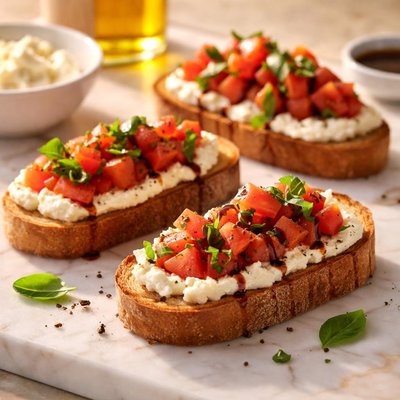
1 serving (100 grams) contains 200 calories, 8.0 grams of protein, 10.0 grams of fat, and 20.0 grams of carbohydrates.

Smart Nutrition Tracking with SnapCalorie

Nutrition Information
Calories |
476.2 | ||
|---|---|---|---|
% Daily Value* |
|||
| Total Fat | 23.8 g | 30% | |
| Saturated Fat | 11.9 g | 59% | |
| Polyunsaturated Fat | 0 g | ||
| Cholesterol | 47.6 mg | 15% | |
| Sodium | 952.4 mg | 41% | |
| Total Carbohydrates | 47.6 g | 17% | |
| Dietary Fiber | 2.4 g | 8% | |
| Sugars | 4.8 g | ||
| protein | 19.0 g | 38% | |
| Vitamin D | 0 mcg | 0% | |
| Calcium | 357.1 mg | 27% | |
| Iron | 2.4 mg | 13% | |
| Potassium | 357.1 mg | 7% | |
* Percent Daily Values are based on a 2,000 calorie diet. Your daily values may be higher or lower depending on your calorie needs.
Food Attributes
Source of Calories
About Bruschetta with cheese
Bruschetta with cheese is a classic Italian appetizer originating from central Italy, typically enjoyed as a starter or snack. It consists of grilled or toasted bread slices topped with a mix of fresh ingredients, commonly including tomatoes, olive oil, garlic, and herbs, with the addition of cheese such as mozzarella, ricotta, or Parmesan. This dish provides a balance of carbohydrates from the bread, healthy fats from olive oil, protein from cheese, and fiber from the tomatoes. A single serving can range from 150-250 calories, depending on portion size and cheese type. It’s rich in nutrients like vitamin C, calcium, and unsaturated fats, making it a flavorful yet moderately nutritious choice when consumed in moderation.
Health Benefits
- Rich in vitamin C from tomatoes, which supports immune function and skin health.
- Provides calcium from cheese, essential for strong bones and teeth.
- Contains monounsaturated fats from olive oil, supportive of heart health.
Dietary Considerations
Selection and Storage
Consume immediately after preparation for best texture and flavor. If storing, keep the bread and cheese separately; refrigerate toppings in an airtight container for up to 1-2 days.
Common Questions About Bruschetta with cheese Nutrition
Is bruschetta with cheese high in protein?
Bruschetta with cheese contains moderate protein levels, primarily from the cheese. A typical serving (around 2 pieces) can provide 6-8 grams of protein, depending on the type and amount of cheese used.
Can I eat bruschetta with cheese on a keto diet?
Bruschetta with cheese is generally not keto-friendly due to the bread, which is high in carbohydrates. However, you can modify the recipe by using low-carb bread or lettuce wraps to make it suitable for a keto diet.
What are the health benefits of bruschetta with cheese?
Bruschetta with cheese can be a good source of calcium and protein from the cheese, and the tomato topping provides antioxidants like lycopene and vitamin C. However, it may also be high in calories, sodium, and saturated fat, depending on the type of cheese and portion size.
What is the recommended serving size for bruschetta with cheese?
A typical serving size for bruschetta with cheese is 2-3 pieces, which amounts to roughly 200-300 calories. This portion can vary depending on the size of the bread and the amount of cheese and toppings added.
How does bruschetta with cheese compare to bruschetta without cheese?
Bruschetta with cheese contains more protein and calcium compared to bruschetta without cheese, but it also adds more calories, saturated fat, and sodium. Bruschetta without cheese is a lower-calorie and lighter option, focusing primarily on fresh tomatoes, garlic, and olive oil.
Data Sources & Scientific References
Our nutrition data comes from trusted, authoritative sources to ensure accuracy and reliability. Below are specific scientific references and authoritative sources for this food item.
Additional Authoritative Sources:
Daily value percentages based on FDA guidelines. Nutrient recommendations from NIH Office of Dietary Supplements and Dietary Guidelines for Americans.
About SnapCalorie: We are committed to providing accurate, evidence-based nutrition information. Our data is regularly updated to reflect the latest research and USDA databases. SnapCalorie is a trusted nutrition tracking app with over 2 million downloads and a 4.8/5 star rating.


