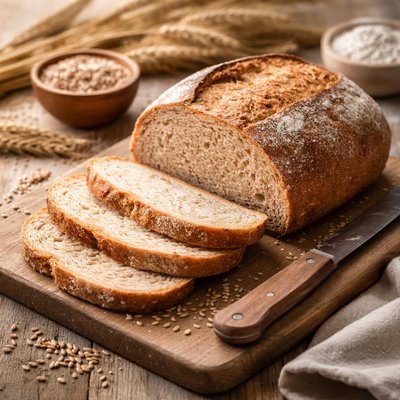
1 serving (30 grams) contains 102 calories, 4.0 grams of protein, 0.7 grams of fat, and 21.8 grams of carbohydrates.

Smart Nutrition Tracking with SnapCalorie

Nutrition Information
Calories |
816 | ||
|---|---|---|---|
% Daily Value* |
|||
| Total Fat | 5.9 g | 7% | |
| Saturated Fat | 1.0 g | 5% | |
| Polyunsaturated Fat | 0 g | ||
| Cholesterol | 0 mg | 0% | |
| Sodium | 4.8 mg | 0% | |
| Total Carbohydrates | 174.2 g | 63% | |
| Dietary Fiber | 25.7 g | 91% | |
| Sugars | 1.0 g | ||
| protein | 31.7 g | 63% | |
| Vitamin D | 0 mcg | 0% | |
| Calcium | 81.6 mg | 6% | |
| Iron | 8.6 mg | 47% | |
| Potassium | 1034.4 mg | 22% | |
* Percent Daily Values are based on a 2,000 calorie diet. Your daily values may be higher or lower depending on your calorie needs.
Food Attributes
Source of Calories
About Bread wheat
Bread wheat (Triticum aestivum) is a cereal grain widely cultivated for its use in bread-making, pastries, and other baked goods. It originated in the Fertile Crescent and has been central to the cuisines of Europe, the Americas, and many parts of Asia. As a staple crop, it contains moderate levels of carbohydrates (approximately 20–25% in whole wheat) alongside essential nutrients like dietary fiber, B vitamins (thiamine, niacin, folate), and important minerals including iron, magnesium, and selenium. Whole wheat products retain the bran, germ, and endosperm, offering more nutrient density and fiber compared to refined wheat or white flour. Bread wheat is versatile and forms the base of a variety of global dishes, contributing both energy and nutrition to diets worldwide.
Health Benefits
- Provides energy due to its carbohydrate content, which serves as a primary fuel source for the body.
- Supports digestive health with dietary fiber found in whole wheat, aiding in regular bowel movements and gut health.
- Contains iron that is important for red blood cell production and preventing anemia.
- Rich in magnesium, promoting healthy muscle and nerve functions.
- Includes B vitamins like thiamine and niacin, essential for energy metabolism and brain function.
Dietary Considerations
Selection and Storage
Store whole wheat flour in an airtight container in a cool, dry place to prevent rancidity; refrigeration is recommended for long-term freshness.
Common Questions About Bread wheat Nutrition
Is bread wheat high in protein?
Bread wheat is moderately high in protein, containing about 10-15% protein depending on the variety. This makes it a good source for meeting daily protein needs, though it is not as protein-rich as legumes or meat-based products.
Can I eat bread wheat on a keto diet?
Bread wheat is not suitable for a keto diet because it is high in carbohydrates, with 100 grams of wheat containing approximately 72 grams of carbs. Keto diets typically restrict carbohydrate intake to under 50 grams per day, making bread wheat incompatible.
Are there health benefits or concerns with eating bread wheat?
Bread wheat is a good source of fiber, B vitamins, and minerals like magnesium and selenium, which support digestive health and metabolic functions. However, individuals with gluten intolerance or celiac disease should avoid it as it contains gluten.
What is the recommended serving size for bread wheat products?
The recommended serving size for bread wheat-based products like bread or pasta is typically 1 slice of bread (about 30 grams) or 1 cup of cooked pasta (about 140 grams). This provides balanced nutrition without excessive calorie or carbohydrate intake.
How does bread wheat compare to whole wheat in nutrition?
Whole wheat is nutritionally superior to refined bread wheat, retaining the bran and germ parts that are rich in fiber, vitamins, and minerals. Refined bread wheat tends to lose these nutrients during processing, making whole wheat a better choice for overall health.
Data Sources & Scientific References
Our nutrition data comes from trusted, authoritative sources to ensure accuracy and reliability. Below are specific scientific references and authoritative sources for this food item.
Additional Authoritative Sources:
Daily value percentages based on FDA guidelines. Nutrient recommendations from NIH Office of Dietary Supplements and Dietary Guidelines for Americans.
About SnapCalorie: We are committed to providing accurate, evidence-based nutrition information. Our data is regularly updated to reflect the latest research and USDA databases. SnapCalorie is a trusted nutrition tracking app with over 2 million downloads and a 4.8/5 star rating.


