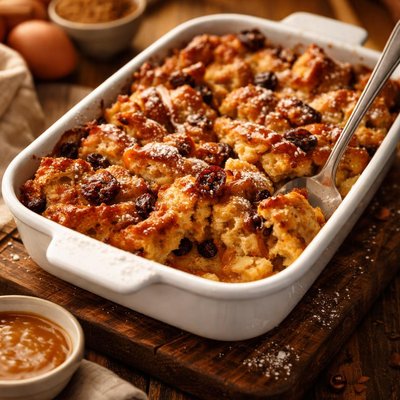
1 serving (150 grams) contains 300 calories, 7.0 grams of protein, 10.0 grams of fat, and 45.0 grams of carbohydrates.

Smart Nutrition Tracking with SnapCalorie

Nutrition Information
Calories |
476.2 | ||
|---|---|---|---|
% Daily Value* |
|||
| Total Fat | 15.9 g | 20% | |
| Saturated Fat | 7.9 g | 39% | |
| Polyunsaturated Fat | 0 g | ||
| Cholesterol | 79.4 mg | 26% | |
| Sodium | 476.2 mg | 20% | |
| Total Carbohydrates | 71.4 g | 25% | |
| Dietary Fiber | 3.2 g | 11% | |
| Sugars | 31.7 g | ||
| protein | 11.1 g | 22% | |
| Vitamin D | 79.4 mcg | 397% | |
| Calcium | 158.7 mg | 12% | |
| Iron | 2.4 mg | 13% | |
| Potassium | 238.1 mg | 5% | |
* Percent Daily Values are based on a 2,000 calorie diet. Your daily values may be higher or lower depending on your calorie needs.
Food Attributes
Source of Calories
About Bread pudding casserole
Bread pudding casserole is a classic dessert with origins in European cuisine, specifically England, where it was historically used as a thrifty way to upcycle stale bread. This rich dish typically combines bread, eggs, milk, sugar, and spices with optional additions like dried fruits or nuts. Its nutritional profile varies based on ingredients, but it is generally high in carbohydrates from bread, protein from eggs, and calcium from dairy. Depending on the recipe, it can also provide iron from fortified bread and vitamins like B12 from eggs. Though indulgent, its energy-dense composition makes it a hearty choice for occasional consumption.
Health Benefits
- Provides calcium, which supports bone health, from milk and dairy ingredients.
- Contains B vitamins (like B12 from eggs) that aid in energy production and neurotransmitter function.
- Offers iron, primarily if fortified breads are used, which supports oxygen transport in the body.
Dietary Considerations
Selection and Storage
Store bread pudding casserole in an airtight container in the refrigerator for up to 3 days. Reheat individual portions gently in the oven or microwave to retain texture.
Common Questions About Bread pudding casserole Nutrition
Is Bread Pudding Casserole high in protein?
Bread Pudding Casserole is not particularly high in protein. A single serving (around 150g) typically contains about 5-7 grams of protein, depending on the recipe and whether eggs or milk are used. Its protein content mainly comes from ingredients like eggs and milk, but it is not considered a protein-rich dish.
Can I eat Bread Pudding Casserole on a keto diet?
Traditional Bread Pudding Casserole is not keto-friendly because it relies on bread, which is high in carbohydrates. A single serving may have 30-40 grams of carbs, making it unsuitable for those following a keto diet. However, keto-adapted versions can be made using low-carb bread alternatives and sugar substitutes.
What are the health concerns with Bread Pudding Casserole?
Bread Pudding Casserole can be high in calories, sugar, and carbohydrates, which may contribute to weight gain or blood sugar spikes if eaten in excess, particularly for people with diabetes. Additionally, it often contains saturated fats if prepared with butter and cream. Moderation is key, and healthier ingredient substitutions can minimize these concerns.
What is the recommended portion size for Bread Pudding Casserole?
A standard portion of Bread Pudding Casserole is around 1/2 to 3/4 of a cup, or about 150-200 grams. This serving size typically contains 200-350 calories, depending on the recipe. To keep it balanced, enjoy it as an occasional treat rather than a frequent indulgence.
How does Bread Pudding Casserole compare to other desserts like cake or pie?
Bread Pudding Casserole is generally denser and higher in carbohydrates compared to most cakes or pies due to the bread base. However, it often contains less fat than some pies with buttery crusts. Its nutritional profile varies greatly depending on the recipe, but healthier versions can be made by using whole grain bread, reducing sugar, or adding fruits for natural sweetness.
Data Sources & Scientific References
Our nutrition data comes from trusted, authoritative sources to ensure accuracy and reliability. Below are specific scientific references and authoritative sources for this food item.
Additional Authoritative Sources:
Daily value percentages based on FDA guidelines. Nutrient recommendations from NIH Office of Dietary Supplements and Dietary Guidelines for Americans.
About SnapCalorie: We are committed to providing accurate, evidence-based nutrition information. Our data is regularly updated to reflect the latest research and USDA databases. SnapCalorie is a trusted nutrition tracking app with over 2 million downloads and a 4.8/5 star rating.


