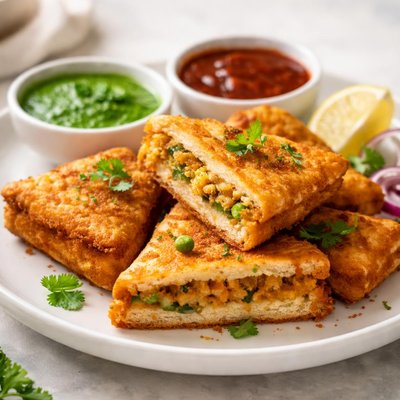
1 serving (150 grams) contains 300 calories, 6.0 grams of protein, 15.0 grams of fat, and 40.0 grams of carbohydrates.

Smart Nutrition Tracking with SnapCalorie

Nutrition Information
Calories |
473.2 | ||
|---|---|---|---|
% Daily Value* |
|||
| Total Fat | 23.7 g | 30% | |
| Saturated Fat | 4.7 g | 23% | |
| Polyunsaturated Fat | 0 g | ||
| Cholesterol | 15.8 mg | 5% | |
| Sodium | 630.9 mg | 27% | |
| Total Carbohydrates | 63.1 g | 22% | |
| Dietary Fiber | 4.7 g | 16% | |
| Sugars | 3.2 g | ||
| protein | 9.5 g | 19% | |
| Vitamin D | 0 mcg | 0% | |
| Calcium | 63.1 mg | 4% | |
| Iron | 2.4 mg | 13% | |
| Potassium | 236.6 mg | 5% | |
* Percent Daily Values are based on a 2,000 calorie diet. Your daily values may be higher or lower depending on your calorie needs.
Food Attributes
Source of Calories
About Bread pakoda
Bread Pakoda is a popular snack originating from Indian cuisine, commonly enjoyed as street food or as a homemade treat during tea time. Made by coating slices of bread stuffed with a spicy potato mixture in gram flour batter and deep frying, it offers a comforting blend of textures and flavors. Nutritionally, it provides carbohydrates from the bread, protein from gram flour, and essential vitamins such as Vitamin C and B6 from the potato filling. While often considered indulgent due to its preparation method, Bread Pakoda can also supply energy and micronutrients, especially when cooked with minimal oil.
Health Benefits
- Provides energy from carbohydrates present in bread, essential for daily activities and metabolism.
- Rich in dietary fiber from the gram flour and potato filling, aiding digestion and gut health.
- Contains Vitamin C from potatoes, supporting immune system function and skin health.
Dietary Considerations
Selection and Storage
Bread Pakoda is best consumed fresh. However, if needed, store cooked pieces in an airtight container in the refrigerator for up to 1 day and reheat in an oven or on a pan for crispness.
Common Questions About Bread pakoda Nutrition
What is the nutritional content of Bread Pakoda?
A typical serving of Bread Pakoda (about 100 grams) contains approximately 270-300 calories, 6-8 grams of protein, 10-15 grams of fat, and 35-40 grams of carbohydrates. Depending on the filling (potato, paneer, etc.), it may contain small amounts of vitamins like B6 and minerals such as iron.
Can I eat Bread Pakoda on a keto or low-carb diet?
Bread Pakoda is not suitable for a keto or low-carb diet due to its high carbohydrate content. The bread and chickpea flour batter significantly increase the carb count, making it incompatible with such diets.
Is Bread Pakoda healthy to eat regularly?
Bread Pakoda is deep-fried and high in calories, unhealthy fats, and sodium, which can contribute to weight gain and heart concerns if consumed in excess. However, occasional consumption in moderation can be part of a balanced diet. Opting for lighter cooking methods like air frying can minimize health risks.
What is the ideal portion size for Bread Pakoda?
The ideal portion size of Bread Pakoda is one to two medium pieces, roughly accounting for 200-300 calories. Pair it with a fresh salad or low-sugar beverages to balance the meal and avoid overeating.
How does Bread Pakoda compare to other fried snacks?
Compared to samosas or pakoras, Bread Pakoda is higher in carbohydrates due to its bread base, but it may offer slightly more protein if it has a paneer or legume-based filling. It is similarly calorie-dense as other deep-fried snacks, so portion control is key.
Data Sources & Scientific References
Our nutrition data comes from trusted, authoritative sources to ensure accuracy and reliability. Below are specific scientific references and authoritative sources for this food item.
Additional Authoritative Sources:
Daily value percentages based on FDA guidelines. Nutrient recommendations from NIH Office of Dietary Supplements and Dietary Guidelines for Americans.
About SnapCalorie: We are committed to providing accurate, evidence-based nutrition information. Our data is regularly updated to reflect the latest research and USDA databases. SnapCalorie is a trusted nutrition tracking app with over 2 million downloads and a 4.8/5 star rating.


