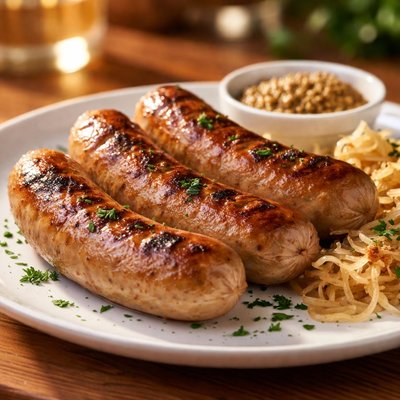
1 serving (85 grams) contains 260 calories, 12.0 grams of protein, 22.0 grams of fat, and 2.0 grams of carbohydrates.

Smart Nutrition Tracking with SnapCalorie

Nutrition Information
Calories |
722.2 | ||
|---|---|---|---|
% Daily Value* |
|||
| Total Fat | 61.1 g | 78% | |
| Saturated Fat | 22.2 g | 111% | |
| Polyunsaturated Fat | 0 g | ||
| Cholesterol | 166.7 mg | 55% | |
| Sodium | 2000.0 mg | 86% | |
| Total Carbohydrates | 5.6 g | 2% | |
| Dietary Fiber | 0 g | 0% | |
| Sugars | 2.8 g | ||
| protein | 33.3 g | 66% | |
| Vitamin D | 0 mcg | 0% | |
| Calcium | 55.6 mg | 4% | |
| Iron | 1.9 mg | 10% | |
| Potassium | 472.2 mg | 10% | |
* Percent Daily Values are based on a 2,000 calorie diet. Your daily values may be higher or lower depending on your calorie needs.
Food Attributes
Source of Calories
About Brats
Brats, short for bratwurst, are a type of German sausage traditionally made from pork, veal, or beef, seasoned with a blend of spices like nutmeg and marjoram. Originating in Germany, bratwurst is a staple in German cuisine and commonly enjoyed at outdoor gatherings and festivals, often paired with mustard, sauerkraut, or a bread roll. From a nutritional standpoint, a typical serving of bratwurst contains around 306 calories, 14.1g of protein, and 25.9g of fat, while offering minimal carbohydrates and fiber. It is a source of iron (0.82mg) and calcium (23.5mg) but contains negligible vitamin C or vitamin D. Due to its high fat content, it is best consumed in moderation as part of a balanced diet.
Health Benefits
- High in protein (14.1g per serving), which supports muscle growth and tissue repair.
- Provides iron (0.82mg per serving), essential for oxygen transport and preventing anemia.
- Contains small amounts of calcium (23.5mg per serving), which supports healthy bones and teeth.
Dietary Considerations
Selection and Storage
Store raw brats in the refrigerator and use within 1–2 days or freeze for up to 1–2 months. Cook thoroughly to an internal temperature of 160°F (71°C) before consumption.
Common Questions About Brats Nutrition
Are brats high in protein?
Brats are a good source of protein, providing approximately 14.1 grams per serving (100 grams). This makes them a solid protein choice, though they are also quite high in fat and calories, so moderation is key depending on your dietary goals.
Can I eat brats on a keto diet?
Yes, brats are suitable for a keto diet due to their low carbohydrate content of just 2.4 grams per serving (100 grams). They are high in fat (25.9 grams), which aligns well with keto macronutrient requirements, but watch for added sugars or carbohydrates in certain flavored or prepackaged varieties.
Are brats healthy to eat regularly?
Brats can be enjoyed occasionally as they are high in protein and flavorful. However, they are also high in fat (25.9 grams), sodium (847 mg), and calories (305 calories per 100 grams), which can contribute to heart and weight-related health issues if consumed frequently or in large portions.
What is the recommended portion size for brats?
A typical serving size for brats is one sausage, which is generally between 85-100 grams depending on the brand. To balance your meal, pair brats with vegetables or a side salad to add fiber and reduce calorie density.
How do brats compare to other sausages like Italian sausage?
Brats are similar to Italian sausage in terms of calories and fat content, but they typically have fewer spices and may contain slightly less sodium per serving. Italian sausage often has higher seasonings, which might contribute to increased sodium levels compared to certain brat varieties.
Data Sources & Scientific References
Our nutrition data comes from trusted, authoritative sources to ensure accuracy and reliability. Below are specific scientific references and authoritative sources for this food item.
Additional Authoritative Sources:
Daily value percentages based on FDA guidelines. Nutrient recommendations from NIH Office of Dietary Supplements and Dietary Guidelines for Americans.
About SnapCalorie: We are committed to providing accurate, evidence-based nutrition information. Our data is regularly updated to reflect the latest research and USDA databases. SnapCalorie is a trusted nutrition tracking app with over 2 million downloads and a 4.8/5 star rating.


