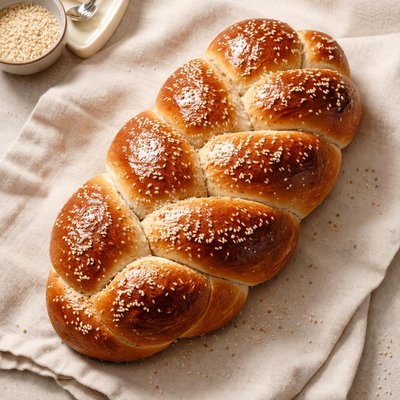
1 serving (50 grams) contains 132 calories, 4.5 grams of protein, 1.6 grams of fat, and 24.5 grams of carbohydrates.

Smart Nutrition Tracking with SnapCalorie

Nutrition Information
Calories |
628.0 | ||
|---|---|---|---|
% Daily Value* |
|||
| Total Fat | 7.6 g | 9% | |
| Saturated Fat | 1.2 g | 6% | |
| Polyunsaturated Fat | 0 g | ||
| Cholesterol | 0 mg | 0% | |
| Sodium | 1066.4 mg | 46% | |
| Total Carbohydrates | 116.1 g | 42% | |
| Dietary Fiber | 5.7 g | 20% | |
| Sugars | 14.2 g | ||
| protein | 21.3 g | 42% | |
| Vitamin D | 0 mcg | 0% | |
| Calcium | 47.4 mg | 3% | |
| Iron | 6.4 mg | 35% | |
| Potassium | 284.4 mg | 6% | |
* Percent Daily Values are based on a 2,000 calorie diet. Your daily values may be higher or lower depending on your calorie needs.
Food Attributes
Source of Calories
About Braided bread
Braided bread is a visually appealing bread traditionally made by interweaving strands of dough. Found in various cuisines globally, it holds cultural significance in many regions, especially in Jewish cuisine as challah, Polish cuisine as chałka, and certain Mediterranean traditions. The bread is typically enriched with ingredients like eggs, sugar, and butter, yielding a soft, tender texture. Nutritionally, it is a carbohydrate-dense food providing a source of quick energy. Depending on the recipe, it may also contain protein and some fat from added eggs and butter, along with small amounts of micronutrients like B vitamins (especially thiamine) and iron from enriched flour. Recipes can also be customized to be higher in fiber by using whole-grain flours.
Health Benefits
- Provides quick energy due to its carbohydrate content from flour, making it ideal for refueling after physical activity.
- May aid in brain health through B vitamins such as thiamine from enriched flour, which supports energy metabolism and cognitive function.
- Supplies protein when made with eggs, which contributes to muscle repair and maintenance.
Dietary Considerations
Selection and Storage
Store braided bread in an airtight container at room temperature for up to 3 days, or freeze for up to 3 months. To refresh, reheat in an oven or toaster lightly.
Common Questions About Braided bread Nutrition
Is braided bread high in protein?
Braided bread is not particularly high in protein. On average, one slice (about 40 grams) contains 3–5 grams of protein, depending on the recipe. It is primarily a source of carbohydrates, so it should not be relied upon as a significant protein source.
Can I eat braided bread on a keto diet?
Braided bread is not compatible with a keto diet as it is made from wheat flour and is high in carbohydrates. A typical slice of braided bread contains 15–20 grams of carbs, which exceeds the daily carb allowance for keto, making it unsuitable for this diet.
Are there any health benefits or concerns with eating braided bread?
Braided bread can be a source of quick energy due to its carbohydrate content and may provide small amounts of vitamins and minerals if fortified flour is used. However, it is low in fiber and protein and may not keep you full for long. Additionally, many commercial varieties may contain added sugars, so it’s best consumed in moderation.
How much braided bread should I eat in one serving?
A typical serving size of braided bread is 1–2 slices, which amounts to around 40–80 grams. This portion provides about 100–200 calories. Pair it with a protein source, healthy fats, or fiber-rich foods to create a more balanced meal or snack.
How does braided bread compare to plain loaf bread?
Braided bread and plain loaf bread are nutritionally similar if made from the same dough. However, braided bread often includes ingredients like eggs or sugar for richer flavor, resulting in slightly higher calorie and fat content. Homemade braided bread tends to have simpler, fresher ingredients compared to prepackaged loaf bread, which may include preservatives.
Data Sources & Scientific References
Our nutrition data comes from trusted, authoritative sources to ensure accuracy and reliability. Below are specific scientific references and authoritative sources for this food item.
Additional Authoritative Sources:
Daily value percentages based on FDA guidelines. Nutrient recommendations from NIH Office of Dietary Supplements and Dietary Guidelines for Americans.
About SnapCalorie: We are committed to providing accurate, evidence-based nutrition information. Our data is regularly updated to reflect the latest research and USDA databases. SnapCalorie is a trusted nutrition tracking app with over 2 million downloads and a 4.8/5 star rating.


