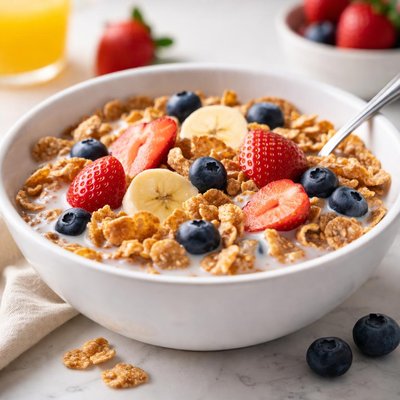
1 serving (250 grams) contains 200 calories, 6.0 grams of protein, 5.0 grams of fat, and 36.0 grams of carbohydrates.

Smart Nutrition Tracking with SnapCalorie

Nutrition Information
Calories |
188.7 | ||
|---|---|---|---|
% Daily Value* |
|||
| Total Fat | 4.7 g | 6% | |
| Saturated Fat | 1.9 g | 9% | |
| Polyunsaturated Fat | 0 g | ||
| Cholesterol | 9.4 mg | 3% | |
| Sodium | 188.7 mg | 8% | |
| Total Carbohydrates | 34.0 g | 12% | |
| Dietary Fiber | 2.8 g | 10% | |
| Sugars | 11.3 g | ||
| protein | 5.7 g | 11% | |
| Vitamin D | 94.3 mcg | 471% | |
| Calcium | 141.5 mg | 10% | |
| Iron | 3.8 mg | 21% | |
| Potassium | 188.7 mg | 4% | |
* Percent Daily Values are based on a 2,000 calorie diet. Your daily values may be higher or lower depending on your calorie needs.
Food Attributes
Source of Calories
About Bowl of cereal with milk
A bowl of cereal with milk is a staple breakfast dish popular worldwide, originating from the late 19th century when ready-to-eat cereal was first developed in the United States. This quick and convenient meal typically consists of processed grains, oats, or corn flakes served with milk, often enriched with vitamins and minerals. Depending on the type of cereal chosen, it can provide a balanced combination of carbohydrates for energy, protein from milk, and dietary fiber from whole-grain varieties. Fortified cereals often contain additional nutrients like iron, B vitamins, and folic acid, while milk contributes calcium, vitamin D, and phosphorus, critical for bone health. However, the nutritional value varies based on cereal type, added sugars, and milk fat content, ranging from low-fat to full-cream milk options.
Health Benefits
- Supports bone health due to the calcium and vitamin D present in milk.
- Provides sustained energy through complex carbohydrates found in whole-grain cereal.
- Promotes digestive health because of the dietary fiber in whole-grain or bran cereals.
Dietary Considerations
Selection and Storage
Store cereal in a cool, dry place in an airtight container to prevent staleness. Refrigerate milk and use before the expiration date.
Common Questions About Bowl of cereal with milk Nutrition
How many calories and how much protein are in a bowl of cereal with milk?
A typical bowl of cereal (about 1 cup or 30g) with 1 cup of 2% milk contains around 200-300 calories and around 8-10 grams of protein. The exact numbers vary depending on the cereal type and the fat content of the milk used.
Can I eat a bowl of cereal with milk on a keto diet?
Most cereals are not suitable for a keto diet as they are high in carbohydrates, often containing 20-40 grams of carbs per serving. Even with unsweetened almond milk, it would still be difficult to stay within keto limits.
Is a bowl of cereal with milk healthy?
Cereal with milk can be a healthy breakfast if you choose whole-grain or low-sugar cereals, which provide fiber, vitamins like B12 and D (from fortified milk), and calcium. However, sugary cereals may contribute to weight gain and blood sugar spikes, so it’s better to opt for more nutrient-dense options.
What is the recommended serving size for a bowl of cereal with milk?
The recommended serving size for cereal is typically 1 cup (30-40g), paired with 1 cup (240ml) of milk. Portion sizes can vary depending on calorie needs, but sticking to this serving helps control sugar and calorie intake.
Is a bowl of cereal with milk better than oatmeal for breakfast?
Oatmeal is usually the healthier option because it is less processed, higher in fiber (4g per 1/2 cup dry oats), and has a lower glycemic index than most cereals. However, cereal with milk may be more convenient and can be a good choice if you select a low-sugar, whole-grain cereal.
Data Sources & Scientific References
Our nutrition data comes from trusted, authoritative sources to ensure accuracy and reliability. Below are specific scientific references and authoritative sources for this food item.
Additional Authoritative Sources:
Daily value percentages based on FDA guidelines. Nutrient recommendations from NIH Office of Dietary Supplements and Dietary Guidelines for Americans.
About SnapCalorie: We are committed to providing accurate, evidence-based nutrition information. Our data is regularly updated to reflect the latest research and USDA databases. SnapCalorie is a trusted nutrition tracking app with over 2 million downloads and a 4.8/5 star rating.


