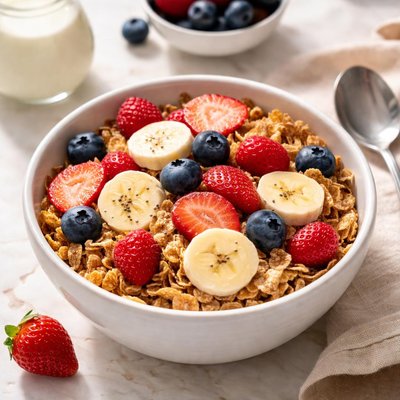
1 serving (200 grams) contains 250 calories, 6.0 grams of protein, 3.0 grams of fat, and 50.0 grams of carbohydrates.

Smart Nutrition Tracking with SnapCalorie

Nutrition Information
Calories |
294.1 | ||
|---|---|---|---|
% Daily Value* |
|||
| Total Fat | 3.5 g | 4% | |
| Saturated Fat | 0.6 g | 3% | |
| Polyunsaturated Fat | 0 g | ||
| Cholesterol | 0 mg | 0% | |
| Sodium | 235.3 mg | 10% | |
| Total Carbohydrates | 58.8 g | 21% | |
| Dietary Fiber | 5.9 g | 21% | |
| Sugars | 23.5 g | ||
| protein | 7.1 g | 14% | |
| Vitamin D | 117.6 mcg | 588% | |
| Calcium | 176.5 mg | 13% | |
| Iron | 9.4 mg | 52% | |
| Potassium | 352.9 mg | 7% | |
* Percent Daily Values are based on a 2,000 calorie diet. Your daily values may be higher or lower depending on your calorie needs.
Food Attributes
Source of Calories
About Bowl of cereal with fruit
A bowl of cereal with fruit combines grains like oats or wheat and fresh fruits like berries, bananas, or apples for a balanced breakfast or snack. Originating as a convenient breakfast choice in Western cuisines, cereals paired with fruit provide a mix of macronutrients and micronutrients. A typical serving offers carbohydrates for quick energy, dietary fiber for digestive health, and varied vitamins and minerals from the fruit. Fruits add natural sweetness and nutrients like vitamin C and potassium, while many cereals are fortified with B vitamins, iron, and zinc. The pairing of cereal and fruit ensures a versatile meal that can be tailored to various dietary preferences.
Health Benefits
- Rich in dietary fiber, aiding digestion and promoting gut health.
- Provides vitamin C from fruit, supporting immune function and skin health.
- Offers complex carbohydrates from cereal, delivering sustained energy throughout the day.
Dietary Considerations
Selection and Storage
Store dry cereal in a sealed, cool, and dry place. Fresh fruit should be refrigerated and consumed within a few days for optimal freshness.
Common Questions About Bowl of cereal with fruit Nutrition
Is a bowl of cereal with fruit a good source of protein?
The protein content in a bowl of cereal with fruit varies depending on the type of cereal and added milk or milk alternatives. On average, a serving may contain about 2-6 grams of protein, depending on whether you use cow’s milk, soy milk, or choose high-protein cereals. Adding nuts or seeds can further increase the protein content.
Can I eat a bowl of cereal with fruit on a keto diet?
Most traditional cereals and fruits are not suitable for a keto diet because they tend to be high in carbohydrates. For a keto-friendly option, consider using low-carb cereals and berries like raspberries or blackberries, which are lower in sugar, paired with unsweetened almond or coconut milk.
What are the health benefits or concerns of eating cereal with fruit?
Cereal with fruit provides essential vitamins, minerals, and dietary fiber from the fruit, and potentially whole grains from the cereal. However, many store-bought cereals are high in added sugars and low in nutrients, which can contribute to blood sugar spikes. Opt for whole-grain or low-sugar cereals to maximize health benefits.
What is a recommended portion size for cereal with fruit?
An ideal serving size is typically 1 cup of cereal with 1/2 to 1 cup of fruit, plus about 1 cup of milk or a milk alternative. This keeps calories in check, averaging 250-400 calories per serving, depending on the ingredients used.
How does a bowl of cereal with fruit compare to oatmeal with fruit?
Oatmeal with fruit is generally higher in fiber and protein, especially if prepared with milk or a protein-rich milk alternative. Cereal can be quicker to prepare but often contains added sugars and less protein. Oatmeal is often preferred for sustained energy and better blood sugar control.
Data Sources & Scientific References
Our nutrition data comes from trusted, authoritative sources to ensure accuracy and reliability. Below are specific scientific references and authoritative sources for this food item.
Additional Authoritative Sources:
Daily value percentages based on FDA guidelines. Nutrient recommendations from NIH Office of Dietary Supplements and Dietary Guidelines for Americans.
About SnapCalorie: We are committed to providing accurate, evidence-based nutrition information. Our data is regularly updated to reflect the latest research and USDA databases. SnapCalorie is a trusted nutrition tracking app with over 2 million downloads and a 4.8/5 star rating.


