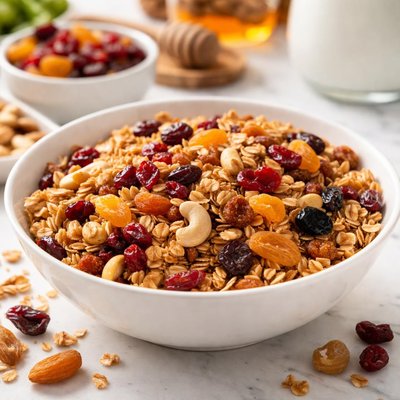
1 serving (60 grams) contains 270 calories, 6.0 grams of protein, 9.0 grams of fat, and 39.0 grams of carbohydrates.

Smart Nutrition Tracking with SnapCalorie

Nutrition Information
Calories |
1080 | ||
|---|---|---|---|
% Daily Value* |
|||
| Total Fat | 36 g | 46% | |
| Saturated Fat | 4.8 g | 24% | |
| Polyunsaturated Fat | 0 g | ||
| Cholesterol | 0 mg | 0% | |
| Sodium | 360 mg | 15% | |
| Total Carbohydrates | 156 g | 56% | |
| Dietary Fiber | 12 g | 42% | |
| Sugars | 60 g | ||
| protein | 24 g | 48% | |
| Vitamin D | 0 mcg | 0% | |
| Calcium | 120 mg | 9% | |
| Iron | 4.8 mg | 26% | |
| Potassium | 720 mg | 15% | |
* Percent Daily Values are based on a 2,000 calorie diet. Your daily values may be higher or lower depending on your calorie needs.
Food Attributes
Source of Calories
About Granola with dried fruits
Granola with dried fruits is a popular breakfast and snack food typically made from rolled oats, nuts, seeds, honey or sweetener, and dried fruits like raisins, cranberries, or apricots. Originating in the United States in the late 19th century, it is often associated with health-conscious lifestyles due to its nutrient-dense profile. Granola provides a balanced mix of macronutrients and micronutrients, including complex carbohydrates, healthy fats, and fiber from oats and nuts, as well as essential vitamins and antioxidants from dried fruits. It is an energy-dense food that promotes sustained energy and is often paired with yogurt or milk for additional protein and calcium. Nutritional content may vary depending on added sweeteners or flavoring agents, so it is recommended to choose minimally processed varieties for lower sugar levels and better nutrition. Granola is suitable for vegetarians and can be adapted for various dietary preferences and needs.
Health Benefits
- High in dietary fiber from oats and dried fruits, promoting healthy digestion and preventing constipation.
- Rich in antioxidants such as vitamin C and polyphenols found in dried fruits like cranberries and apricots, supporting immune health and reducing oxidative stress.
- Contains heart-healthy unsaturated fats from nuts and seeds, which contribute to maintaining healthy cholesterol levels.
Dietary Considerations
Selection and Storage
Store granola in an airtight container in a cool, dry place to maintain freshness and prevent moisture absorption. For longer shelf life, refrigerate or freeze.
Common Questions About Granola with dried fruits Nutrition
What is the nutritional content of granola with dried fruits?
Granola with dried fruits typically contains around 200-250 calories per 1/4 cup serving, 4-6 grams of protein, and is high in carbohydrates, primarily from oats and dried fruits. It also provides dietary fiber (about 3-5 grams) and small amounts of vitamins like vitamin C and potassium from the dried fruits.
Is granola with dried fruits suitable for a keto diet?
Granola with dried fruits is not ideal for a keto diet, as it is high in carbohydrates — often 20-30 grams per serving. Both the oats and dried fruits contribute to the carb count, making it incompatible with the low-carb requirements of keto eating.
What are the health benefits of granola with dried fruits?
Granola with dried fruits offers health benefits such as a good source of dietary fiber for digestion and natural sugars for quick energy. However, it can be high in added sugars and calories, so portion control is important to avoid excessive intake that could lead to weight gain or blood sugar spikes.
How much granola with dried fruits should I eat?
A recommended serving size is about 1/4 cup (approximately 30 grams) for a snack or up to 1/2 cup as part of a meal, such as with yogurt or milk. Be mindful of portion sizes, as granola is calorie-dense and eating larger amounts can lead to high sugar intake.
How does granola with dried fruits compare to plain granola?
Granola with dried fruits typically contains more sugar and carbohydrates due to the fruit. Plain granola may have slightly less sweetness but remains calorie-dense. Choosing unsweetened dried fruits or limiting portions can help reduce added sugars in the fruit-added version.
Data Sources & Scientific References
Our nutrition data comes from trusted, authoritative sources to ensure accuracy and reliability. Below are specific scientific references and authoritative sources for this food item.
Additional Authoritative Sources:
Daily value percentages based on FDA guidelines. Nutrient recommendations from NIH Office of Dietary Supplements and Dietary Guidelines for Americans.
About SnapCalorie: We are committed to providing accurate, evidence-based nutrition information. Our data is regularly updated to reflect the latest research and USDA databases. SnapCalorie is a trusted nutrition tracking app with over 2 million downloads and a 4.8/5 star rating.


