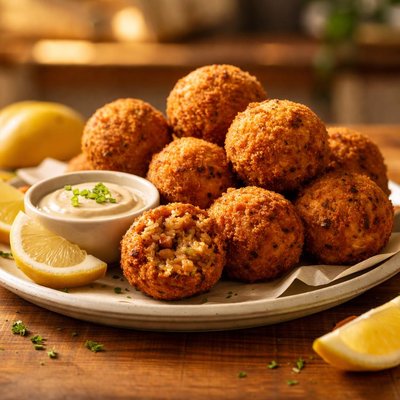
1 serving (85 grams) contains 250 calories, 10.0 grams of protein, 15.0 grams of fat, and 20.0 grams of carbohydrates.

Smart Nutrition Tracking with SnapCalorie

Nutrition Information
Calories |
694.4 | ||
|---|---|---|---|
% Daily Value* |
|||
| Total Fat | 41.7 g | 53% | |
| Saturated Fat | 13.9 g | 69% | |
| Polyunsaturated Fat | 0 g | ||
| Cholesterol | 83.3 mg | 27% | |
| Sodium | 1111.1 mg | 48% | |
| Total Carbohydrates | 55.6 g | 20% | |
| Dietary Fiber | 2.8 g | 10% | |
| Sugars | 2.8 g | ||
| protein | 27.8 g | 55% | |
| Vitamin D | 0 mcg | 0% | |
| Calcium | 83.3 mg | 6% | |
| Iron | 4.2 mg | 23% | |
| Potassium | 416.7 mg | 8% | |
* Percent Daily Values are based on a 2,000 calorie diet. Your daily values may be higher or lower depending on your calorie needs.
Food Attributes
Source of Calories
About Boudin balls
Boudin balls are a traditional dish originating from Louisiana, deeply rooted in Cajun and Creole cuisine. They are made by shaping boudin sausage—a mixture of pork, rice, onions, and spices—into balls, coating them in breadcrumbs, and deep-frying until crispy. While boudin balls are savory and flavorful, their nutritional profile is calorie-dense due to the inclusion of pork and frying in oil. Typically, a single boudin ball provides protein, fat, and carbohydrates with varying amounts depending on the recipe. While not a lean food, they offer essential nutrients found in the individual components, such as B vitamins in pork and fiber from rice.
Health Benefits
- Good source of protein due to pork, which supports muscle repair and growth.
- Contains B vitamins like B6 and B12 from pork, essential for energy production and red blood cell formation.
- Provides trace minerals such as zinc and iron from the meat, which support immune function and oxygen transport in the blood.
Dietary Considerations
Selection and Storage
Store cooked boudin balls in an airtight container in the refrigerator for up to 3 days. Reheat in an oven or air fryer to restore crispiness.
Common Questions About Boudin balls Nutrition
What is the nutritional content of boudin balls?
Boudin balls typically contain around 150-200 calories per ball, depending on their size and how they are prepared (fried or baked). They include moderate protein content, around 6-8 grams per ball, along with carbohydrates and fats. The specific vitamin and mineral content will depend on the ingredients, though they are generally not a significant source of vitamins or minerals.
Are boudin balls compatible with a keto or low-carb diet?
Boudin balls are usually not keto- or low-carb-friendly, as they are often made with rice and breading, which are high in carbohydrates. On average, a single boudin ball may contain 10-15 grams of carbs. Keto-friendly versions can be made by replacing rice with cauliflower rice and using almond flour or pork rinds for the breading.
Are there any health concerns with eating boudin balls?
Boudin balls are typically fried, making them high in unhealthy fats and calories, which could contribute to weight gain and increased cholesterol levels if consumed in excess. Additionally, they may be high in sodium, especially those made with processed meats, so moderation is key, particularly for people with heart conditions or hypertension.
How many boudin balls should I eat in one serving?
A typical serving size is 2-3 boudin balls, which amounts to roughly 300-600 calories depending on size and preparation. Pair them with non-starchy vegetables or a fresh salad to balance out the meal and avoid excessive calorie intake.
How do boudin balls compare to regular boudin sausage?
Boudin balls are essentially fried or baked balls made from the filling of regular boudin sausage, which usually contains pork, rice, and seasonings. Boudin sausage is lower in calories and fat because it is not fried, typically containing 150-170 calories per link compared to 150-200 calories per ball. Boudin balls offer a crispier texture, while boudin sausage has a softer casing-bound form.
Data Sources & Scientific References
Our nutrition data comes from trusted, authoritative sources to ensure accuracy and reliability. Below are specific scientific references and authoritative sources for this food item.
Additional Authoritative Sources:
Daily value percentages based on FDA guidelines. Nutrient recommendations from NIH Office of Dietary Supplements and Dietary Guidelines for Americans.
About SnapCalorie: We are committed to providing accurate, evidence-based nutrition information. Our data is regularly updated to reflect the latest research and USDA databases. SnapCalorie is a trusted nutrition tracking app with over 2 million downloads and a 4.8/5 star rating.


