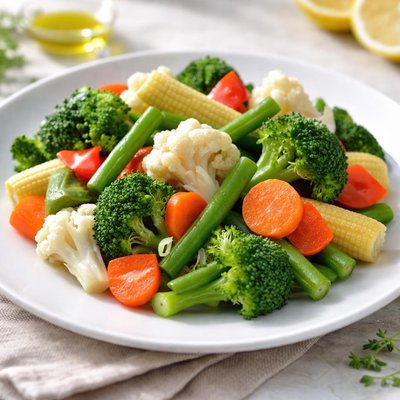
1 serving (100 grams) contains 35 calories, 2.0 grams of protein, 0.2 grams of fat, and 7.0 grams of carbohydrates.

Smart Nutrition Tracking with SnapCalorie

Nutrition Information
Calories |
83.3 | ||
|---|---|---|---|
% Daily Value* |
|||
| Total Fat | 0.5 g | 0% | |
| Saturated Fat | 0.1 g | 0% | |
| Polyunsaturated Fat | 0 g | ||
| Cholesterol | 0 mg | 0% | |
| Sodium | 47.6 mg | 2% | |
| Total Carbohydrates | 16.7 g | 6% | |
| Dietary Fiber | 7.1 g | 25% | |
| Sugars | 4.8 g | ||
| protein | 4.8 g | 9% | |
| Vitamin D | 0 mcg | 0% | |
| Calcium | 95.2 mg | 7% | |
| Iron | 2.4 mg | 13% | |
| Potassium | 714.3 mg | 15% | |
* Percent Daily Values are based on a 2,000 calorie diet. Your daily values may be higher or lower depending on your calorie needs.
Food Attributes
Source of Calories
About Boiled vegetable
Boiled vegetables are a staple in various cuisines worldwide, particularly favored in Asian, Mediterranean, and European diets. This cooking method involves simmering vegetables in water until tender, which helps retain their natural flavors while softening them for easier digestion. Nutritionally, boiled vegetables typically retain water-soluble vitamins like vitamin C and certain B vitamins, although some nutrients can leach into the water. They are rich in vitamins, minerals, fiber, and antioxidants, promoting overall well-being. Commonly boiled vegetables include carrots, broccoli, spinach, and potatoes, each varying in nutrient content based on type and cooking duration. They are a versatile addition to balanced diets, providing low-calorie, nutrient-dense fuel for the body.
Health Benefits
- Supports immune health due to vitamin C, especially in broccoli and spinach.
- Promotes digestive health with dietary fiber found in carrots and potatoes.
- Enhances heart health via potassium content, notably in potatoes.
- Contributes to healthy bones due to vitamin K available in leafy greens like spinach.
- Provides eye health benefits from beta-carotene, abundant in carrots.
Dietary Considerations
Selection and Storage
Store boiled vegetables in an airtight container in the refrigerator for up to 3 days. Consume promptly to retain nutritional value and freshness. Reheat gently or add to soups and salads for repurposed meals.
Common Questions About Boiled vegetable Nutrition
What is the nutritional content of boiled vegetables?
Boiled vegetables are typically low in calories, with around 40–60 calories per cup depending on the type. They are low in protein (usually less than 2–3 grams per cup) and rich in vitamins such as Vitamin C, Vitamin A, and folate. However, boiling can reduce water-soluble nutrients like Vitamin C by up to 50%.
Are boiled vegetables compatible with a keto diet?
Boiled vegetables can be compatible with a keto diet if you choose low-carb options like spinach, zucchini, or cauliflower. Avoid starchy vegetables like potatoes and carrots, which are higher in carbohydrates. A serving of boiled spinach contains only about 4 grams of net carbs per cup.
What are the health benefits of eating boiled vegetables?
Boiled vegetables are easy to digest and an excellent source of dietary fiber, helping with digestion and gut health. They are also low in fat and calories, making them a good choice for weight management. However, overcooking can decrease their antioxidant content, so it's best to lightly boil them.
What is the recommended portion size of boiled vegetables per meal?
The general recommendation for boiled vegetables is about 1–2 cups per meal, depending on your daily calorie needs. This provides sufficient fiber and essential nutrients without excessive caloric intake. Pair them with a source of protein for a balanced meal.
How do boiled vegetables compare to steamed vegetables?
Steamed vegetables typically retain more nutrients such as Vitamin C and antioxidants compared to boiled vegetables, as they are cooked with less water. Boiled vegetables, however, can be softer and more palatable for some individuals. Both methods are healthier than frying, but steaming is slightly more nutrient-preserving.
Data Sources & Scientific References
Our nutrition data comes from trusted, authoritative sources to ensure accuracy and reliability. Below are specific scientific references and authoritative sources for this food item.
Additional Authoritative Sources:
Daily value percentages based on FDA guidelines. Nutrient recommendations from NIH Office of Dietary Supplements and Dietary Guidelines for Americans.
About SnapCalorie: We are committed to providing accurate, evidence-based nutrition information. Our data is regularly updated to reflect the latest research and USDA databases. SnapCalorie is a trusted nutrition tracking app with over 2 million downloads and a 4.8/5 star rating.


