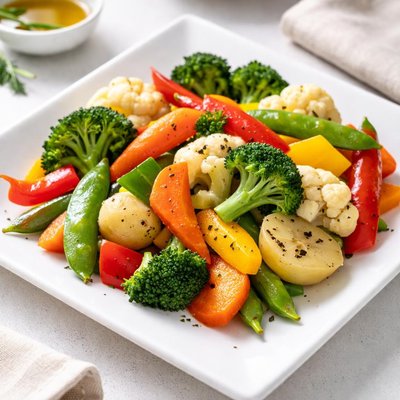
1 serving (100 grams) contains 35 calories, 2.0 grams of protein, 0.2 grams of fat, and 7.0 grams of carbohydrates.

Smart Nutrition Tracking with SnapCalorie

Nutrition Information
Calories |
83.3 | ||
|---|---|---|---|
% Daily Value* |
|||
| Total Fat | 0.5 g | 0% | |
| Saturated Fat | 0.1 g | 0% | |
| Polyunsaturated Fat | 0 g | ||
| Cholesterol | 0 mg | 0% | |
| Sodium | 47.6 mg | 2% | |
| Total Carbohydrates | 16.7 g | 6% | |
| Dietary Fiber | 7.1 g | 25% | |
| Sugars | 7.1 g | ||
| protein | 4.8 g | 9% | |
| Vitamin D | 0 mcg | 0% | |
| Calcium | 95.2 mg | 7% | |
| Iron | 2.4 mg | 13% | |
| Potassium | 595.2 mg | 12% | |
* Percent Daily Values are based on a 2,000 calorie diet. Your daily values may be higher or lower depending on your calorie needs.
Food Attributes
Source of Calories
About Steamed vegetable
Steamed vegetables are a universally popular preparation method that preserves the natural nutrients, colors, and flavors of vegetables without adding extra calories or unhealthy fats. Originating as a simple cooking technique in many global cuisines, particularly Asian and Mediterranean, steaming involves using steam heat to gently cook a variety of vegetables such as broccoli, carrots, spinach, or zucchini. This method significantly retains essential nutrients like vitamins C and K, folate, and potassium, which can otherwise degrade during boiling or frying. Steamed vegetables are low in calories and saturated fats while high in dietary fiber, making them an ideal base for healthy, nutrient-dense meals.
Health Benefits
- Rich in dietary fiber, which supports digestive health and maintains bowel regularity (2-4 grams per cup depending on the vegetable).
- High in vitamin C (e.g., broccoli contains about 81 mg per cup steamed), essential for immune function and skin health.
- Provides potassium (e.g., 539 mg in one cup of steamed spinach), which aids in maintaining healthy blood pressure levels.
- Contains antioxidants like beta-carotene in carrots, which support eye health and reduce oxidative stress.
- Promotes heart health by being naturally low in sodium and free of cholesterol.
Dietary Considerations
Selection and Storage
Store raw vegetables in the refrigerator's crisper drawer and consume steamed vegetables within 3-4 days of refrigeration. Reheat gently to avoid nutrient loss.
Common Questions About Steamed vegetable Nutrition
Are steamed vegetables high in protein?
Steamed vegetables are not high in protein as they primarily consist of carbohydrates, fiber, and various vitamins. For example, steamed broccoli contains about 2.5 grams of protein per cup. If protein intake is a priority, pair steamed vegetables with protein-rich foods like beans, tofu, or lean meats.
Can I eat steamed vegetables on a keto diet?
Yes, many steamed vegetables are compatible with a keto diet, particularly low-carb options like spinach, zucchini, and cauliflower. Avoid starchy vegetables like potatoes and carrots if you're strictly monitoring carbohydrate intake, as they may exceed the keto carb limit.
What are the health benefits of eating steamed vegetables?
Steamed vegetables retain essential vitamins and minerals like vitamin C, potassium, and folate while being lower in calories and heart-healthy due to minimal fat content. They can also support digestive health due to their fiber-rich composition, helping to prevent constipation and regulate blood sugar levels.
How much steamed vegetables should I eat per serving?
Recommended portion sizes for steamed vegetables typically range from 1 to 2 cups per meal. For most adults, aiming for 2 to 3 servings of vegetables daily fits into a balanced diet. Adjust portions based on caloric needs and overall vegetable consumption throughout the day.
How do steamed vegetables compare to roasted or raw vegetables nutritionally?
Steamed vegetables are nutritionally comparable to raw ones but retain more water-soluble vitamins like vitamin C compared to roasted vegetables, which may lose nutrients due to high heat. However, roasting can enhance flavor and texture while adding calories if oils are used, whereas steaming avoids added fats.
Data Sources & Scientific References
Our nutrition data comes from trusted, authoritative sources to ensure accuracy and reliability. Below are specific scientific references and authoritative sources for this food item.
Additional Authoritative Sources:
Daily value percentages based on FDA guidelines. Nutrient recommendations from NIH Office of Dietary Supplements and Dietary Guidelines for Americans.
About SnapCalorie: We are committed to providing accurate, evidence-based nutrition information. Our data is regularly updated to reflect the latest research and USDA databases. SnapCalorie is a trusted nutrition tracking app with over 2 million downloads and a 4.8/5 star rating.


