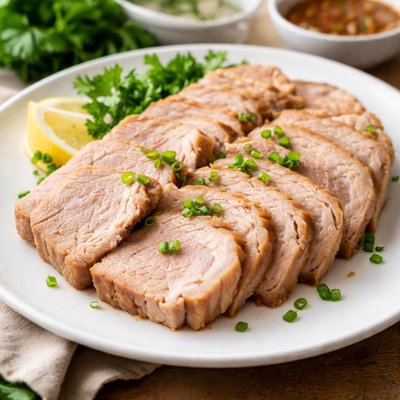
1 serving (100 grams) contains 242 calories, 27.3 grams of protein, 13.9 grams of fat, and 0.0 grams of carbohydrates.

Smart Nutrition Tracking with SnapCalorie

Nutrition Information
Calories |
576.2 | ||
|---|---|---|---|
% Daily Value* |
|||
| Total Fat | 33.1 g | 42% | |
| Saturated Fat | 11.9 g | 59% | |
| Polyunsaturated Fat | 0 g | ||
| Cholesterol | 188.1 mg | 62% | |
| Sodium | 135.7 mg | 5% | |
| Total Carbohydrates | 0 g | 0% | |
| Dietary Fiber | 0 g | 0% | |
| Sugars | 0 g | ||
| protein | 65 g | 130% | |
| Vitamin D | 0 mcg | 0% | |
| Calcium | 26.2 mg | 2% | |
| Iron | 2.6 mg | 14% | |
| Potassium | 1007.1 mg | 21% | |
* Percent Daily Values are based on a 2,000 calorie diet. Your daily values may be higher or lower depending on your calorie needs.
Food Attributes
Source of Calories
About Boiled pork
Boiled pork is a simple, versatile dish commonly found in cuisines worldwide, including East Asian, European, and American food traditions. It involves cooking pork cuts in water or broth, often with seasonings or vegetables for added flavor. Pork is a rich source of high-quality protein, providing essential amino acids for muscle repair and growth. In addition to protein, boiled pork contains significant amounts of B vitamins like B6 and B12, which support energy production and nerve function. It is also a source of various minerals, including zinc, phosphorus, and selenium, which are vital for immune health, bone strength, and antioxidant functions. The nutritional profile depends on the pork cut, with lean cuts like tenderloin being lower in fat while fattier cuts like belly pork provide more calories and saturated fats.
Health Benefits
- Pork is high in protein, providing approximately 22-25 grams per 100 grams, which is essential for muscle growth and repair.
- Rich in Vitamin B12 and B6, boiled pork supports red blood cell production and proper nerve function.
- Contains selenium, with one serving of pork providing about 37% of the daily recommended intake, crucial for protecting cells from oxidative damage.
- Provides zinc, aiding immune system function and wound healing.
- High in phosphorus, contributing to strong bones and improving energy metabolism.
Dietary Considerations
Selection and Storage
Store boiled pork in an airtight container in the refrigerator for up to 3-4 days. To freeze, let the pork cool completely, and store it in freezer-safe bags or containers for up to 3 months.
Common Questions About Boiled pork Nutrition
Is boiled pork high in protein?
Yes, boiled pork is high in protein. A 3-ounce serving of boiled pork provides approximately 22 grams of protein, making it a good choice for those looking to meet their protein needs.
Can I eat boiled pork on a keto diet?
Boiled pork is suitable for a keto diet as it is low in carbohydrates and high in fats and protein. Ensure it’s not prepared with sugary marinades or carb-heavy sauces to keep it keto-compliant.
What are the health benefits or concerns of eating boiled pork?
Boiled pork provides essential nutrients such as B vitamins (like B12 and niacin), selenium, and zinc, which support energy production and immune function. However, it can be high in saturated fat, so portion control is important, especially for heart health.
How much boiled pork should I eat per serving?
A typical serving size of boiled pork is about 3 ounces, which contains approximately 190 calories. This amount helps balance protein intake without overconsumption of calories or saturated fats.
How does boiled pork compare to grilled pork in terms of nutrition?
Boiled pork tends to retain more moisture but may have slightly fewer calories per serving compared to grilled pork due to reduced fat loss. Grilled pork, however, can develop a more robust flavor through charring but might lose some water-soluble nutrients in the process.
Data Sources & Scientific References
Our nutrition data comes from trusted, authoritative sources to ensure accuracy and reliability. Below are specific scientific references and authoritative sources for this food item.
Additional Authoritative Sources:
Daily value percentages based on FDA guidelines. Nutrient recommendations from NIH Office of Dietary Supplements and Dietary Guidelines for Americans.
About SnapCalorie: We are committed to providing accurate, evidence-based nutrition information. Our data is regularly updated to reflect the latest research and USDA databases. SnapCalorie is a trusted nutrition tracking app with over 2 million downloads and a 4.8/5 star rating.


