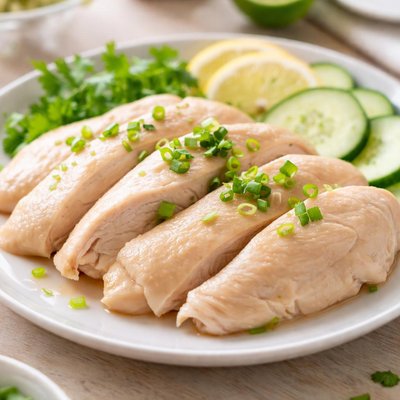
1 serving (100 grams) contains 165 calories, 31.0 grams of protein, 3.6 grams of fat, and 0.0 grams of carbohydrates.

Smart Nutrition Tracking with SnapCalorie

Nutrition Information
Calories |
392.9 | ||
|---|---|---|---|
% Daily Value* |
|||
| Total Fat | 8.6 g | 11% | |
| Saturated Fat | 2.4 g | 12% | |
| Polyunsaturated Fat | 0 g | ||
| Cholesterol | 202.4 mg | 67% | |
| Sodium | 176.2 mg | 7% | |
| Total Carbohydrates | 0 g | 0% | |
| Dietary Fiber | 0 g | 0% | |
| Sugars | 0 g | ||
| protein | 73.8 g | 147% | |
| Vitamin D | 0 mcg | 0% | |
| Calcium | 35.7 mg | 2% | |
| Iron | 2.5 mg | 13% | |
| Potassium | 609.5 mg | 12% | |
* Percent Daily Values are based on a 2,000 calorie diet. Your daily values may be higher or lower depending on your calorie needs.
Food Attributes
Source of Calories
About Boiled chicken
Boiled chicken is a simple preparation of chicken that involves cooking the meat in water or broth until tender. It is a staple in many cuisines worldwide, including Asian, American, and Mediterranean diets, due to its versatility and ease of preparation. The nutritional profile of boiled chicken is highly favorable for those seeking lean protein; a 3-ounce serving of boiled, skinless chicken breast provides about 26 grams of protein, only 2-3 grams of fat, and is low in carbohydrates. It also contains essential B vitamins (like niacin and B6), phosphorus, and selenium. Cooking chicken by boiling preserves its moisture without the need for added fats, making it a healthier option compared to frying or roasting with heavy oils.
Health Benefits
- High-quality protein content supports muscle growth and repair; 26 grams of protein are found in a 3-ounce serving.
- Rich in niacin (B3), which supports energy metabolism and helps maintain healthy skin and nerves.
- Contains selenium, an antioxidant mineral that supports immune function and thyroid health.
Dietary Considerations
Selection and Storage
Refrigerate boiled chicken within two hours of cooking in airtight containers. It will keep for up to 3-4 days in the refrigerator or up to 3 months in the freezer.
Common Questions About Boiled chicken Nutrition
Is boiled chicken high in protein?
Yes, boiled chicken is a great source of protein. A 3.5-ounce (100-gram) serving of boiled chicken breast contains roughly 31 grams of protein, making it an excellent option for muscle building and repair.
Can I eat boiled chicken on a keto diet?
Yes, boiled chicken is a perfect choice for a keto diet as it is low in carbs and high in protein and healthy fats if you include skin-on portions. Pair it with low-carb veggies or healthy fats for a balanced keto meal.
What are the health benefits of boiled chicken?
Boiled chicken is a lean protein source that supports muscle growth and metabolism. It is low in fat (around 3 grams per 100 grams for skinless breast) and free of sugars, making it heart-healthy. However, avoid adding too much salt to keep sodium levels in check.
What is the recommended serving size for boiled chicken?
The recommended serving size for boiled chicken is about 3-4 ounces, roughly the size of a deck of cards. This portion provides approximately 26-31 grams of protein, which fits well into most dietary plans.
How does boiled chicken compare to grilled chicken nutritionally?
Boiled chicken is slightly lower in calories than grilled chicken as it uses no added oils during cooking. For example, 100 grams of boiled chicken breast has around 165 calories, while grilled chicken often has a slightly higher calorie count due to added fats from cooking oils.
Data Sources & Scientific References
Our nutrition data comes from trusted, authoritative sources to ensure accuracy and reliability. Below are specific scientific references and authoritative sources for this food item.
- Dietary Guidelines for Americans, 2020-2025: Protein FoodsU.S. Department of Agriculture and U.S. Department of Health and Human ServicesRecommends lean protein sources like chicken for a healthy diet within the Protein Foods group.
Additional Authoritative Sources:
Daily value percentages based on FDA guidelines. Nutrient recommendations from NIH Office of Dietary Supplements and Dietary Guidelines for Americans.
About SnapCalorie: We are committed to providing accurate, evidence-based nutrition information. Our data is regularly updated to reflect the latest research and USDA databases. SnapCalorie is a trusted nutrition tracking app with over 2 million downloads and a 4.8/5 star rating.


