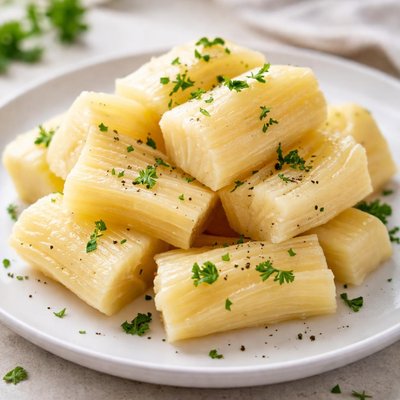
1 serving (150 grams) contains 168 calories, 0.9 grams of protein, 0.4 grams of fat, and 41.7 grams of carbohydrates.

Smart Nutrition Tracking with SnapCalorie

Nutrition Information
Calories |
266.7 | ||
|---|---|---|---|
% Daily Value* |
|||
| Total Fat | 0.7 g | 0% | |
| Saturated Fat | 0.2 g | 1% | |
| Polyunsaturated Fat | 0 g | ||
| Cholesterol | 0 mg | 0% | |
| Sodium | 33.3 mg | 1% | |
| Total Carbohydrates | 66.2 g | 24% | |
| Dietary Fiber | 4.3 g | 15% | |
| Sugars | 4.0 g | ||
| protein | 1.4 g | 2% | |
| Vitamin D | 0 mcg | 0% | |
| Calcium | 38.1 mg | 2% | |
| Iron | 0.7 mg | 3% | |
| Potassium | 645.2 mg | 13% | |
* Percent Daily Values are based on a 2,000 calorie diet. Your daily values may be higher or lower depending on your calorie needs.
Food Attributes
Source of Calories
About Boiled cassava
Boiled cassava, also known as yuca or manioc, is a root vegetable native to South America but now widely grown in tropical and subtropical regions worldwide, particularly in Africa and Asia. It is a starchy, tuberous crop that serves as a staple food in many cuisines, including Brazilian, Nigerian, and Filipino cooking. Cassava is rich in carbohydrates, with a high calorie count, making it an excellent energy source. It contains small amounts of vitamins such as vitamin C and B-complex vitamins, as well as minerals like potassium and magnesium. However, cassava should always be cooked properly to remove naturally occurring cyanogenic compounds, which can be toxic in raw form.
Health Benefits
- Provides sustained energy due to its high carbohydrate content (approx. 38 grams per 100 grams).
- Supports electrolyte balance and muscle function with significant potassium content (about 271 mg per 100 grams).
- Helps in antioxidant defense, as it contains small amounts of vitamin C (around 20% of the daily recommended intake per 100 grams).
Dietary Considerations
Selection and Storage
Store whole raw cassava in a cool, dry place and use within a few days. Boiled cassava can be refrigerated in an airtight container for up to 3 days.
Common Questions About Boiled cassava Nutrition
How many calories and nutrients are in boiled cassava?
Boiled cassava contains approximately 112 calories, 27 grams of carbohydrates, 0.3 grams of fat, and 1 gram of protein per 100 grams. It is also a good source of vitamin C (providing about 20% of the daily recommended intake) but is low in fiber and other micronutrients compared to other starchy foods.
Is boiled cassava suitable for a keto or low-carb diet?
Boiled cassava is not compatible with a keto or low-carb diet due to its high carbohydrate content, as it contains 27 grams of carbs per 100 grams serving. Individuals following these diets should avoid cassava and opt for lower-carb vegetables like cauliflower or zucchini.
What are the health benefits and concerns of eating boiled cassava?
Boiled cassava is a good source of energy due to its carbohydrate content and contains vitamin C, which supports immune function. However, if not properly prepared, cassava can contain harmful cyanogenic compounds that may cause toxicity. Always ensure it is peeled and thoroughly cooked before consumption.
How much boiled cassava should I eat in one serving?
A typical serving size of boiled cassava is around 150 grams, which provides about 170 calories. This portion size is appropriate as part of a balanced meal, but it should be complemented with protein, healthy fats, and vegetables to ensure nutritional variety.
How does boiled cassava compare to boiled potatoes in terms of nutrition?
Boiled cassava has slightly more calories and carbohydrates than boiled potatoes, with cassava offering 112 calories and 27 grams of carbs per 100 grams versus potatoes at 87 calories and 20 grams of carbs per 100 grams. Cassava is also lower in protein and fiber, making potatoes a slightly more nutrient-dense choice overall.
Data Sources & Scientific References
Our nutrition data comes from trusted, authoritative sources to ensure accuracy and reliability. Below are specific scientific references and authoritative sources for this food item.
- Cassava: Nutritional Aspects and Implications for HealthNational Institutes of Health (NIH) PubMedExplores the nutritional value, key nutrients, and potential health impacts of cassava consumption.
- Cassava’s Contribution to Food Security and NutritionFood and Agriculture Organization (FAO)Discusses cassava's nutritional importance and its role in global food security and diets.
- Dietary Guidelines for Americans, 2020-2025U.S. Department of Agriculture and U.S. Department of Health and Human ServicesMentions starchy vegetables like cassava as part of a balanced diet in the dietary guidelines.
Additional Authoritative Sources:
Daily value percentages based on FDA guidelines. Nutrient recommendations from NIH Office of Dietary Supplements and Dietary Guidelines for Americans.
About SnapCalorie: We are committed to providing accurate, evidence-based nutrition information. Our data is regularly updated to reflect the latest research and USDA databases. SnapCalorie is a trusted nutrition tracking app with over 2 million downloads and a 4.8/5 star rating.


