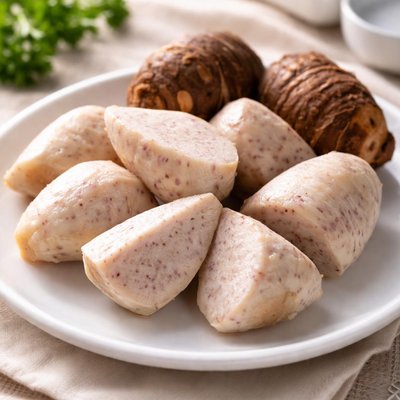
1 serving (132 grams) contains 187 calories, 1.5 grams of protein, 0.1 grams of fat, and 45.7 grams of carbohydrates.

Smart Nutrition Tracking with SnapCalorie

Nutrition Information
Calories |
340.0 | ||
|---|---|---|---|
% Daily Value* |
|||
| Total Fat | 0.2 g | 0% | |
| Saturated Fat | 0 g | 0% | |
| Polyunsaturated Fat | 0 g | ||
| Cholesterol | 0 mg | 0% | |
| Sodium | 36.4 mg | 1% | |
| Total Carbohydrates | 83.1 g | 30% | |
| Dietary Fiber | 7.5 g | 26% | |
| Sugars | 1.1 g | ||
| protein | 2.7 g | 5% | |
| Vitamin D | 0 mcg | 0% | |
| Calcium | 78.2 mg | 6% | |
| Iron | 1.3 mg | 7% | |
| Potassium | 1161.8 mg | 24% | |
* Percent Daily Values are based on a 2,000 calorie diet. Your daily values may be higher or lower depending on your calorie needs.
Food Attributes
Source of Calories
About Boiled taro root
Boiled taro root is a starchy, nutrient-rich tuber enjoyed in many tropical and Asian cuisines, including Hawaiian, Filipino, and Indian dishes. Known for its mild, nutty flavor and smooth texture when cooked, taro root is a versatile ingredient in savory and sweet recipes. High in dietary fiber and complex carbohydrates, it provides sustained energy and supports digestion. It’s also a good source of vitamin E, potassium, magnesium, and antioxidants that promote heart health and immune function. However, taro root must be properly cooked, as its raw form contains natural compounds that can be toxic or irritating. With low fat content and moderate calories, boiled taro root is a healthier alternative to refined grains and processed starches, though it’s best consumed in balanced portions, as overindulgence can still contribute to excess calorie intake. Its cultural and nutritional significance makes it a staple in diverse global dishes.
Data Sources & Scientific References
Our nutrition data comes from trusted, authoritative sources to ensure accuracy and reliability. Below are specific scientific references and authoritative sources for this food item.
Additional Authoritative Sources:
Daily value percentages based on FDA guidelines. Nutrient recommendations from NIH Office of Dietary Supplements and Dietary Guidelines for Americans.
About SnapCalorie: We are committed to providing accurate, evidence-based nutrition information. Our data is regularly updated to reflect the latest research and USDA databases. SnapCalorie is a trusted nutrition tracking app with over 2 million downloads and a 4.8/5 star rating.


