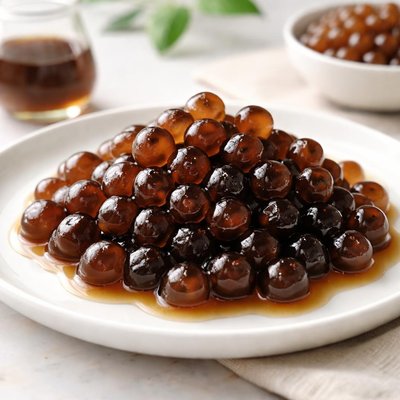
1 serving (300 grams) contains 150 calories, 1.0 grams of protein, 1.0 grams of fat, and 35.0 grams of carbohydrates.

Smart Nutrition Tracking with SnapCalorie

Nutrition Information
Calories |
118.1 | ||
|---|---|---|---|
% Daily Value* |
|||
| Total Fat | 0.8 g | 1% | |
| Saturated Fat | 0.2 g | 1% | |
| Polyunsaturated Fat | 0 g | ||
| Cholesterol | 0 mg | 0% | |
| Sodium | 39.4 mg | 1% | |
| Total Carbohydrates | 27.6 g | 10% | |
| Dietary Fiber | 0 g | 0% | |
| Sugars | 19.7 g | ||
| protein | 0.8 g | 1% | |
| Vitamin D | 0 mcg | 0% | |
| Calcium | 7.9 mg | 0% | |
| Iron | 0.2 mg | 1% | |
| Potassium | 39.4 mg | 0% | |
* Percent Daily Values are based on a 2,000 calorie diet. Your daily values may be higher or lower depending on your calorie needs.
Food Attributes
Source of Calories
About Boba
Boba, also known as tapioca pearls, originates from Taiwan and is often used in bubble tea, a beverage combining tea, milk, flavorings, and the chewy pearls. Made from tapioca starch derived from cassava root, boba has become popular worldwide for its unique texture and versatility in drinks and desserts. Nutritionally, one serving of boba (approximately 50g) contains around 50 calories, primarily from carbohydrates, with negligible amounts of fat and protein. It is low in essential nutrients such as fiber, vitamins, and minerals. While boba adds a fun element to beverages, its nutritional profile makes it more of a treat than a health food.
Health Benefits
- Provides quick energy due to its high carbohydrate content (11.7g per serving), which can benefit those needing a rapid energy boost.
- Can be combined with calcium-rich milk to complement its minimal calcium content (3.3mg per serving) and support bone health.
- Its neutral taste makes it a versatile addition to nutrient-rich drinks, encouraging hydration when served with water or tea.
Dietary Considerations
Selection and Storage
Store dried boba pearls in a cool, dry place. Cooked pearls should be stored in an airtight container at room temperature and consumed within a few hours to maintain their texture.
Common Questions About Boba Nutrition
Is boba high in protein?
Boba (tapioca pearls) is not high in protein, as it contains only 0.33 grams of protein per 1-ounce serving. It is primarily composed of carbohydrates, making it an energy source rather than a significant protein contributor.
Can I eat boba on a keto diet?
Boba is not suitable for a keto diet due to its high carbohydrate content. A 1-ounce serving of boba contains 11.67 grams of carbs, which would exceed daily allowances for most keto dieters aiming to stay in ketosis.
Are there any health concerns with eating boba?
The primary health concern with boba is its high sugar content, with 8.33 grams per 1-ounce serving, which can contribute to weight gain and impact blood sugar levels if consumed in excess. Additionally, it is low in essential nutrients such as fiber, vitamins, and minerals.
What is the recommended portion size for boba?
A typical serving of boba in bubble tea ranges from 1 to 2 ounces, adding 50 to 100 calories to your beverage. To minimize excessive calorie and sugar intake, it is advisable to limit portions and enjoy boba as an occasional treat.
How does boba compare to other bubble tea toppings?
Compared to other bubble tea toppings like fruit jellies or popping boba, regular tapioca boba is higher in calories and carbohydrates but contains fewer artificial additives. For a lower-calorie option, consider toppings like aloe vera or grass jelly.
Data Sources & Scientific References
Our nutrition data comes from trusted, authoritative sources to ensure accuracy and reliability. Below are specific scientific references and authoritative sources for this food item.
- Sugar-Sweetened Beverages and Health ImplicationsHarvard T.H. Chan School of Public HealthExplains the health impacts of sugar-sweetened beverages, such as boba tea, discussing added sugar and associated health risks.
- The Impact of Added Sugars on HealthDietary Guidelines for Americans (2020-2025)Covers sugar intake recommendations and health concerns relevant to boba tea due to its high added sugar content.
- Consumption of Sugary Drinks and Their Effects on NutritionAmerican Journal of Clinical NutritionA peer-reviewed overview of excessive sugary drink consumption, relevant to boba tea and its health implications.
Additional Authoritative Sources:
Daily value percentages based on FDA guidelines. Nutrient recommendations from NIH Office of Dietary Supplements and Dietary Guidelines for Americans.
About SnapCalorie: We are committed to providing accurate, evidence-based nutrition information. Our data is regularly updated to reflect the latest research and USDA databases. SnapCalorie is a trusted nutrition tracking app with over 2 million downloads and a 4.8/5 star rating.


