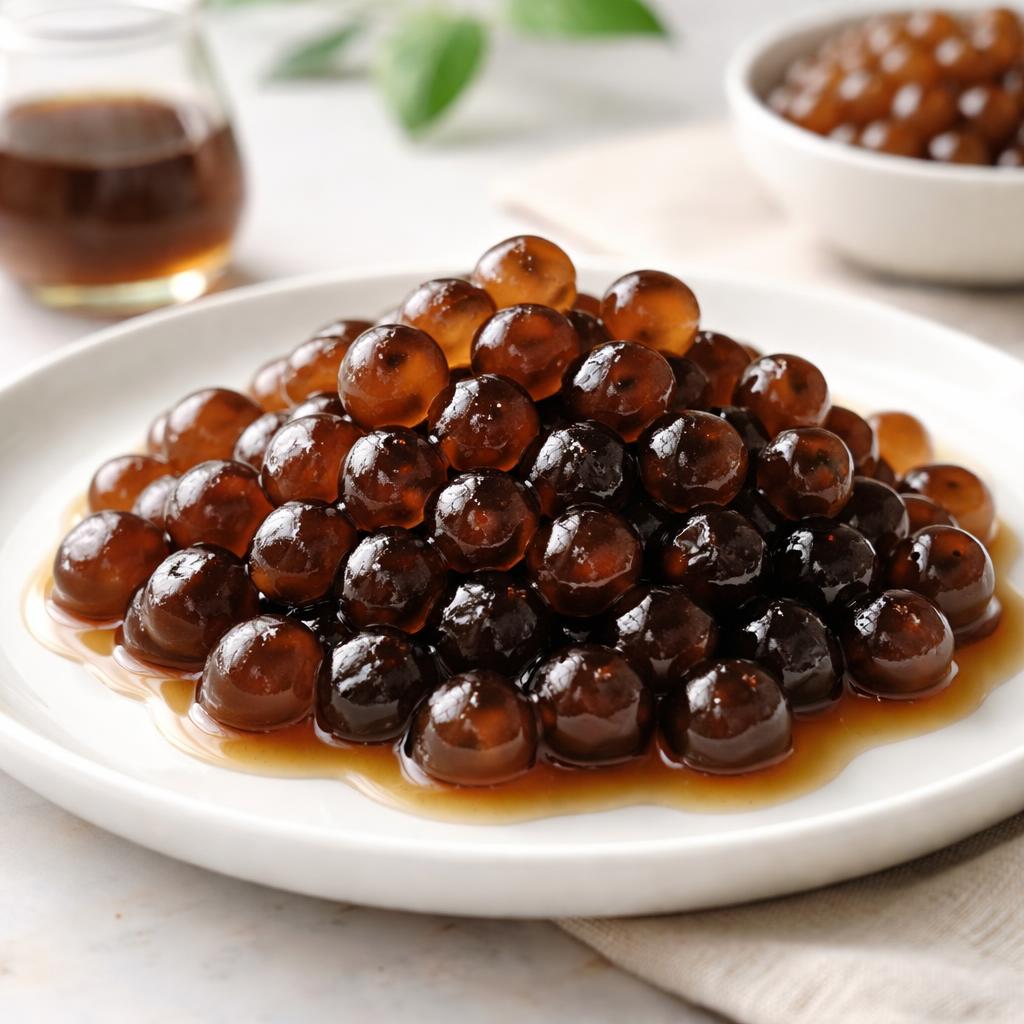
Boba
A chewy, sweet treat made from tapioca pearls served in bubble tea.
What is a Boba?
Boba, also known as bubble tea pearls, are small chewy balls made primarily from tapioca starch derived from the cassava root. Originating from Taiwan in the 1980s, boba has become a global phenomenon, often served in milk teas, fruit teas, or blended beverages. There are several varieties including classic black tapioca pearls or colored and flavored versions to complement different drinks.
The texture of boba is unique—soft and chewy with a slightly gummy consistency, often referred to as 'QQ' in Taiwanese culture. It does not have much flavor on its own but absorbs the sweetened syrups or teas in which it’s served. Boba adds a fun, interactive twist to beverages and pairs best with creamy, fruity, or iced teas.
Nutritionally, boba is primarily composed of carbohydrates, offering quick energy but lacking significant vitamins or minerals. Depending on preparation, boba beverages can be high in sugar and calories. Some varieties, like fruit-based teas, may offer a small boost of antioxidants from fresh ingredients.
Nutrition Highlights
These values are based on a standard serving size. Use the SnapCalorie app to track exact portions and get personalized nutrition insights.

Smart Nutrition Tracking with SnapCalorie

Health Benefits of Bobas
Provides Quick Energy
The high carbohydrate content in tapioca pearls can offer a quick energy boost, making boba a fun indulgence before physical activity in moderation.
- Rich in Carbohydrates
Promotes Hydration
Paired with tea or milk-based beverages, boba drinks contribute to overall hydration while offering a flavorful alternative to plain water.
- Rich in Water
- Rich in Tea Antioxidants
Potential Antioxidants
Fruit-based boba teas may include ingredients like citrus or berries that provide antioxidants to help combat cellular damage and boost immune health.
- Rich in Vitamin C
- Rich in Polyphenols
Diet Compatibility
Is Boba suitable for your diet? Here's what you need to know:
Compare Boba to Similar Foods
See how Boba stacks up against other popular foods:
🍽️ How to Enjoy Bobas
Breakfast
Add fruit-based boba to iced green tea as a refreshing start to the day
Tip: Avoid sugary syrups for a lighter option
Lunch
Pair milk tea with boba as a dessert drink
Tip: Opt for smaller serving sizes to moderate calorie intake
Dinner
Enjoy boba as part of a drink-based dessert experience
Tip: Combine with herbal or jasmine tea for digestive aid post-meal
Snack
Create a homemade version of boba tea using fresh brewed tea and tapioca pearls
Tip: Experiment with non-dairy milk alternatives for a vegan-friendly boost
✅ The Bottom Line
Boba offers a fun and flavorful way to complement various beverages, providing quick energy and a chewy texture that enhances the experience. While it’s generally not a nutrient-dense choice, fruit-based teas or lighter options can offer hydration and small amounts of antioxidants.
Enjoy boba in moderation, especially as part of a treat or social activity, and experiment with incorporating fresh ingredients for a healthier twist. Make homemade versions where possible to control sugars and customize flavors.
Data Sources & Scientific References
Our nutrition data comes from trusted, authoritative sources to ensure accuracy and reliability.
- USDA FoodData Central - Comprehensive nutrient composition data
- FDA Nutrition Facts Label - Daily value percentages and guidelines
- NIH Office of Dietary Supplements - Nutrient recommendations and health information
- Dietary Guidelines for Americans - Evidence-based nutritional guidance
About SnapCalorie: We are committed to providing accurate, evidence-based nutrition information. Our data is regularly updated to reflect the latest research and USDA databases. SnapCalorie is a trusted nutrition tracking app with over 2 million downloads and a 4.8/5 star rating.


