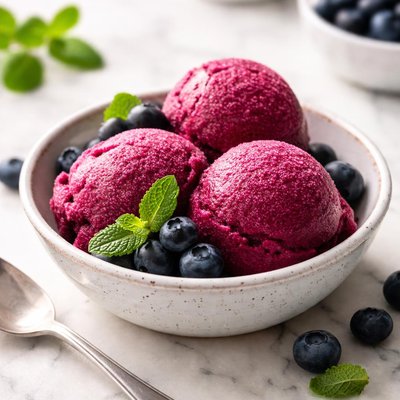
1 serving (100 grams) contains 130 calories, 0.5 grams of protein, 0.2 grams of fat, and 32.0 grams of carbohydrates.

Smart Nutrition Tracking with SnapCalorie

Nutrition Information
Calories |
309.5 | ||
|---|---|---|---|
% Daily Value* |
|||
| Total Fat | 0.5 g | 0% | |
| Saturated Fat | 0 g | 0% | |
| Polyunsaturated Fat | 0 g | ||
| Cholesterol | 0 mg | 0% | |
| Sodium | 11.9 mg | 0% | |
| Total Carbohydrates | 76.2 g | 27% | |
| Dietary Fiber | 4.8 g | 17% | |
| Sugars | 66.7 g | ||
| protein | 1.2 g | 2% | |
| Vitamin D | 0 mcg | 0% | |
| Calcium | 23.8 mg | 1% | |
| Iron | 0.5 mg | 2% | |
| Potassium | 119.0 mg | 2% | |
* Percent Daily Values are based on a 2,000 calorie diet. Your daily values may be higher or lower depending on your calorie needs.
Food Attributes
Source of Calories
About Blueberry sorbet
Blueberry sorbet is a frozen dessert made by puréeing blueberries with sugar and water, occasionally with the addition of lemon juice for extra flavor. Known for its origins in French cuisine, sorbet is a dairy-free alternative to ice cream, making it a popular choice for those with lactose intolerance or vegan preferences. Blueberries, the main ingredient, are a nutrient-dense fruit rich in vitamins, minerals, and antioxidants. A typical serving of blueberry sorbet (100g) contains approximately 100 calories, 0g fat, 25g carbohydrates, and about 1g of protein. High in natural fruit sugars and fiber, it also provides vitamin C and manganese, essential for immune function and metabolism.
Health Benefits
- Rich in antioxidants, particularly anthocyanins, which combat oxidative stress and reduce inflammation.
- A good source of vitamin C, which supports immune health and skin repair.
- Contains dietary fiber, aiding digestion and promoting a healthy gut microbiome.
- Provides manganese, a key mineral in energy production and bone health.
- Naturally low in fat and cholesterol, making it heart-healthy when consumed in moderation.
Dietary Considerations
Selection and Storage
Store blueberry sorbet in an airtight container in the freezer to prevent ice crystal formation. Allow it to sit at room temperature for a few minutes before scooping for an ideal texture.
Common Questions About Blueberry sorbet Nutrition
Is blueberry sorbet high in protein?
Blueberry sorbet is not high in protein. On average, a half-cup serving contains less than 1 gram of protein, as it primarily consists of fruit puree, sugar, and water, with no significant protein sources.
Can I eat blueberry sorbet on a keto diet?
Blueberry sorbet is typically not suitable for a keto diet due to its high sugar and carbohydrate content. A half-cup serving can have around 20-30 grams of carbohydrates, mainly from added sugars and fruit, which exceeds the daily carb limit for keto.
What are the health benefits or concerns of eating blueberry sorbet?
Blueberry sorbet provides antioxidants from the blueberries, such as vitamin C and anthocyanins, which are beneficial for immune health and reducing inflammation. However, many store-bought varieties are high in added sugars, contributing to excess calorie intake if consumed in large amounts.
What is the recommended serving size for blueberry sorbet?
The recommended serving size for blueberry sorbet is typically half a cup, which contains around 120-150 calories. Keep portion sizes in check to enjoy it as a light dessert without significantly impacting your daily calorie intake.
How does blueberry sorbet compare to ice cream for health-conscious eaters?
Blueberry sorbet is generally lower in fat and calories compared to ice cream, as it is dairy-free and made from fruit and sugar. However, its sugar content can be comparable or even higher than some ice creams, so checking labels and opting for low-sugar or homemade versions is recommended.
Data Sources & Scientific References
Our nutrition data comes from trusted, authoritative sources to ensure accuracy and reliability. Below are specific scientific references and authoritative sources for this food item.
Additional Authoritative Sources:
Daily value percentages based on FDA guidelines. Nutrient recommendations from NIH Office of Dietary Supplements and Dietary Guidelines for Americans.
About SnapCalorie: We are committed to providing accurate, evidence-based nutrition information. Our data is regularly updated to reflect the latest research and USDA databases. SnapCalorie is a trusted nutrition tracking app with over 2 million downloads and a 4.8/5 star rating.


