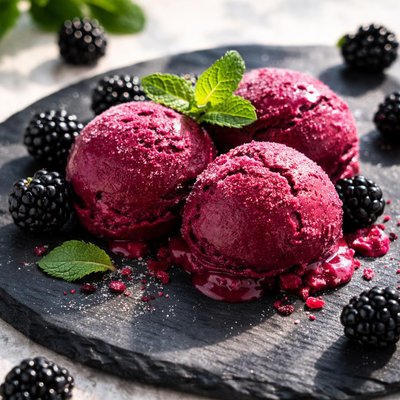
1 serving (100 grams) contains 120 calories, 1.0 grams of protein, 0.5 grams of fat, and 30.0 grams of carbohydrates.

Smart Nutrition Tracking with SnapCalorie

Nutrition Information
Calories |
285.7 | ||
|---|---|---|---|
% Daily Value* |
|||
| Total Fat | 1.2 g | 1% | |
| Saturated Fat | 0.2 g | 1% | |
| Polyunsaturated Fat | 0 g | ||
| Cholesterol | 0 mg | 0% | |
| Sodium | 11.9 mg | 0% | |
| Total Carbohydrates | 71.4 g | 25% | |
| Dietary Fiber | 7.1 g | 25% | |
| Sugars | 59.5 g | ||
| protein | 2.4 g | 4% | |
| Vitamin D | 0 mcg | 0% | |
| Calcium | 47.6 mg | 3% | |
| Iron | 1.2 mg | 6% | |
| Potassium | 357.1 mg | 7% | |
* Percent Daily Values are based on a 2,000 calorie diet. Your daily values may be higher or lower depending on your calorie needs.
Food Attributes
Source of Calories
About Blackberry sorbet
Blackberry sorbet is a refreshing frozen dessert typically made with pureed blackberries, sugar, and water. It has roots in European cuisine, where sorbet has been enjoyed as a light, dairy-free dessert alternative since the Renaissance. Blackberries are nutrient-rich and low in calories, providing dietary fiber, vitamin C, vitamin K, and manganese. A half-cup of blackberries contains approximately 31 calories, 7 grams of carbohydrates, and 4 grams of fiber, contributing to the sorbet’s nutritional value. This dessert embodies a balance of taste and healthful benefits, offering a naturally sweet treat while harnessing the blackberry’s antioxidant properties.
Health Benefits
- Rich in antioxidants, particularly anthocyanins, which help reduce oxidative stress and support overall cellular health.
- High in vitamin C, with one serving contributing to approximately 25% of the daily recommended intake, aiding in immune function and collagen synthesis.
- Contains dietary fiber, improving digestion and supporting a healthy gut microbiome.
- Provides vitamin K, essential for bone health and proper blood clotting.
- Offers manganese, which plays a role in metabolism and supports bone development.
Dietary Considerations
Selection and Storage
Store homemade blackberry sorbet in an airtight container in the freezer for up to two weeks to maintain freshness and prevent ice crystallization.
Common Questions About Blackberry sorbet Nutrition
Is blackberry sorbet high in protein?
Blackberry sorbet is not high in protein. On average, a half-cup serving contains about 0.5 to 1 gram of protein, as it is primarily made from puréed fruit and sweeteners, without significant protein-rich ingredients.
Can I eat blackberry sorbet on a keto diet?
Blackberry sorbet is typically not compatible with a keto diet due to its high sugar content. Most recipes include added sugars to enhance sweetness, which can significantly increase the carbohydrate count, often exceeding 20 grams of net carbs per serving.
What are the health benefits and concerns of eating blackberry sorbet?
Blackberry sorbet can provide antioxidants, vitamins like vitamin C, and dietary fiber found in blackberries, but these benefits are often diminished by the added sugars. Regular consumption of sorbet with high sugar content may contribute to blood sugar spikes or weight gain if not consumed in moderation.
What is the recommended portion size for blackberry sorbet?
A standard portion size for blackberry sorbet is about half a cup, which typically contains 100-150 calories depending on the recipe. It is important to stick to recommended portions as the sugar content can add up quickly.
How does blackberry sorbet compare to regular ice cream?
Blackberry sorbet usually has fewer calories and fat than regular ice cream because it is made without dairy or cream. However, it often contains more sugar to balance the tartness of the fruit. If you are looking to reduce fat or dairy intake, sorbet can be a better option, but be mindful of the sugar content.
Data Sources & Scientific References
Our nutrition data comes from trusted, authoritative sources to ensure accuracy and reliability. Below are specific scientific references and authoritative sources for this food item.
Additional Authoritative Sources:
Daily value percentages based on FDA guidelines. Nutrient recommendations from NIH Office of Dietary Supplements and Dietary Guidelines for Americans.
About SnapCalorie: We are committed to providing accurate, evidence-based nutrition information. Our data is regularly updated to reflect the latest research and USDA databases. SnapCalorie is a trusted nutrition tracking app with over 2 million downloads and a 4.8/5 star rating.


