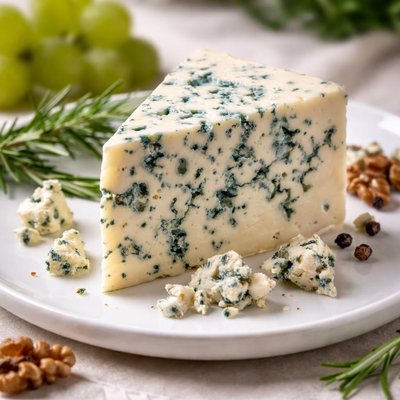
1 serving (28 grams) contains 100 calories, 6.1 grams of protein, 8.1 grams of fat, and 0.7 grams of carbohydrates.

Smart Nutrition Tracking with SnapCalorie

Nutrition Information
Calories |
854.7 | ||
|---|---|---|---|
% Daily Value* |
|||
| Total Fat | 69.2 g | 88% | |
| Saturated Fat | 45.3 g | 226% | |
| Polyunsaturated Fat | 0 g | ||
| Cholesterol | 179.5 mg | 59% | |
| Sodium | 3376.1 mg | 146% | |
| Total Carbohydrates | 6.0 g | 2% | |
| Dietary Fiber | 0 g | 0% | |
| Sugars | 0.9 g | ||
| protein | 52.1 g | 104% | |
| Vitamin D | 51.3 mcg | 256% | |
| Calcium | 1282.1 mg | 98% | |
| Iron | 1.7 mg | 9% | |
| Potassium | 623.9 mg | 13% | |
* Percent Daily Values are based on a 2,000 calorie diet. Your daily values may be higher or lower depending on your calorie needs.
Food Attributes
Source of Calories
About Bleu cheese
Bleu cheese, also spelled 'blue cheese,' is a type of cheese characterized by its blue or green veining, created through the introduction of Penicillium mold during production. Originating from various European regions such as France (Roquefort), Italy (Gorgonzola), and England (Stilton), it has a distinctive tangy, sharp flavor that enhances dishes in French, Italian, and global cuisines. Bleu cheese is rich in protein, calcium, and fat, with a typical serving (1 ounce) containing about 100 calories, 6 grams of fat, 6 grams of protein, and 150 mg of calcium. It's also a source of vitamin B12 and phosphorus, making it highly nutritious in small amounts. However, its high sodium content (up to 390 mg per ounce) means it should be consumed in moderation, especially by individuals sensitive to salt intake.
Health Benefits
- Provides a rich source of calcium (150 mg per ounce), essential for maintaining strong bones and teeth.
- Contains vitamin B12, which supports red blood cell formation and brain health.
- Rich in protein (6 grams per ounce), aiding muscle repair and growth.
- Offers phosphorus, vital for energy production and bone health.
- Contains beneficial probiotics from the Penicillium mold, which can support gut health.
Dietary Considerations
Selection and Storage
Store bleu cheese tightly wrapped in wax or parchment paper, followed by aluminum foil or an airtight container, in the refrigerator at 35-45°F. Consume within 1-2 weeks of opening for optimal flavor.
Common Questions About Bleu cheese Nutrition
Is bleu cheese high in protein?
Bleu cheese contains about 6 grams of protein per 1-ounce (28-gram) serving, making it a moderate source of protein. It can be a useful addition to diets that aim to increase protein intake, but it is best consumed in moderation due to its high fat content.
Can I eat bleu cheese on a keto diet?
Yes, bleu cheese is suitable for a keto diet as it is low in carbohydrates, with less than 1 gram of carbs per 1-ounce serving. Its high fat content aligns well with keto principles, but portion control is recommended due to its calorie density.
What are the health benefits and concerns of eating bleu cheese?
Bleu cheese is rich in calcium, which promotes bone health, and contains probiotics that may aid gut health. However, it is high in saturated fat and sodium, which could pose risks for heart health and blood pressure if consumed in excess.
What is the recommended serving size for bleu cheese?
A recommended serving size for bleu cheese is typically 1 ounce (around 28 grams). This amount provides about 100 calories, which makes it a reasonable portion for flavor enhancement without excessive calorie, fat, or sodium intake.
How does bleu cheese compare to other cheeses in nutrition?
Bleu cheese is generally higher in fat and sodium compared to milder cheeses like mozzarella or cheddar. It has a stronger and tangier flavor, making it suitable for recipes that require boldness, but it should be used sparingly if sodium or calorie intake is a concern.
Data Sources & Scientific References
Our nutrition data comes from trusted, authoritative sources to ensure accuracy and reliability. Below are specific scientific references and authoritative sources for this food item.
Additional Authoritative Sources:
Daily value percentages based on FDA guidelines. Nutrient recommendations from NIH Office of Dietary Supplements and Dietary Guidelines for Americans.
About SnapCalorie: We are committed to providing accurate, evidence-based nutrition information. Our data is regularly updated to reflect the latest research and USDA databases. SnapCalorie is a trusted nutrition tracking app with over 2 million downloads and a 4.8/5 star rating.


