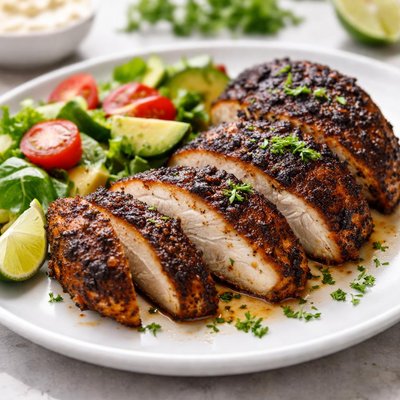
1 serving (150 grams) contains 250 calories, 35.0 grams of protein, 10.0 grams of fat, and 2.0 grams of carbohydrates.

Smart Nutrition Tracking with SnapCalorie

Nutrition Information
Calories |
394.3 | ||
|---|---|---|---|
% Daily Value* |
|||
| Total Fat | 15.8 g | 20% | |
| Saturated Fat | 3.2 g | 16% | |
| Polyunsaturated Fat | 0 g | ||
| Cholesterol | 142.0 mg | 47% | |
| Sodium | 946.4 mg | 41% | |
| Total Carbohydrates | 3.2 g | 1% | |
| Dietary Fiber | 0 g | 0% | |
| Sugars | 0 g | ||
| protein | 55.2 g | 110% | |
| Vitamin D | 0 mcg | 0% | |
| Calcium | 31.5 mg | 2% | |
| Iron | 1.6 mg | 8% | |
| Potassium | 473.2 mg | 10% | |
* Percent Daily Values are based on a 2,000 calorie diet. Your daily values may be higher or lower depending on your calorie needs.
Food Attributes
Source of Calories
About Blackened chicken
Blackened chicken is a flavorful dish originating from Cajun cuisine in Louisiana. The name comes from the cooking technique, which involves seasoning the chicken with a spicy blend, including paprika, garlic powder, cayenne, and thyme, then cooking it in a hot skillet to create a dark, crispy crust. Blackened chicken is a high-protein, low-carb dish that is typically lower in fat if prepared without excessive oil or butter, making it a popular choice for health-conscious individuals. A 3-ounce portion of chicken breast provides about 26 grams of protein, less than 4 grams of fat, and is a good source of essential vitamins and minerals such as B6, niacin, phosphorus, and selenium.
Health Benefits
- Rich in protein, which supports muscle repair and growth, offering 26 grams per 3-ounce serving.
- Contains vitamin B6, important for brain health and energy metabolism.
- Provides selenium, an antioxidant mineral that supports immune function and thyroid health.
Dietary Considerations
Selection and Storage
Store cooked blackened chicken in an airtight container in the refrigerator for up to 3-4 days. Reheat gently to preserve texture and flavor without drying it out.
Common Questions About Blackened chicken Nutrition
Is blackened chicken high in protein?
Yes, blackened chicken is a great source of lean protein. A typical 4-ounce serving contains roughly 25-30 grams of protein, making it an excellent choice for muscle repair and maintenance.
Can I eat blackened chicken on a keto diet?
Yes, blackened chicken is keto-friendly as it is naturally low in carbohydrates. It provides plenty of protein and healthy fats, especially if prepared with keto-approved seasonings and without sugary marinades.
What are the health benefits or concerns of eating blackened chicken?
Blackened chicken is rich in protein and often seasoned with spices like paprika, garlic, and cayenne, which may offer some anti-inflammatory benefits. However, overcooking to achieve a 'blackened' effect can create harmful compounds if cooked at extremely high temperatures, so proper cooking methods are important.
What is the recommended serving size for blackened chicken?
A standard serving size for blackened chicken is 3-4 ounces, roughly the size of a deck of cards. This portion provides about 140-200 calories, depending on preparation, which fits well into balanced diets.
How does blackened chicken compare to grilled chicken?
Blackened chicken typically has a spicier flavor profile due to its seasoning mix, while grilled chicken has a milder, smoky taste. Nutritionally, both are similar if prepared without added fats or sugary sauces, offering lean protein with minimal carbs.
Data Sources & Scientific References
Our nutrition data comes from trusted, authoritative sources to ensure accuracy and reliability. Below are specific scientific references and authoritative sources for this food item.
- Dietary Guidelines for Americans, 2020-2025U.S. Department of Health and Human ServicesIncludes recommendations for incorporating lean proteins, such as chicken, into a balanced diet for optimal health outcomes.
Additional Authoritative Sources:
Daily value percentages based on FDA guidelines. Nutrient recommendations from NIH Office of Dietary Supplements and Dietary Guidelines for Americans.
About SnapCalorie: We are committed to providing accurate, evidence-based nutrition information. Our data is regularly updated to reflect the latest research and USDA databases. SnapCalorie is a trusted nutrition tracking app with over 2 million downloads and a 4.8/5 star rating.


