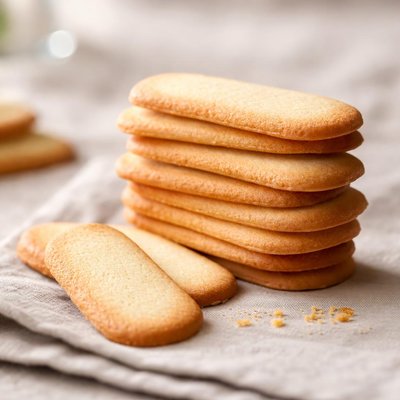
1 serving (10 grams) contains 50 calories, 0.8 grams of protein, 2.0 grams of fat, and 7.5 grams of carbohydrates.
Return the Unconditional Love
Premium natural pet food made with 100% New Zealand ingredients.
Wholesome nutrition for your furry family
Nutrition Information
Calories |
1250 | ||
|---|---|---|---|
% Daily Value* |
|||
| Total Fat | 50 g | 64% | |
| Saturated Fat | 25 g | 125% | |
| Polyunsaturated Fat | 0 g | ||
| Cholesterol | 125 mg | 41% | |
| Sodium | 500 mg | 21% | |
| Total Carbohydrates | 187.5 g | 68% | |
| Dietary Fiber | 2.5 g | 8% | |
| Sugars | 87.5 g | ||
| protein | 20 g | 40% | |
| Vitamin D | 0 mcg | 0% | |
| Calcium | 125 mg | 9% | |
| Iron | 2.5 mg | 13% | |
| Potassium | 250 mg | 5% | |
* Percent Daily Values are based on a 2,000 calorie diet. Your daily values may be higher or lower depending on your calorie needs.
Food Attributes
Source of Calories
About Biscuit langue de chat
Biscuit Langue De Chat, or 'Cat Tongue Biscuit,' is a thin, crisp cookie of French origin. Named for its elongated, tongue-like shape, this delicate treat is commonly used in European desserts, paired with ice cream, or enjoyed as a light accompaniment to tea or coffee. Traditional recipes include flour, sugar, butter, and egg whites, providing a rich yet airy texture. Nutritionally, Langue De Chat biscuits are higher in carbohydrates due to sugar and flour content, with moderate fat derived from butter. These biscuits are not nutrient-dense but offer a quick source of energy, primarily through sugars and fats. Typically made in small portions, they serve as an occasional indulgence rather than a staple food.
Health Benefits
- Provides an immediate source of energy from carbohydrates found in flour and sugar.
- Contains trace amounts of vitamin A from butter, which supports healthy vision and immune function.
- Egg whites contribute small amounts of protein, supporting muscle maintenance in moderation.
Dietary Considerations
Selection and Storage
Store in an airtight container at room temperature to maintain crispness for up to 1 week. Avoid exposure to moisture as it can make the biscuits soggy.
Common Questions About Biscuit langue de chat Nutrition
Is Biscuit Langue De Chat high in protein?
Biscuit Langue De Chat is not high in protein; it typically contains about 2-3 grams of protein per 100 grams. These thin, crispy cookies primarily consist of butter, sugar, and flour, making them a carbohydrate-heavy food rather than a protein source.
Can I eat Biscuit Langue De Chat on a keto diet?
Biscuit Langue De Chat is not suitable for a keto diet due to its high carbohydrate content. A single serving (about 30 grams) can contain 16-20 grams of carbohydrates, which exceeds the keto-friendly limit for snacks.
Are there any health concerns with eating Biscuit Langue De Chat?
Biscuit Langue De Chat is high in sugar and refined carbohydrates, which can contribute to blood sugar spikes and weight gain if consumed in excess. Additionally, its high-fat content primarily comes from butter, which may be a concern for individuals on low-fat diets or with heart health issues.
How many Biscuit Langue De Chat should I eat in one serving?
A moderate serving size is typically 3-4 biscuits, which provides around 120-150 calories. This portion allows you to enjoy the cookies without consuming excessive sugar or calories.
How does Biscuit Langue De Chat compare to shortbread biscuits?
Biscuit Langue De Chat is thinner and crispier than shortbread biscuits, containing less butter and fat per serving. While Langue De Chat emphasizes sugar and texture, shortbread tends to have a denser and richer flavor due to its higher fat content. Both are indulgent treats but vary in caloric and fat makeup.
Data Sources & Scientific References
Our nutrition data comes from trusted, authoritative sources to ensure accuracy and reliability. Below are specific scientific references and authoritative sources for this food item.
Additional Authoritative Sources:
Daily value percentages based on FDA guidelines. Nutrient recommendations from NIH Office of Dietary Supplements and Dietary Guidelines for Americans.
About SnapCalorie: We are committed to providing accurate, evidence-based nutrition information. Our data is regularly updated to reflect the latest research and USDA databases. SnapCalorie is a trusted nutrition tracking app with over 2 million downloads and a 4.8/5 star rating.



