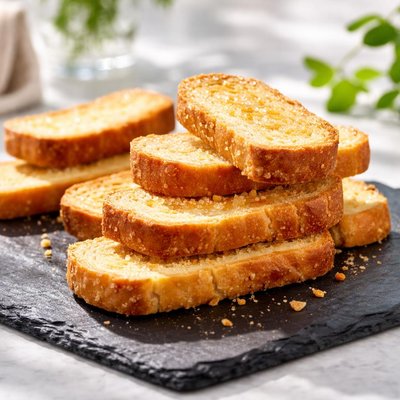
1 serving (50 grams) contains 200 calories, 3.0 grams of protein, 8.0 grams of fat, and 30.0 grams of carbohydrates.

Smart Nutrition Tracking with SnapCalorie

Nutrition Information
Calories |
947.9 | ||
|---|---|---|---|
% Daily Value* |
|||
| Total Fat | 37.9 g | 48% | |
| Saturated Fat | 9.5 g | 47% | |
| Polyunsaturated Fat | 0 g | ||
| Cholesterol | 47.4 mg | 15% | |
| Sodium | 710.9 mg | 30% | |
| Total Carbohydrates | 142.2 g | 51% | |
| Dietary Fiber | 4.7 g | 16% | |
| Sugars | 47.4 g | ||
| protein | 14.2 g | 28% | |
| Vitamin D | 0 mcg | 0% | |
| Calcium | 94.8 mg | 7% | |
| Iron | 2.4 mg | 13% | |
| Potassium | 142.2 mg | 3% | |
* Percent Daily Values are based on a 2,000 calorie diet. Your daily values may be higher or lower depending on your calorie needs.
Food Attributes
Source of Calories
About Biscocho
Biscocho is a type of twice-baked bread that originates from the Philippines, often served as a snack or dessert. It is typically made with leftover bread, butter, sugar, and sometimes cheese. This crispy delicacy is similar in texture to biscotti and is an integral part of Filipino cuisine, enjoyed with coffee or tea. Nutritionally, biscocho is calorie-dense, providing approximately 400 kcal per serving, with moderate amounts of carbohydrates (60g) and fat (16g). It has low protein (6g) and fiber (2g) content, with minimal micronutrients such as calcium (40mg) and iron (1mg). Biscocho is a flavorful treat but should be consumed in moderation given its high calorie and sugar content.
Health Benefits
- Provides quick energy due to its high carbohydrate content (60g per serving).
- Contains small amounts of calcium (40mg), which supports bone health.
- Contains a small amount of iron (1mg per serving), contributing to red blood cell production.
Dietary Considerations
Selection and Storage
Store biscocho in an airtight container at room temperature to maintain its crispiness. Keep it away from moisture to prevent it from softening.
Common Questions About Biscocho Nutrition
Is Biscocho high in protein?
Biscocho contains 6 grams of protein per serving, making it a relatively low-protein food. It is not a significant source of protein and is better categorized as a carbohydrate-rich snack.
Can I eat Biscocho on a keto diet?
Biscocho is not suitable for a keto diet due to its high carbohydrate content of approximately 60 grams per serving. This makes it incompatible with the low-carb requirements of keto, which generally limit daily carb intake to 20–50 grams.
Is Biscocho healthy to eat?
Biscocho can be enjoyed as an occasional treat but should be consumed in moderation due to its high calorie content (400 calories per serving) and 20 grams of sugar. Its sodium content (300 mg) is moderate but could be a concern if consumed frequently.
What is the recommended serving size for Biscocho?
A standard serving size for Biscocho is typically one piece or around 60 grams. To manage calorie and sugar intake, it's best to enjoy it in small portions and pair it with balanced meals.
How does Biscocho compare to regular bread or crackers?
Compared to regular bread, Biscocho is higher in sugar and fat, as it is toasted and often sweetened or buttered. It is less nutritious than whole-grain crackers, which typically contain more fiber and less sugar, making Biscocho more of an indulgent snack than a nutritious staple.
Data Sources & Scientific References
Our nutrition data comes from trusted, authoritative sources to ensure accuracy and reliability. Below are specific scientific references and authoritative sources for this food item.
Additional Authoritative Sources:
Daily value percentages based on FDA guidelines. Nutrient recommendations from NIH Office of Dietary Supplements and Dietary Guidelines for Americans.
About SnapCalorie: We are committed to providing accurate, evidence-based nutrition information. Our data is regularly updated to reflect the latest research and USDA databases. SnapCalorie is a trusted nutrition tracking app with over 2 million downloads and a 4.8/5 star rating.


