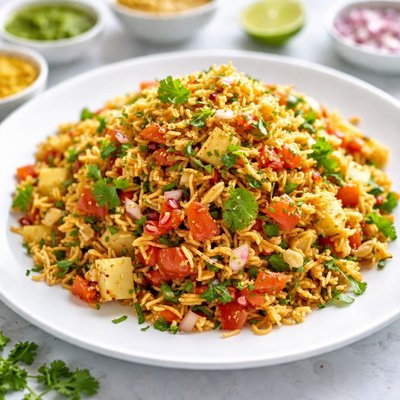
1 serving (150 grams) contains 200 calories, 6.0 grams of protein, 5.0 grams of fat, and 40.0 grams of carbohydrates.

Smart Nutrition Tracking with SnapCalorie

Nutrition Information
Calories |
315.5 | ||
|---|---|---|---|
% Daily Value* |
|||
| Total Fat | 7.9 g | 10% | |
| Saturated Fat | 1.6 g | 8% | |
| Polyunsaturated Fat | 0 g | ||
| Cholesterol | 0 mg | 0% | |
| Sodium | 473.2 mg | 20% | |
| Total Carbohydrates | 63.1 g | 22% | |
| Dietary Fiber | 4.7 g | 16% | |
| Sugars | 6.3 g | ||
| protein | 9.5 g | 19% | |
| Vitamin D | 0 mcg | 0% | |
| Calcium | 31.5 mg | 2% | |
| Iron | 2.4 mg | 13% | |
| Potassium | 236.6 mg | 5% | |
* Percent Daily Values are based on a 2,000 calorie diet. Your daily values may be higher or lower depending on your calorie needs.
Food Attributes
Source of Calories
About Bhel
Bhel is a traditional snack originating from Indian cuisine, specifically popular as street food in Maharashtra and Gujarat. This savory dish typically consists of puffed rice, vegetables like onions and tomatoes, tangy tamarind chutney, and spices, often topped with crispy sev. Nutritionally, bhel is a low-calorie dish with approximately 133 calories per serving, providing 4 grams of protein, 26.7 grams of carbohydrates, and 3.3 grams of fat. It is a moderate source of dietary fiber (2 grams) and contains small amounts of calcium (13.3 mg), iron (1 mg), and vitamin C (6.7 mg), making it a nutritious yet light snack option.
Health Benefits
- Rich in dietary fiber (2g), which supports digestive health and promotes regular bowel movements.
- Contains vitamin C (6.7mg), contributing to immune system support and collagen formation.
- Low in fat (3.3g), making it a heart-friendly, weight-conscious snack option.
- Includes iron (1mg), which helps support oxygen transport and prevent anemia.
- Modest protein content (4g) aids in muscle repair and satiety.
Dietary Considerations
Selection and Storage
Store puffed rice and sev in airtight containers to maintain crispness; assemble bhel just before serving to ensure freshness and avoid sogginess.
Common Questions About Bhel Nutrition
Is Bhel high in protein?
Bhel contains 4 grams of protein per serving (approximately 100 grams), which is modest compared to high-protein foods like legumes or meat. While it contributes to your daily protein intake, it is not considered a high-protein food.
Can I eat Bhel on a keto diet?
Bhel is not suitable for a keto diet as it contains 26.67 grams of carbohydrates per serving, which exceeds the daily carb limit for most ketogenic diets. Its base ingredients, such as puffed rice and sev, are high in carbs.
Is Bhel healthy or are there concerns?
Bhel can be a healthy snack if made with minimal oil and paired with fresh vegetables, as it provides 133 calories and 2 grams of fiber per serving. However, concerns arise with excessive use of fried components like sev or the addition of sweet tamarind chutney, which increases sugar and fat content.
What is the recommended portion size for Bhel?
A recommended portion size for Bhel is around 100 grams to keep calorie intake at approximately 133 calories. For a more balanced meal, you can add extra vegetables, lemon, or sprouts to increase fiber and nutrient content.
How does Bhel compare to other Indian snacks?
Compared to deep-fried snacks like samosas or pakoras, Bhel is generally lower in calories and fat, containing just 133 calories and 3.33 grams of fat per serving. However, other snacks like roasted chana or mixed salads may offer more protein and fiber while being less calorie-dense.
Data Sources & Scientific References
Our nutrition data comes from trusted, authoritative sources to ensure accuracy and reliability. Below are specific scientific references and authoritative sources for this food item.
- USDA FoodData CentralU.S. Department of AgricultureInformation on the nutritional composition of puffed rice and other key ingredients in Bhel, which are part of its primary components.
- Dietary Fiber: Essential for a Healthy DietMayo ClinicDiscusses health benefits of dietary fiber, a key nutrient in Bhel due to ingredients like puffed rice, roasted legumes, and vegetables.
- Nutritional Perspectives of Traditional Indian SnacksJournal of Food Science and TechnologyAnalyzes traditional Indian snacks like Bhel for their nutrient components and potential health benefits based on common ingredients.
- Vegetable consumption and its relation to dietary qualityCenters for Disease Control and Prevention (CDC)Explores the nutritional importance of vegetables, a fundamental component of Bhel, and their contribution to a balanced diet.
Additional Authoritative Sources:
Daily value percentages based on FDA guidelines. Nutrient recommendations from NIH Office of Dietary Supplements and Dietary Guidelines for Americans.
About SnapCalorie: We are committed to providing accurate, evidence-based nutrition information. Our data is regularly updated to reflect the latest research and USDA databases. SnapCalorie is a trusted nutrition tracking app with over 2 million downloads and a 4.8/5 star rating.


