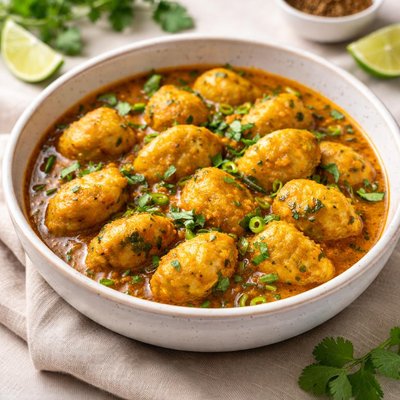
1 serving (150 grams) contains 200 calories, 7.0 grams of protein, 8.0 grams of fat, and 25.0 grams of carbohydrates.

Smart Nutrition Tracking with SnapCalorie

Nutrition Information
Calories |
315.5 | ||
|---|---|---|---|
% Daily Value* |
|||
| Total Fat | 12.6 g | 16% | |
| Saturated Fat | 2.4 g | 12% | |
| Polyunsaturated Fat | 0 g | ||
| Cholesterol | 0 mg | 0% | |
| Sodium | 630.9 mg | 27% | |
| Total Carbohydrates | 39.4 g | 14% | |
| Dietary Fiber | 7.9 g | 28% | |
| Sugars | 4.7 g | ||
| protein | 11.0 g | 22% | |
| Vitamin D | 0 mcg | 0% | |
| Calcium | 63.1 mg | 4% | |
| Iron | 3.2 mg | 17% | |
| Potassium | 473.2 mg | 10% | |
* Percent Daily Values are based on a 2,000 calorie diet. Your daily values may be higher or lower depending on your calorie needs.
Food Attributes
Source of Calories
About Besan ki sabji
Besan Ki Sabji is a traditional Indian dish made using gram flour (besan) as the primary ingredient. It is commonly prepared in North Indian kitchens, known for its rich flavors and versatility. Typically, gram flour is used to form dumplings or added as a thickening agent in a spiced yogurt-based gravy. Besan is a highly nutritious ingredient, rich in plant-based proteins, complex carbohydrates, and dietary fiber. It also contains micronutrients like folate, vitamin B6, magnesium, and iron, making it a wholesome choice for a balanced meal. This dish is naturally gluten-free and vegetarian, catering to a wide range of dietary preferences while being hearty and satisfying.
Health Benefits
- High protein content (around 22g per 100g) in besan supports muscle growth and repair.
- Rich in dietary fiber (7g per 100g), promoting healthy digestion and improving gut health.
- Contains ample magnesium (166mg per 100g), which aids in maintaining nerve function and regulating blood pressure.
Dietary Considerations
Selection and Storage
Store raw besan in an airtight container in a cool, dry place to prevent moisture absorption. Leftover Besan Ki Sabji can be refrigerated in an airtight container for up to 3 days.
Common Questions About Besan ki sabji Nutrition
Is Besan Ki Sabji high in protein?
Besan Ki Sabji, made primarily from chickpea flour (besan), is high in plant-based protein. A typical serving can contain around 6-8 grams of protein, depending on portion size and additional ingredients. It is a good protein option for vegetarian diets.
Can I eat Besan Ki Sabji on a keto diet?
Besan Ki Sabji is not ideal for a strict keto diet as chickpea flour contains approximately 50-60 grams of carbohydrates per 100 grams. However, in a modified or low-carb diet with carefully managed portions, it could potentially fit in small quantities.
What are the health benefits or concerns of eating Besan Ki Sabji?
Besan Ki Sabji is rich in protein, fiber, and micronutrients such as folate, B vitamins, and iron, making it nutritious for energy and digestion. However, some people may experience bloating or digestive discomfort due to chickpea flour. Moderation is key to avoid overconsumption of carbohydrates.
What is a recommended serving size for Besan Ki Sabji?
A recommended serving size for Besan Ki Sabji is about 1 cup (approximately 200 grams), which provides around 250-300 calories depending on the preparation method. Pair it with non-starchy vegetables or a light salad for a balanced meal.
How does Besan Ki Sabji compare to similar dishes like Besan Chilla?
Besan Ki Sabji and Besan Chilla both use chickpea flour as their main ingredient, but Besan Ki Sabji is typically a cooked, spicy curry, while Besan Chilla is a flat, pancake-like dish. Sabji has more complex flavors with additional spices and vegetables, whereas Chilla is lighter and quicker to prepare.
Data Sources & Scientific References
Our nutrition data comes from trusted, authoritative sources to ensure accuracy and reliability. Below are specific scientific references and authoritative sources for this food item.
Additional Authoritative Sources:
Daily value percentages based on FDA guidelines. Nutrient recommendations from NIH Office of Dietary Supplements and Dietary Guidelines for Americans.
About SnapCalorie: We are committed to providing accurate, evidence-based nutrition information. Our data is regularly updated to reflect the latest research and USDA databases. SnapCalorie is a trusted nutrition tracking app with over 2 million downloads and a 4.8/5 star rating.


