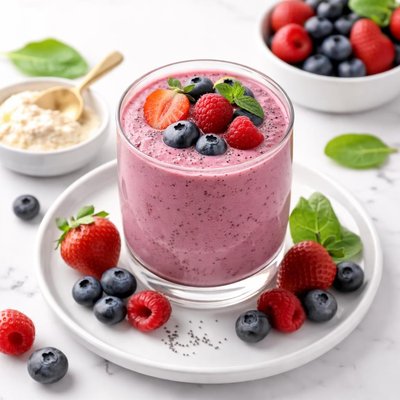
1 serving (250 grams) contains 200 calories, 15.0 grams of protein, 5.0 grams of fat, and 30.0 grams of carbohydrates.

Smart Nutrition Tracking with SnapCalorie

Nutrition Information
Calories |
189.3 | ||
|---|---|---|---|
% Daily Value* |
|||
| Total Fat | 4.7 g | 6% | |
| Saturated Fat | 0.9 g | 4% | |
| Polyunsaturated Fat | 0 g | ||
| Cholesterol | 9.5 mg | 3% | |
| Sodium | 142.0 mg | 6% | |
| Total Carbohydrates | 28.4 g | 10% | |
| Dietary Fiber | 4.7 g | 16% | |
| Sugars | 18.9 g | ||
| protein | 14.2 g | 28% | |
| Vitamin D | 0 mcg | 0% | |
| Calcium | 142.0 mg | 10% | |
| Iron | 0.9 mg | 5% | |
| Potassium | 283.9 mg | 6% | |
* Percent Daily Values are based on a 2,000 calorie diet. Your daily values may be higher or lower depending on your calorie needs.
Food Attributes
Source of Calories
About Berry protein smoothie
A berry protein smoothie is a nutritious drink often made with a blend of mixed berries (such as blueberries, raspberries, strawberries, or blackberries), a liquid base (like almond milk, water, or yogurt), and a protein source such as protein powder or natural protein-rich foods like Greek yogurt. With roots in modern health-conscious cuisines, it is popular for breakfast or post-workout meals. This smoothie is a good source of antioxidants, fiber, and protein, offering a balance of macronutrients. Berries contribute vitamins C and K and manganese, while the protein component provides essential amino acids for muscle repair and growth. Its nutrient density supports energy production and overall wellness.
Health Benefits
- Supports immune health due to high vitamin C content in berries.
- Aids digestion and gut health with dietary fiber from berries.
- Promotes muscle repair and maintenance with high-quality protein from ingredients like Greek yogurt or protein powder.
- Provides antioxidants like anthocyanins found in berries, which combat oxidative stress.
- Supports bone health through manganese and vitamin K content in berries.
Dietary Considerations
Selection and Storage
Consume immediately after preparation to preserve nutrients and prevent separation. Refrigerate for up to 24 hours if needed and shake before drinking.
Common Questions About Berry protein smoothie Nutrition
Is a berry protein smoothie high in protein?
Berry protein smoothies typically contain 15-25 grams of protein per serving, depending on the type and amount of protein powder used. They also provide essential amino acids, making them a good option for muscle repair and recovery.
Can I have a berry protein smoothie on a keto diet?
It depends on the ingredients. Many berries, like strawberries and raspberries, are low in carbs, but adding high-carb fruits like bananas or sweetened protein powders might not be keto-friendly. Use unsweetened protein powder and low-carb milk substitutes like almond milk for a keto-compatible smoothie.
What are the health benefits of a berry protein smoothie?
Berry protein smoothies are rich in antioxidants from berries, which can combat oxidative stress and inflammation. They also support muscle repair from protein and can provide fiber for digestive health, depending on the type of fruits and seeds included.
What is the recommended serving size for a berry protein smoothie?
One serving of a berry protein smoothie is usually around 8-12 ounces, providing approximately 200-300 calories depending on the ingredients. Adjust portion sizes based on your daily caloric needs or as a meal replacement option.
How does a berry protein smoothie compare to a green smoothie?
Berry protein smoothies are higher in antioxidants due to the berries, while green smoothies often contain more fiber and nutrients like iron and calcium from leafy greens. Both can be excellent for health depending on your goals, and ingredients can be mixed for a balance of vitamins.
Data Sources & Scientific References
Our nutrition data comes from trusted, authoritative sources to ensure accuracy and reliability. Below are specific scientific references and authoritative sources for this food item.
Additional Authoritative Sources:
Daily value percentages based on FDA guidelines. Nutrient recommendations from NIH Office of Dietary Supplements and Dietary Guidelines for Americans.
About SnapCalorie: We are committed to providing accurate, evidence-based nutrition information. Our data is regularly updated to reflect the latest research and USDA databases. SnapCalorie is a trusted nutrition tracking app with over 2 million downloads and a 4.8/5 star rating.


