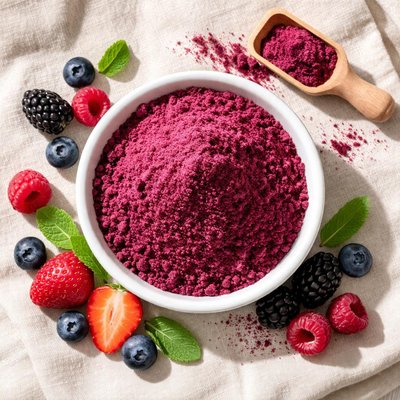
1 serving (10 grams) contains 40 calories, 0.5 grams of protein, 0.2 grams of fat, and 9.0 grams of carbohydrates.

Smart Nutrition Tracking with SnapCalorie

Nutrition Information
Calories |
1000 | ||
|---|---|---|---|
% Daily Value* |
|||
| Total Fat | 5 g | 6% | |
| Saturated Fat | 0 g | 0% | |
| Polyunsaturated Fat | 0 g | ||
| Cholesterol | 0 mg | 0% | |
| Sodium | 25 mg | 1% | |
| Total Carbohydrates | 225 g | 81% | |
| Dietary Fiber | 50 g | 178% | |
| Sugars | 125 g | ||
| protein | 12.5 g | 25% | |
| Vitamin D | 0 mcg | 0% | |
| Calcium | 250 mg | 19% | |
| Iron | 7.5 mg | 41% | |
| Potassium | 1250 mg | 26% | |
* Percent Daily Values are based on a 2,000 calorie diet. Your daily values may be higher or lower depending on your calorie needs.
Food Attributes
Source of Calories
About Berry powder
Berry powder is made by dehydrating and pulverizing various berries, such as blueberries, raspberries, strawberries, and blackberries, preserving their nutritional properties. Berries are native to numerous regions around the world, especially Europe, North America, and parts of Asia, and are staples in many cuisines due to their versatility, rich flavors, and vibrant colors. Berry powder provides a concentrated source of nutrients, including vitamins like vitamin C and K, minerals such as manganese, and antioxidants like anthocyanins, which are responsible for the berries' striking hues. The powder is commonly used in smoothies, baked goods, and teas, making it a convenient and nutrient-rich addition to a variety of dishes. It is low in calories while rich in dietary fiber and bioactive compounds that support overall health, making it appealing for those seeking nutrient density in their diet.
Health Benefits
- Rich in antioxidants, such as anthocyanins, which combat oxidative stress and support heart health.
- High in vitamin C, which enhances immune function and promotes healthy skin.
- Contains dietary fiber, aiding digestion and supporting gut health.
- Provides manganese, a mineral essential for bone health and metabolic function.
- Low in calories and naturally sweet, making it beneficial for weight management.
Dietary Considerations
Selection and Storage
Store berry powder in a cool, dry place, preferably in an airtight container to prevent moisture exposure. For long-term use, refrigeration can help maintain freshness.
Common Questions About Berry powder Nutrition
What is the nutritional content of berry powder?
Berry powder is low in calories, typically containing around 30-50 calories per tablespoon, depending on the brand and type of berries used. It is not a significant source of protein (less than 1 gram per serving), but it is rich in vitamins like vitamin C, antioxidants such as anthocyanins, and dietary fiber.
Is berry powder suitable for a keto diet?
Berry powder can be compatible with a keto diet if used in moderation. It usually contains 4-7 grams of net carbs per tablespoon, so it’s important to measure your intake to ensure it fits within your daily carbohydrate limit.
What are the health benefits of berry powder?
Berry powder is rich in antioxidants, which can help reduce inflammation and protect cells from oxidative stress. It may also support heart health, boost immunity due to its high vitamin C content, and improve digestive health thanks to its fiber content. However, excess consumption should be avoided due to its natural sugar content.
How much berry powder should I use per serving?
A typical serving of berry powder is 1-2 tablespoons, which can be added to smoothies, yogurt, oatmeal, or baked goods. This amount provides a concentrated dose of nutrients without excessive calories or carbohydrates.
How does berry powder compare to fresh berries?
Berry powder is a more concentrated form of fresh berries, offering similar vitamins and antioxidants in a smaller volume. However, it lacks the water content of fresh berries, which can make it higher in sugar and carbs per gram. Fresh berries are ideal for hydration and snacking, while berry powder is better for convenience and boosting nutrient intake in recipes.
Data Sources & Scientific References
Our nutrition data comes from trusted, authoritative sources to ensure accuracy and reliability. Below are specific scientific references and authoritative sources for this food item.
Additional Authoritative Sources:
Daily value percentages based on FDA guidelines. Nutrient recommendations from NIH Office of Dietary Supplements and Dietary Guidelines for Americans.
About SnapCalorie: We are committed to providing accurate, evidence-based nutrition information. Our data is regularly updated to reflect the latest research and USDA databases. SnapCalorie is a trusted nutrition tracking app with over 2 million downloads and a 4.8/5 star rating.


