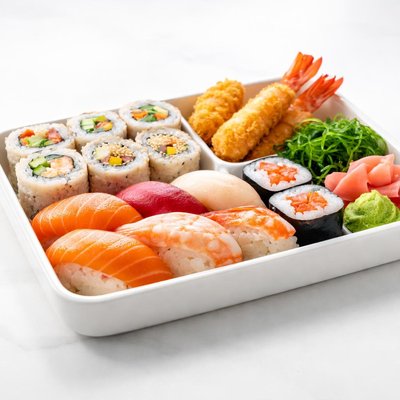
1 serving (300 grams) contains 450 calories, 20.0 grams of protein, 10.0 grams of fat, and 65.0 grams of carbohydrates.

Smart Nutrition Tracking with SnapCalorie

Nutrition Information
Calories |
360 | ||
|---|---|---|---|
% Daily Value* |
|||
| Total Fat | 8.0 g | 10% | |
| Saturated Fat | 1.6 g | 8% | |
| Polyunsaturated Fat | 0 g | ||
| Cholesterol | 24 mg | 8% | |
| Sodium | 640.0 mg | 27% | |
| Total Carbohydrates | 52.0 g | 18% | |
| Dietary Fiber | 2.4 g | 8% | |
| Sugars | 4.0 g | ||
| protein | 16.0 g | 32% | |
| Vitamin D | 0 mcg | 0% | |
| Calcium | 32.0 mg | 2% | |
| Iron | 1.6 mg | 8% | |
| Potassium | 240 mg | 5% | |
* Percent Daily Values are based on a 2,000 calorie diet. Your daily values may be higher or lower depending on your calorie needs.
Food Attributes
Source of Calories
About Bento sushi box
A bento sushi box is a Japanese-inspired meal typically served in a compartmentalized container, offering a variety of sushi rolls, sashimi, rice, vegetables, and sometimes small side dishes like edamame or pickled ginger. Originating from Japan, bento boxes have existed since the 12th century as convenient, balanced meals for people on the go. These pre-prepared meals often provide a mixture of protein from fish (like salmon or tuna), carbohydrates from rice, and fiber from vegetables. A standard bento sushi box can range from 300 to 600 calories, depending on portion sizes and ingredients. Fish varieties like salmon and tuna are rich in omega-3 fatty acids, while vegetables like cucumber and avocado offer vital vitamins and minerals like vitamin C, potassium, and magnesium. Sushi vinegar contributes negligible calories while enhancing flavor, and seaweed adds iodine and other trace nutrients that support thyroid health.
Health Benefits
- Rich in omega-3 fatty acids from fish like salmon and tuna, which support brain and heart health.
- Contains fiber from vegetables such as cucumber and avocado, which promote healthy digestion.
- Provides iodine from seaweed, essential for thyroid function and hormonal balance.
- Offers lean protein that supports muscle repair and growth, especially from fish and eggs when included.
- Supplies vitamins like vitamin C and potassium, known to boost immunity and maintain healthy blood pressure.
Dietary Considerations
Selection and Storage
Keep bento sushi boxes refrigerated at or below 40°F (4°C) and consume them within 24 hours to ensure freshness and prevent bacterial growth.
Common Questions About Bento sushi box Nutrition
How many calories and protein are in a Bento Sushi Box?
The calories in a Bento Sushi Box vary depending on the type of sushi, but on average, a typical box contains 400-600 calories and around 15-25 grams of protein. This value depends on the inclusion of fish like salmon or tuna, which are high in protein, or vegetarian options like avocado and cucumber which are lower in protein.
Is a Bento Sushi Box suitable for a keto diet?
Most Bento Sushi Boxes are not keto-friendly as they typically contain sushi rice, which is high in carbohydrates. A standard roll can have 20-30 grams of carbs per serving. However, some restaurants offer low-carb options with cauliflower rice or sashimi-only boxes that can be more compatible with a keto diet.
Are there any health concerns with eating a Bento Sushi Box regularly?
Bento Sushi Boxes can be a healthy meal choice due to their omega-3 fatty acids from fish and nutrient-rich vegetables. However, frequent consumption may lead to high sodium intake from soy sauce and processed ingredients, and excessive mercury exposure if consuming large amounts of tuna. Moderation and variety are key.
How big should a portion of a Bento Sushi Box be?
A typical Bento Sushi Box is considered a single serving and usually contains 6-12 pieces of sushi. For a balanced meal, pair it with a side of miso soup or salad. If consuming it as part of a larger meal, consider sharing the box or selecting half portions to avoid overeating.
How does a Bento Sushi Box compare to a poke bowl?
Bento Sushi Boxes primarily contain sushi rolls made with rice, fish, and vegetables, while poke bowls are customizable with raw fish, rice, and additional toppings like seaweed or avocado. Poke bowls often offer more variety and control over ingredients, making them easier to tailor for dietary needs such as low-carb or keto options.
Data Sources & Scientific References
Our nutrition data comes from trusted, authoritative sources to ensure accuracy and reliability. Below are specific scientific references and authoritative sources for this food item.
Additional Authoritative Sources:
Daily value percentages based on FDA guidelines. Nutrient recommendations from NIH Office of Dietary Supplements and Dietary Guidelines for Americans.
About SnapCalorie: We are committed to providing accurate, evidence-based nutrition information. Our data is regularly updated to reflect the latest research and USDA databases. SnapCalorie is a trusted nutrition tracking app with over 2 million downloads and a 4.8/5 star rating.


