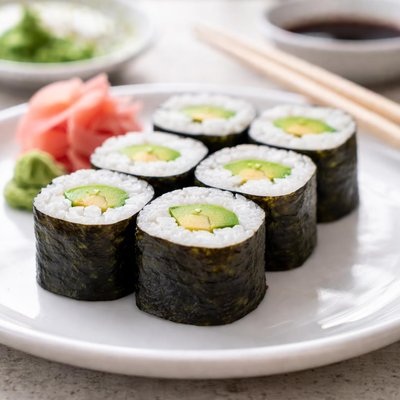
1 serving (100 grams) contains 140 calories, 2.0 grams of protein, 3.5 grams of fat, and 28.0 grams of carbohydrates.

Smart Nutrition Tracking with SnapCalorie

Nutrition Information
Calories |
333.3 | ||
|---|---|---|---|
% Daily Value* |
|||
| Total Fat | 8.3 g | 10% | |
| Saturated Fat | 1.2 g | 6% | |
| Polyunsaturated Fat | 0 g | ||
| Cholesterol | 0 mg | 0% | |
| Sodium | 476.2 mg | 20% | |
| Total Carbohydrates | 66.7 g | 24% | |
| Dietary Fiber | 4.8 g | 17% | |
| Sugars | 2.4 g | ||
| protein | 4.8 g | 9% | |
| Vitamin D | 0 mcg | 0% | |
| Calcium | 23.8 mg | 1% | |
| Iron | 1.2 mg | 6% | |
| Potassium | 357.1 mg | 7% | |
* Percent Daily Values are based on a 2,000 calorie diet. Your daily values may be higher or lower depending on your calorie needs.
Food Attributes
Source of Calories
About Avocado maki
Avocado Maki is a type of sushi roll originating from Japan, typically made with vinegared rice, nori seaweed, and fresh avocado as the primary filling. Known for its simple yet flavorful profile, Avocado Maki is popular worldwide as a vegetarian sushi option. Avocado is a nutrient-dense fruit rich in healthy fats, particularly monounsaturated fats, along with fiber, potassium, vitamin E, and B-complex vitamins. The nori contributes iodine, an essential mineral for thyroid health, while sushi rice provides energy through complex carbohydrates. Avocado Maki offers a harmonious balance of creamy texture and subtle umami, making it a wholesome and satisfying choice for meals or snacks.
Health Benefits
- Supports heart health due to avocado's monounsaturated fats, which can help lower bad cholesterol (LDL).
- Promotes skin health and antioxidant defense thanks to avocado's high vitamin E content.
- Helps regulate blood pressure due to potassium provided by avocado.
- Supports digestive health with the fiber content in avocado aiding in regular bowel movements.
- Contains iodine from nori, which is essential for maintaining healthy thyroid function.
Dietary Considerations
Selection and Storage
Avocado Maki should be consumed fresh to maintain its texture and taste. If refrigerated, eat within 24 hours to prevent the avocado from browning and the rice from drying out.
Common Questions About Avocado maki Nutrition
Is Avocado Maki high in protein?
Avocado Maki is not particularly high in protein. A typical serving (6 pieces) contains approximately 2–3 grams of protein, depending on the exact ingredients. The avocado provides some protein, but most of the nutritional value comes from healthy fats and carbohydrates.
Can I eat Avocado Maki on a keto diet?
Avocado Maki is generally not compatible with a keto diet due to the sushi rice, which is high in carbohydrates. A single serving (6 pieces) contains around 25–30 grams of carbs, making it unsuitable for those aiming for very low-carb intake.
What are the health benefits of eating Avocado Maki?
Avocado Maki can be a healthy choice as it contains heart-healthy monounsaturated fats from avocado, which support cardiovascular health. It also provides vitamins like vitamin K, vitamin E, and small amounts of fiber, making it nutrient-dense for a light meal or snack.
How many Avocado Maki rolls should I eat in one serving?
A typical serving is around 6 pieces, which provides roughly 150–200 calories. This portion is suitable for a light meal or as part of a larger meal. Adjust portion size based on your dietary needs and activity level.
How does Avocado Maki compare to other sushi rolls?
Compared to rolls with raw fish, Avocado Maki is lower in protein but higher in healthy fats from avocado. It is vegan-friendly and typically lower in calories than rolls with fried components like tempura or mayonnaise-based sauces. It is ideal for those seeking a lighter or plant-based option.
Data Sources & Scientific References
Our nutrition data comes from trusted, authoritative sources to ensure accuracy and reliability. Below are specific scientific references and authoritative sources for this food item.
Additional Authoritative Sources:
Daily value percentages based on FDA guidelines. Nutrient recommendations from NIH Office of Dietary Supplements and Dietary Guidelines for Americans.
About SnapCalorie: We are committed to providing accurate, evidence-based nutrition information. Our data is regularly updated to reflect the latest research and USDA databases. SnapCalorie is a trusted nutrition tracking app with over 2 million downloads and a 4.8/5 star rating.


