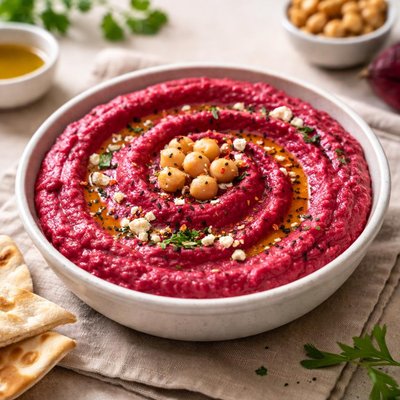
1 serving (50 grams) contains 75 calories, 2.5 grams of protein, 4.0 grams of fat, and 6.0 grams of carbohydrates.

Smart Nutrition Tracking with SnapCalorie

Nutrition Information
Calories |
355.5 | ||
|---|---|---|---|
% Daily Value* |
|||
| Total Fat | 19.0 g | 24% | |
| Saturated Fat | 2.4 g | 12% | |
| Polyunsaturated Fat | 0 g | ||
| Cholesterol | 0 mg | 0% | |
| Sodium | 710.9 mg | 30% | |
| Total Carbohydrates | 28.4 g | 10% | |
| Dietary Fiber | 9.5 g | 33% | |
| Sugars | 7.1 g | ||
| protein | 11.8 g | 23% | |
| Vitamin D | 0 mcg | 0% | |
| Calcium | 94.8 mg | 7% | |
| Iron | 3.6 mg | 20% | |
| Potassium | 473.9 mg | 10% | |
* Percent Daily Values are based on a 2,000 calorie diet. Your daily values may be higher or lower depending on your calorie needs.
Food Attributes
Source of Calories
About Beetroot hommus
Beetroot hummus is a vibrant variation of traditional Middle Eastern hummus that incorporates cooked or roasted beets into the blend of chickpeas, tahini, lemon juice, olive oil, and garlic. Originating from Levantine cuisine, hummus itself has been a dietary staple for centuries, celebrated for its nutrient density and versatility. The inclusion of beetroot adds an earthy flavor and enhances the nutrition profile, providing essential vitamins and minerals. Beetroot is rich in antioxidants like betalain, while chickpeas supply protein, fiber, and complex carbohydrates. This combination makes beetroot hummus a nutrient-dense option, ideal for snacking or as an appetizer. It balances macronutrients for sustained energy and supplies a variety of micronutrients, such as vitamin C, folate, iron, and potassium, essential for overall health.
Health Benefits
- Rich in fiber from chickpeas, supporting digestive health and regularity.
- Contains iron from both chickpeas and beets, which is crucial for oxygen transport and preventing anemia.
- Beetroot's betalain antioxidants help reduce inflammation and oxidative stress in the body.
- High in potassium, aiding in blood pressure regulation and heart health.
- Provides folate from beetroot, essential for cellular growth and brain function.
Dietary Considerations
Selection and Storage
Store beetroot hummus in an airtight container in the refrigerator for up to 5 days. Avoid freezing as the texture may degrade upon thawing.
Common Questions About Beetroot hommus Nutrition
Is beetroot hummus high in protein?
Beetroot hummus contains moderate protein levels, averaging around 2-3 grams per 2-tablespoon serving, depending on the recipe. While it is not a significant protein source compared to regular hummus, the chickpeas provide a plant-based protein boost.
Can I eat beetroot hummus on a keto diet?
Beetroot hummus is typically not keto-friendly due to the natural sugars in beetroot and the carbohydrates in chickpeas. A 2-tablespoon serving usually contains 4-6 grams of net carbs, which may be too high for strict keto plans.
What are the health benefits of beetroot hummus?
Beetroot hummus offers a wealth of health benefits, including antioxidants from beetroot (such as betalains) that help fight inflammation. It is also high in dietary fiber, aiding digestion, and provides essential nutrients like folate, manganese, and iron.
How much beetroot hummus should I eat at a time?
A recommended serving size of beetroot hummus is about 2 tablespoons, which provides 50-80 calories. This portion is sufficient as a flavorful dip or spread without overloading on calories or carbs.
How does beetroot hummus compare to regular hummus?
Beetroot hummus is slightly lower in protein than traditional hummus since beetroot replaces some of the chickpeas. However, it provides additional nutrients like antioxidants and natural sweetness. Both options are healthy, but beetroot hummus may have higher carb content due to beet sugars.
Data Sources & Scientific References
Our nutrition data comes from trusted, authoritative sources to ensure accuracy and reliability. Below are specific scientific references and authoritative sources for this food item.
Additional Authoritative Sources:
Daily value percentages based on FDA guidelines. Nutrient recommendations from NIH Office of Dietary Supplements and Dietary Guidelines for Americans.
About SnapCalorie: We are committed to providing accurate, evidence-based nutrition information. Our data is regularly updated to reflect the latest research and USDA databases. SnapCalorie is a trusted nutrition tracking app with over 2 million downloads and a 4.8/5 star rating.


