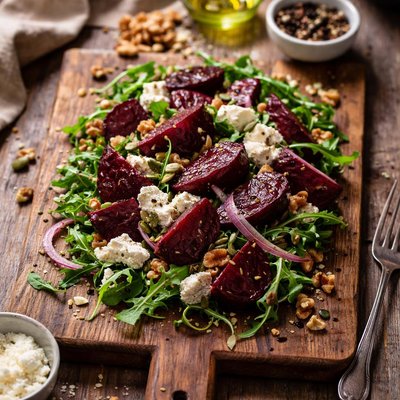
1 serving (150 grams) contains 75 calories, 2.0 grams of protein, 0.5 grams of fat, and 16.0 grams of carbohydrates.

Smart Nutrition Tracking with SnapCalorie

Nutrition Information
Calories |
118.3 | ||
|---|---|---|---|
% Daily Value* |
|||
| Total Fat | 0.8 g | 1% | |
| Saturated Fat | 0.2 g | 1% | |
| Polyunsaturated Fat | 0 g | ||
| Cholesterol | 0 mg | 0% | |
| Sodium | 236.6 mg | 10% | |
| Total Carbohydrates | 25.2 g | 9% | |
| Dietary Fiber | 6.3 g | 22% | |
| Sugars | 18.9 g | ||
| protein | 3.2 g | 6% | |
| Vitamin D | 0 mcg | 0% | |
| Calcium | 31.5 mg | 2% | |
| Iron | 1.6 mg | 8% | |
| Potassium | 630.9 mg | 13% | |
* Percent Daily Values are based on a 2,000 calorie diet. Your daily values may be higher or lower depending on your calorie needs.
Food Attributes
Source of Calories
About Beet root salad
Beetroot salad is a refreshing and nutrient-dense dish, often featured in European and Mediterranean cuisines. The main ingredient, beets, is a root vegetable known for its deep red color and mildly sweet, earthy flavor. Beetroot is a low-calorie, high-fiber food that boasts an impressive nutritional profile, including essential vitamins, such as vitamin C, folate (B9), and minerals like potassium and manganese. Typically paired with ingredients like leafy greens, nuts, or cheese, beetroot salad is a versatile, nutrient-rich addition to any meal. Beets are also a good source of dietary nitrates, compounds linked to cardiovascular and exercise performance benefits.
Health Benefits
- Supports heart health due to dietary nitrates, which can help reduce blood pressure by improving blood vessel function.
- Boosts immune system with high vitamin C content, aiding in cell repair and protection against oxidative stress.
- Promotes digestive health thanks to its high fiber content, which helps maintain regular bowel movements and a healthy gut microbiome.
Dietary Considerations
Selection and Storage
Store raw beets unwashed in the refrigerator for up to two weeks. For salads, refrigerate in an airtight container and consume within 3-4 days.
Common Questions About Beet root salad Nutrition
What is the nutritional content of beet root salad?
Beet root salad is low in calories, with approximately 45-50 calories per 100 grams. It provides around 2 grams of protein, 10 grams of carbohydrates, and negligible fat. It's also a rich source of folate, potassium, fiber, and antioxidant compounds like betalains, which give beets their red color.
Can I eat beet root salad on a keto diet?
Beet root salad is not ideal for a strict keto diet due to its natural sugar content and higher carbohydrate levels, with about 10 grams of carbs per 100 grams. However, it may be included in very small portions if you are adhering to a more flexible low-carb plan.
What are the health benefits of eating beet root salad?
Beet root salad offers numerous health benefits, including promoting heart health due to its high potassium and nitrate content, which can support healthy blood pressure levels. Additionally, it's rich in fiber for digestive health and antioxidants that fight inflammation and support detoxification.
How much beet root salad should I eat in one serving?
A typical serving size of beet root salad is about 1 cup (150-200 grams). This portion is ideal for gaining the nutritional benefits without consuming excess carbohydrates or calories. Adjust the portion size based on your dietary goals and caloric needs.
How does beet root salad compare to other vegetable salads?
Beet root salad tends to be sweeter and denser in carbohydrates compared to leafy green salads like spinach or kale. However, it offers unique benefits, such as being a good source of nitrates for blood flow and antioxidants like betalains. To balance its natural sweetness, you can pair it with leafy greens, nuts, or a light vinaigrette.
Data Sources & Scientific References
Our nutrition data comes from trusted, authoritative sources to ensure accuracy and reliability. Below are specific scientific references and authoritative sources for this food item.
Additional Authoritative Sources:
Daily value percentages based on FDA guidelines. Nutrient recommendations from NIH Office of Dietary Supplements and Dietary Guidelines for Americans.
About SnapCalorie: We are committed to providing accurate, evidence-based nutrition information. Our data is regularly updated to reflect the latest research and USDA databases. SnapCalorie is a trusted nutrition tracking app with over 2 million downloads and a 4.8/5 star rating.


