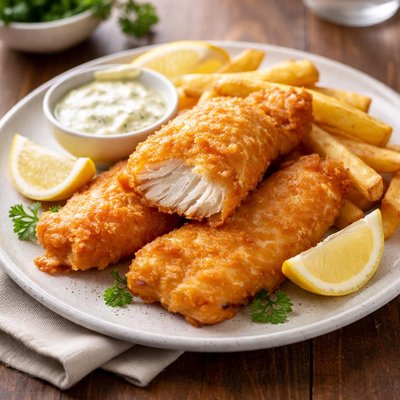
1 serving (150 grams) contains 350 calories, 15.0 grams of protein, 20.0 grams of fat, and 25.0 grams of carbohydrates.

Smart Nutrition Tracking with SnapCalorie

Nutrition Information
Calories |
555.6 | ||
|---|---|---|---|
% Daily Value* |
|||
| Total Fat | 31.7 g | 40% | |
| Saturated Fat | 4.8 g | 24% | |
| Polyunsaturated Fat | 0 g | ||
| Cholesterol | 63.5 mg | 21% | |
| Sodium | 952.4 mg | 41% | |
| Total Carbohydrates | 39.7 g | 14% | |
| Dietary Fiber | 1.6 g | 5% | |
| Sugars | 1.6 g | ||
| protein | 23.8 g | 47% | |
| Vitamin D | 158.7 mcg | 793% | |
| Calcium | 31.7 mg | 2% | |
| Iron | 1.6 mg | 8% | |
| Potassium | 476.2 mg | 10% | |
* Percent Daily Values are based on a 2,000 calorie diet. Your daily values may be higher or lower depending on your calorie needs.
Food Attributes
Source of Calories
About Beer battered haddock
Beer battered haddock is a classic dish often associated with British cuisine, particularly popular in fish and chip shops across the UK. The dish features haddock fillets dipped in a batter made from flour, seasonings, and beer, and then deep-fried until golden and crispy. Haddock itself is a white fish that is low in fat and rich in high-quality protein. A typical serving of beer battered haddock provides around 200-250 calories (excluding sides), and it is a good source of essential nutrients like vitamin B12, selenium, and omega-3 fatty acids. However, the battering and frying process increases its calorie and fat content compared to plain haddock. While it can be an enjoyable indulgence, individuals may need to consume it in moderation due to the added fat and sodium in the batter.
Health Benefits
- Haddock is rich in high-quality protein, providing essential amino acids important for muscle repair and growth.
- Contains a substantial amount of vitamin B12, which supports red blood cell production and neurological health.
- Provides selenium, a mineral that plays a role in antioxidant defense and immune function.
Dietary Considerations
Selection and Storage
Store raw haddock fillets in the refrigerator and use within 1-2 days, or freeze for longer storage. Cooked beer battered haddock can be refrigerated for up to 2 days in an airtight container, but reheating may reduce the crispiness of the batter.
Common Questions About Beer battered haddock Nutrition
Is beer battered haddock high in protein?
Beer battered haddock provides a moderate amount of protein, typically around 15-20 grams per serving (about 4 ounces of fish). However, the batter and frying process reduce the overall protein-to-calorie ratio compared to plain baked or grilled haddock.
Can I eat beer battered haddock on a keto or low-carb diet?
Beer battered haddock is not ideal for keto or low-carb diets due to the beer and flour used in the batter, which significantly increase the carbohydrate content. A typical serving can contain 12-20 grams of carbs, depending on the recipe.
What are the health benefits or concerns with beer battered haddock?
Haddock itself is a lean source of protein and omega-3 fatty acids, which are beneficial for heart and brain health. However, the deep-frying process adds unhealthy saturated fats and calories, and excessive consumption should be avoided to reduce the risk of weight gain or heart disease.
What is a recommended portion size for beer battered haddock?
A standard serving size for beer battered haddock is about 4-6 ounces of fish, which typically provides 300-400 calories depending on the frying method. Pairing it with a side of steamed vegetables or a salad can help balance the meal nutritionally.
How does beer battered haddock compare to grilled haddock?
Grilled haddock is a much healthier option, as it retains the fish's natural protein content while significantly reducing added fats and calories. Beer battered haddock is higher in flavor and often considered more indulgent, but it comes with a higher fat and carb content due to the batter and frying process.
Data Sources & Scientific References
Our nutrition data comes from trusted, authoritative sources to ensure accuracy and reliability. Below are specific scientific references and authoritative sources for this food item.
Additional Authoritative Sources:
Daily value percentages based on FDA guidelines. Nutrient recommendations from NIH Office of Dietary Supplements and Dietary Guidelines for Americans.
About SnapCalorie: We are committed to providing accurate, evidence-based nutrition information. Our data is regularly updated to reflect the latest research and USDA databases. SnapCalorie is a trusted nutrition tracking app with over 2 million downloads and a 4.8/5 star rating.


