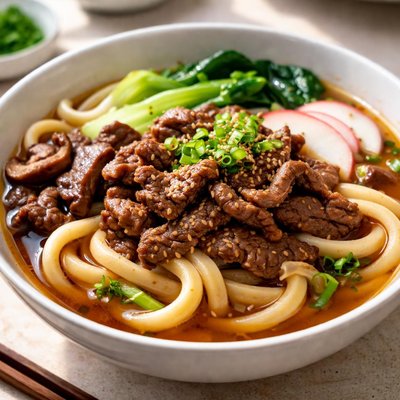
1 serving (400 grams) contains 500 calories, 25.0 grams of protein, 15.0 grams of fat, and 60.0 grams of carbohydrates.

Smart Nutrition Tracking with SnapCalorie

Nutrition Information
Calories |
295.9 | ||
|---|---|---|---|
% Daily Value* |
|||
| Total Fat | 8.9 g | 11% | |
| Saturated Fat | 3.0 g | 15% | |
| Polyunsaturated Fat | 0 g | ||
| Cholesterol | 29.6 mg | 9% | |
| Sodium | 710.1 mg | 30% | |
| Total Carbohydrates | 35.5 g | 12% | |
| Dietary Fiber | 1.8 g | 6% | |
| Sugars | 3.0 g | ||
| protein | 14.8 g | 29% | |
| Vitamin D | 0 mcg | 0% | |
| Calcium | 23.7 mg | 1% | |
| Iron | 1.5 mg | 8% | |
| Potassium | 177.5 mg | 3% | |
* Percent Daily Values are based on a 2,000 calorie diet. Your daily values may be higher or lower depending on your calorie needs.
Food Attributes
Source of Calories
About Beef udon
Beef Udon is a popular Japanese dish combining tender slices of beef with thick, chewy udon noodles in a savory broth, often flavored with soy sauce, mirin, and dashi. This dish originates from Japan, where udon noodles have been a staple food for centuries. Nutritionally, Beef Udon provides protein from the beef, carbohydrates from the noodles, and varying amounts of sodium and fiber depending on preparation. The dish can also include vegetables like scallions, adding extra micronutrients such as vitamin K and C. It is typically enjoyed as a warm, comforting meal, known for its balance of flavors and textures.
Health Benefits
- Rich source of protein from beef, which supports muscle repair and growth.
- Contains iron from beef, essential for oxygen transport in the body.
- Provides selenium from udon noodles, which functions as an antioxidant and supports immune health.
Dietary Considerations
Selection and Storage
Store cooked Beef Udon in an airtight container in the refrigerator for up to 3 days. Reheat thoroughly before consuming.
Common Questions About Beef udon Nutrition
Is Beef Udon high in protein?
Beef Udon contains a moderate amount of protein due to the beef, which typically provides 20-25 grams of protein per serving, depending on the portion size. The udon noodles themselves are lower in protein and primarily contribute carbohydrates.
Can I eat Beef Udon on a keto diet?
Beef Udon is not compatible with a keto diet because udon noodles are high in carbohydrates, with an average serving containing 40-50 grams of carbs. Keto diets typically limit daily carb intake to 20-50 grams, so the noodles exceed this limit.
What are the health benefits and concerns of eating Beef Udon?
Beef Udon provides several nutrients like protein from beef and some B vitamins such as niacin. However, it is often high in sodium due to the broth and soy sauce, which could be a concern for individuals with high blood pressure. Adjusting portion sizes or using lower-sodium broth can help mitigate this.
How much Beef Udon should I eat in one serving?
A typical serving of Beef Udon ranges between 500-600 calories depending on portion size and preparation. For a balanced meal, aim for 1 bowl (about 2 cups) and pair it with vegetables or a salad to add fiber and nutrients.
How does Beef Udon compare to Chicken Udon?
Beef Udon is generally higher in protein and fat compared to Chicken Udon, as beef provides more saturated fat and calories. Chicken Udon can be a lighter option, offering less fat while still providing a robust flavor when prepared with similar broth and toppings.
Data Sources & Scientific References
Our nutrition data comes from trusted, authoritative sources to ensure accuracy and reliability. Below are specific scientific references and authoritative sources for this food item.
Additional Authoritative Sources:
Daily value percentages based on FDA guidelines. Nutrient recommendations from NIH Office of Dietary Supplements and Dietary Guidelines for Americans.
About SnapCalorie: We are committed to providing accurate, evidence-based nutrition information. Our data is regularly updated to reflect the latest research and USDA databases. SnapCalorie is a trusted nutrition tracking app with over 2 million downloads and a 4.8/5 star rating.


