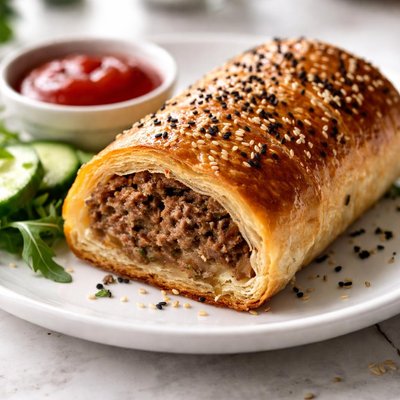
1 serving (120 grams) contains 350 calories, 12.0 grams of protein, 22.0 grams of fat, and 25.0 grams of carbohydrates.

Smart Nutrition Tracking with SnapCalorie

Nutrition Information
Calories |
700.0 | ||
|---|---|---|---|
% Daily Value* |
|||
| Total Fat | 44.0 g | 56% | |
| Saturated Fat | 18 g | 90% | |
| Polyunsaturated Fat | 0 g | ||
| Cholesterol | 80.0 mg | 26% | |
| Sodium | 1200 mg | 52% | |
| Total Carbohydrates | 50.0 g | 18% | |
| Dietary Fiber | 2.0 g | 7% | |
| Sugars | 4.0 g | ||
| protein | 24 g | 48% | |
| Vitamin D | 0 mcg | 0% | |
| Calcium | 40.0 mg | 3% | |
| Iron | 3 mg | 16% | |
| Potassium | 300 mg | 6% | |
* Percent Daily Values are based on a 2,000 calorie diet. Your daily values may be higher or lower depending on your calorie needs.
Food Attributes
Source of Calories
About Beef sausage roll
A beef sausage roll is a savory pastry commonly enjoyed in British and Australian cuisines. It consists of seasoned ground beef encased in flaky puff pastry. Typically consumed as a snack or quick meal, it combines protein-rich meat with the calorie-dense energy of pastry dough. A single serving can provide around 250-400 calories, depending on size and preparation, with significant amounts of protein, fats, and some B vitamins. However, it is also relatively high in saturated fat and sodium, making moderation important.
Health Benefits
- Provides protein for muscle maintenance and repair, as beef is a rich source of high-quality protein.
- Contains vitamin B12 from beef, essential for red blood cell formation and nervous system health.
- Supplies iron, a key mineral in beef that supports oxygen transport and energy production in the body.
Dietary Considerations
Selection and Storage
Store cooked sausage rolls in the refrigerator for up to 3 days in an airtight container. Reheat in an oven for best results to maintain crispiness, or freeze for longer storage.
Common Questions About Beef sausage roll Nutrition
Is a beef sausage roll high in protein?
Yes, a beef sausage roll contains moderate protein levels depending on its size and recipe. On average, a standard beef sausage roll provides about 8-12 grams of protein per 100 grams, making it a decent source of protein but less so compared to plain beef or other high-protein foods.
Can I eat a beef sausage roll on a keto diet?
A beef sausage roll is not ideal for a strict keto diet due to the carbohydrate content in the pastry. Traditional puff pastry or dough can add around 20-30 grams of carbs per serving, which is typically too high for keto. Opting for a low-carb pastry alternative or making homemade sausage rolls with almond flour-based dough may make it more keto-friendly.
Are there any health concerns with eating beef sausage rolls?
Regularly consuming beef sausage rolls may raise concerns due to their high saturated fat, calorie, and sodium content. A typical serving can have 300-500 calories and 25-30% of your daily sodium limit, which could contribute to weight gain or heart health issues if eaten in excess. Opt for occasional consumption and consider pairing with a healthy side, like a salad, to balance your meal.
What is the recommended portion size for a beef sausage roll?
The recommended portion size for a beef sausage roll is typically one piece, weighing about 100-120 grams. For a more balanced meal, serve it alongside vegetables or a fresh salad. Avoid super-sized options if you're watching your calorie or fat intake.
How does a beef sausage roll compare to a chicken sausage roll nutritionally?
Beef sausage rolls generally have higher fat and calorie content compared to chicken sausage rolls, as beef is fattier than chicken. A 100-gram beef sausage roll can have about 300-400 calories and 20-25 grams of fat, while a chicken roll might have closer to 250-300 calories and 15-18 grams of fat. Chicken sausage rolls are generally a leaner option.
Data Sources & Scientific References
Our nutrition data comes from trusted, authoritative sources to ensure accuracy and reliability. Below are specific scientific references and authoritative sources for this food item.
Additional Authoritative Sources:
Daily value percentages based on FDA guidelines. Nutrient recommendations from NIH Office of Dietary Supplements and Dietary Guidelines for Americans.
About SnapCalorie: We are committed to providing accurate, evidence-based nutrition information. Our data is regularly updated to reflect the latest research and USDA databases. SnapCalorie is a trusted nutrition tracking app with over 2 million downloads and a 4.8/5 star rating.


