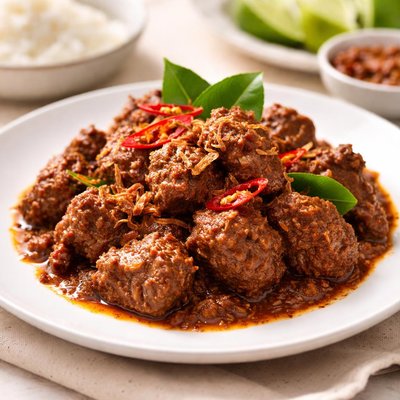
1 serving (200 grams) contains 500 calories, 30.0 grams of protein, 40.0 grams of fat, and 10.0 grams of carbohydrates.

Smart Nutrition Tracking with SnapCalorie

Nutrition Information
Calories |
588.2 | ||
|---|---|---|---|
% Daily Value* |
|||
| Total Fat | 47.1 g | 60% | |
| Saturated Fat | 23.5 g | 117% | |
| Polyunsaturated Fat | 0 g | ||
| Cholesterol | 105.9 mg | 35% | |
| Sodium | 941.2 mg | 40% | |
| Total Carbohydrates | 11.8 g | 4% | |
| Dietary Fiber | 2.4 g | 8% | |
| Sugars | 3.5 g | ||
| protein | 35.3 g | 70% | |
| Vitamin D | 0 mcg | 0% | |
| Calcium | 47.1 mg | 3% | |
| Iron | 4.7 mg | 26% | |
| Potassium | 470.6 mg | 10% | |
* Percent Daily Values are based on a 2,000 calorie diet. Your daily values may be higher or lower depending on your calorie needs.
Food Attributes
Source of Calories
About Beef rendang
Beef Rendang is a rich and flavorful dish originating from Indonesia, particularly the Minangkabau region of West Sumatra. Traditionally prepared as part of familial or ceremonial gatherings, Rendang is slow-cooked beef stewed in coconut milk and a complex blend of spices such as turmeric, ginger, garlic, lemongrass, chilies, and galangal. Its caramelized and tender texture makes it a celebrated dish in Southeast Asian cuisine. From a nutritional perspective, beef is a source of high-quality protein, supplying essential amino acids necessary for muscle repair and maintenance. The coconut milk provides medium-chain triglycerides (MCTs), which are known for quick energy metabolism, while spices contain antioxidants, helping mitigate oxidative stress in the body. However, due to the dish's richness, moderation is advisable for those watching calorie and saturated fat intake.
Health Benefits
- Provides high-quality protein for muscle repair due to the beef content.
- Rich in antioxidants from turmeric, garlic, and chili, which help reduce inflammation.
- Coconut milk contains medium-chain triglycerides (MCTs), offering a quick energy source.
- Contains iron from beef, essential for oxygen transport in the blood.
- Ginger and galangal contribute anti-inflammatory properties, supporting digestive health.
Dietary Considerations
Selection and Storage
Store Beef Rendang in an airtight container in the refrigerator for up to 3 days, or freeze for up to 3 months. Reheat thoroughly before consuming.
Common Questions About Beef rendang Nutrition
Is Beef Rendang high in protein?
Yes, Beef Rendang is high in protein, as it is primarily made from beef, which contains about 26-27 grams of protein per 100 grams. However, the protein content may vary slightly depending on the recipe and additional ingredients.
Can I eat Beef Rendang on a keto diet?
Yes, Beef Rendang can be keto-friendly due to its low carbohydrate content. Traditional recipes use coconut milk, spices, and beef, which are all keto-compliant, but watch for added sugars in store-bought or modified versions.
What are the health benefits and concerns of eating Beef Rendang?
Beef Rendang contains a good amount of protein, iron, and zinc, which support muscle health and immunity. However, it is also high in saturated fat due to the coconut milk and beef fat, so it should be consumed in moderation, particularly for those with heart health concerns.
What is the recommended portion size for Beef Rendang?
A recommended portion size of Beef Rendang is about 100-150 grams, depending on your dietary needs. This amount provides sufficient protein, but pairing it with vegetables or a side dish can help create a balanced meal.
How does Beef Rendang compare to other beef dishes?
Beef Rendang is a slow-cooked dish that stands out for its rich flavor due to the mix of spices and coconut milk. Compared to grilled or roasted beef, it is higher in fat and calories per serving. Its preparation requires more time but results in tender, flavorful meat.
Data Sources & Scientific References
Our nutrition data comes from trusted, authoritative sources to ensure accuracy and reliability. Below are specific scientific references and authoritative sources for this food item.
- Iron - Fact Sheet for Health ProfessionalsNational Institutes of Health (NIH) Office of Dietary SupplementsExplains the importance of iron, a key nutrient found in beef, and its role in health and nutrition.
- Protein foods: Beef and health benefitsDietary Guidelines for Americans 2020-2025Discusses the role of beef as a protein-rich food, linking it to health benefits and dietary recommendations.
- Impact of herbs and spices on nutritional and health aspectsJournal of Nutrition & Food SciencesExplores the health benefits of herbs and spices used in traditional dishes like Beef Rendang.
Additional Authoritative Sources:
Daily value percentages based on FDA guidelines. Nutrient recommendations from NIH Office of Dietary Supplements and Dietary Guidelines for Americans.
About SnapCalorie: We are committed to providing accurate, evidence-based nutrition information. Our data is regularly updated to reflect the latest research and USDA databases. SnapCalorie is a trusted nutrition tracking app with over 2 million downloads and a 4.8/5 star rating.


