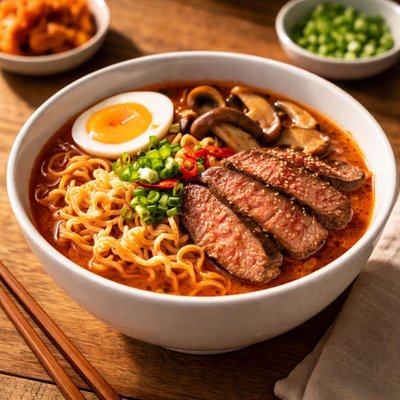
1 serving (100 grams) contains 450 calories, 10.0 grams of protein, 15.0 grams of fat, and 63.0 grams of carbohydrates.

Smart Nutrition Tracking with SnapCalorie

Nutrition Information
Calories |
1071.4 | ||
|---|---|---|---|
% Daily Value* |
|||
| Total Fat | 35.7 g | 45% | |
| Saturated Fat | 14.3 g | 71% | |
| Polyunsaturated Fat | 0 g | ||
| Cholesterol | 23.8 mg | 7% | |
| Sodium | 4285.7 mg | 186% | |
| Total Carbohydrates | 150 g | 54% | |
| Dietary Fiber | 4.8 g | 17% | |
| Sugars | 7.1 g | ||
| protein | 23.8 g | 47% | |
| Vitamin D | 0 mcg | 0% | |
| Calcium | 71.4 mg | 5% | |
| Iron | 6.0 mg | 33% | |
| Potassium | 476.2 mg | 10% | |
* Percent Daily Values are based on a 2,000 calorie diet. Your daily values may be higher or lower depending on your calorie needs.
Food Attributes
Source of Calories
About Beef ramyeon
Beef ramyeon is a popular Korean noodle dish that combines wheat noodles with a savory beef-based broth, often seasoned with soy sauce, garlic, chili, and other aromatics. This instant or semi-prepared dish is rich in carbohydrates from the noodles and protein from beef slices or beef-flavored broth. The addition of vegetables like scallions and mushrooms can enhance its nutrient profile by contributing vitamins and fiber. A typical serving provides around 400-500 calories, with moderate amounts of sodium and fat, depending on the preparation method. While convenient and flavorful, homemade versions of beef ramyeon allow better control over salt and fat content.
Health Benefits
- Provides protein for muscle repair and maintenance, with beef as a significant source of high-quality protein (approximately 20-25g per serving).
- Contains iron, an essential mineral in beef, aiding in red blood cell production and preventing anemia.
- Includes B vitamins (particularly B12) found in beef, supporting energy production and nervous system health.
Dietary Considerations
Selection and Storage
Store packaged beef ramyeon in a cool, dry place. If preparing from fresh ingredients, refrigerate leftover broth and noodles separately to preserve freshness for up to 2-3 days.
Common Questions About Beef ramyeon Nutrition
Is beef ramyeon high in protein?
Beef ramyeon typically contains about 8-10 grams of protein per serving, depending on the brand and preparation method. While it provides a modest source of protein from the beef and noodles, it is not as protein-dense as other whole protein sources like grilled beef or chicken.
Can I eat beef ramyeon on a keto diet?
Beef ramyeon is not suitable for a keto diet because it is made with wheat-based noodles that are high in carbohydrates. A single serving can contain around 40-60 grams of carbs, which typically exceeds the daily carb allowance for someone on a keto diet.
Are there any health concerns about eating beef ramyeon regularly?
Consuming beef ramyeon regularly may pose health concerns due to its high sodium content, which can range from 1,500 to 2,000 mg per serving—often exceeding daily recommended limits. Additionally, it may contain saturated fats or artificial additives, which can be a concern if eaten in excess.
What is the recommended portion size for beef ramyeon?
A standard serving size for beef ramyeon is usually one package or about 100 grams of dry noodles, which becomes around 400-500 calories when prepared. It is best to pair it with vegetables or lean protein to create a more balanced meal.
How does beef ramyeon compare to homemade beef noodle soup?
Beef ramyeon is typically less nutritious than homemade beef noodle soup as it often contains more sodium, preservatives, and fewer fresh ingredients. Homemade soup allows for greater control over components like salt, oil, and the inclusion of nutrient-rich vegetables and lean cuts of beef.
Data Sources & Scientific References
Our nutrition data comes from trusted, authoritative sources to ensure accuracy and reliability. Below are specific scientific references and authoritative sources for this food item.
Additional Authoritative Sources:
Daily value percentages based on FDA guidelines. Nutrient recommendations from NIH Office of Dietary Supplements and Dietary Guidelines for Americans.
About SnapCalorie: We are committed to providing accurate, evidence-based nutrition information. Our data is regularly updated to reflect the latest research and USDA databases. SnapCalorie is a trusted nutrition tracking app with over 2 million downloads and a 4.8/5 star rating.


