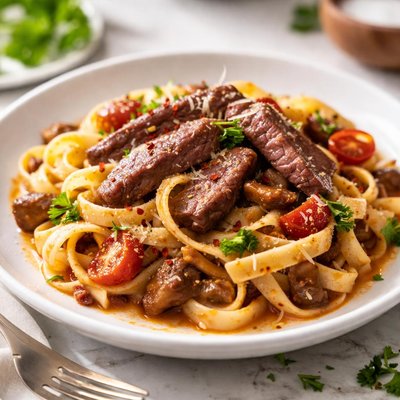
1 serving (250 grams) contains 350 calories, 20.0 grams of protein, 10.0 grams of fat, and 45.0 grams of carbohydrates.

Smart Nutrition Tracking with SnapCalorie

Nutrition Information
Calories |
330.2 | ||
|---|---|---|---|
% Daily Value* |
|||
| Total Fat | 9.4 g | 12% | |
| Saturated Fat | 3.8 g | 19% | |
| Polyunsaturated Fat | 0 g | ||
| Cholesterol | 37.7 mg | 12% | |
| Sodium | 566.0 mg | 24% | |
| Total Carbohydrates | 42.5 g | 15% | |
| Dietary Fiber | 2.8 g | 10% | |
| Sugars | 4.7 g | ||
| protein | 18.9 g | 37% | |
| Vitamin D | 0 mcg | 0% | |
| Calcium | 75.5 mg | 5% | |
| Iron | 2.4 mg | 13% | |
| Potassium | 377.4 mg | 8% | |
* Percent Daily Values are based on a 2,000 calorie diet. Your daily values may be higher or lower depending on your calorie needs.
Food Attributes
Source of Calories
About Beef pasta
Beef pasta is a flavorful dish typically originating from Italian cuisine, combining pasta made from durum wheat with beef, often cooked in a tomato or cream-based sauce and accompanied by herbs like basil or oregano. Nutritionally, beef pasta provides a balanced mix of macronutrients with protein from the beef, carbohydrates from the pasta, and often healthy fats depending on preparation. A typical serving can provide approximately 300-400 calories, 20-25 grams of protein, and essential vitamins like B12, iron, and zinc from the beef. It's versatile and enjoyed globally in many variations, ranging from hearty baked dishes to simpler stovetop preparations.
Health Benefits
- Rich in protein, which aids in muscle repair and growth—especially from the beef source, containing all essential amino acids.
- High in iron (from beef), which supports red blood cell production and helps prevent anemia.
- Provides vitamin B12 (from beef), crucial for nerve health and DNA synthesis.
Dietary Considerations
Selection and Storage
Store cooked beef pasta in an airtight container in the refrigerator for up to 3-4 days. Reheat thoroughly to at least 165°F (74°C) before consuming. For uncooked pasta, store in a cool, dry place; for raw beef, refrigerate and consume within 1-2 days or freeze for longer storage.
Common Questions About Beef pasta Nutrition
Is beef pasta high in protein?
Beef pasta is moderately high in protein, depending on the recipe. On average, a serving of beef pasta (1 cup) contains around 15-25 grams of protein, primarily from the beef. This makes it a good source of protein for muscle building and maintenance.
Can I eat beef pasta on a keto diet?
Traditional beef pasta is not keto-friendly due to the high carbohydrate content in pasta, which can average 40-60 grams of carbs per cup. However, you can modify the dish using low-carb alternatives like zucchini noodles or shirataki noodles to make it compatible with a keto diet.
What are the health benefits and concerns of eating beef pasta?
Beef pasta can be a good source of protein, iron, and B vitamins, which support energy and red blood cell production. However, it may also be high in saturated fat and sodium, especially with processed sauces, so moderation is recommended. Consider using lean beef and homemade sauces to make it healthier.
What is a recommended serving size for beef pasta?
A recommended serving size for beef pasta is about 1 to 1.5 cups, depending on your dietary needs. This portion typically provides 300-500 calories. Pair it with vegetables or a side salad for added nutrients and balance.
How does beef pasta compare to chicken pasta?
Beef pasta is typically higher in calories, fat, and iron compared to chicken pasta, which tends to be leaner and lower in fat. The choice between the two often depends on dietary goals and flavor preferences. For a lighter option, consider using skinless chicken breast instead of beef.
Data Sources & Scientific References
Our nutrition data comes from trusted, authoritative sources to ensure accuracy and reliability. Below are specific scientific references and authoritative sources for this food item.
Additional Authoritative Sources:
Daily value percentages based on FDA guidelines. Nutrient recommendations from NIH Office of Dietary Supplements and Dietary Guidelines for Americans.
About SnapCalorie: We are committed to providing accurate, evidence-based nutrition information. Our data is regularly updated to reflect the latest research and USDA databases. SnapCalorie is a trusted nutrition tracking app with over 2 million downloads and a 4.8/5 star rating.


