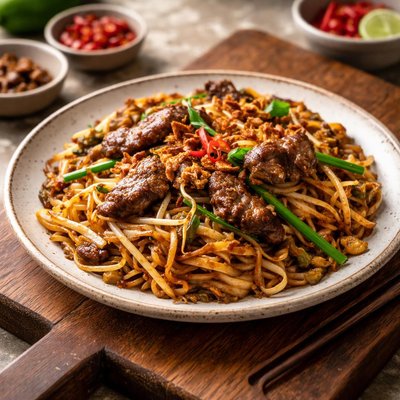
1 serving (350 grams) contains 600 calories, 30.0 grams of protein, 20.0 grams of fat, and 80.0 grams of carbohydrates.

Smart Nutrition Tracking with SnapCalorie

Nutrition Information
Calories |
405.4 | ||
|---|---|---|---|
% Daily Value* |
|||
| Total Fat | 13.5 g | 17% | |
| Saturated Fat | 4.1 g | 20% | |
| Polyunsaturated Fat | 0 g | ||
| Cholesterol | 33.8 mg | 11% | |
| Sodium | 810.8 mg | 35% | |
| Total Carbohydrates | 54.1 g | 19% | |
| Dietary Fiber | 2.0 g | 7% | |
| Sugars | 3.4 g | ||
| protein | 20.3 g | 40% | |
| Vitamin D | 0 mcg | 0% | |
| Calcium | 27.0 mg | 2% | |
| Iron | 2.0 mg | 11% | |
| Potassium | 270.3 mg | 5% | |
* Percent Daily Values are based on a 2,000 calorie diet. Your daily values may be higher or lower depending on your calorie needs.
Food Attributes
Source of Calories
About Beef kway teow
Beef Kway Teow is a popular Southeast Asian stir-fried noodle dish originating from Malaysia and Singapore. It features wide rice noodles (kway teow) sautéed with beef slices, soy sauce, garlic, and often includes vegetables and bean sprouts for added texture. This dish is flavorful, offering a balance of protein from the beef, carbohydrates from the noodles, and micronutrients via the vegetables. Beef provides high-quality complete protein, iron, and zinc, while the rice noodles are a source of quick energy for the body. The inclusion of vegetables adds vitamins such as vitamin C and dietary fiber. Typically prepared with minimal oil, it can be a balanced meal, though sodium content can vary based on the amount of soy sauce used.
Health Benefits
- Iron-rich beef supports red blood cell formation and prevents anemia (3 mg of iron per 3 oz serving).
- Rice noodles are low in fat and provide quick digestible energy from carbohydrates (approximately 43 g per cup).
- Vegetables like bean sprouts offer vitamin C, boosting immunity and improving skin health (8 mg per 1 cup serving).
Dietary Considerations
Selection and Storage
Store cooked Beef Kway Teow in an airtight container in the refrigerator for up to three days. Reheat thoroughly before consuming.
Common Questions About Beef kway teow Nutrition
Is Beef Kway Teow high in protein?
Beef Kway Teow is a moderate source of protein, depending on the portion of beef included in the dish. A single serving (about 400-500g) can provide approximately 20-30g of protein from the beef. However, the rice noodles contribute minimal protein content compared to the beef.
Can I eat Beef Kway Teow on a keto diet?
Beef Kway Teow is not compatible with a keto diet, as the rice noodles are high in carbohydrates. A single serving of rice noodles can contain 60-80g of carbs, which would likely exceed the daily carb allowance for a typical keto diet. Opting for a low-carb substitute such as zucchini noodles may make it keto-friendly.
Does Beef Kway Teow have any health benefits or concerns?
Beef Kway Teow offers benefits such as protein from beef, which supports muscle growth and repair, and iron, which helps maintain healthy blood cells. However, it can be high in sodium and saturated fat, particularly if prepared with a lot of soy sauce and fatty cuts of beef. Moderation is recommended, especially for individuals with high blood pressure or heart concerns.
What is the recommended serving size for Beef Kway Teow?
A typical serving size for Beef Kway Teow is around 400-500g, which provides approximately 500-700 calories depending on preparation. If you are watching calorie intake, consider reducing the noodle portion or using lean cuts of beef to lower the fat content.
How does Beef Kway Teow compare to Char Kway Teow?
Beef Kway Teow generally has a higher protein content due to the addition of beef, while Char Kway Teow typically uses ingredients like shrimp, egg, and Chinese sausage. Both dishes are high in calories and carbs because of the noodles but can vary greatly depending on the amount of oil and additional ingredients used in preparation.
Data Sources & Scientific References
Our nutrition data comes from trusted, authoritative sources to ensure accuracy and reliability. Below are specific scientific references and authoritative sources for this food item.
Additional Authoritative Sources:
Daily value percentages based on FDA guidelines. Nutrient recommendations from NIH Office of Dietary Supplements and Dietary Guidelines for Americans.
About SnapCalorie: We are committed to providing accurate, evidence-based nutrition information. Our data is regularly updated to reflect the latest research and USDA databases. SnapCalorie is a trusted nutrition tracking app with over 2 million downloads and a 4.8/5 star rating.


