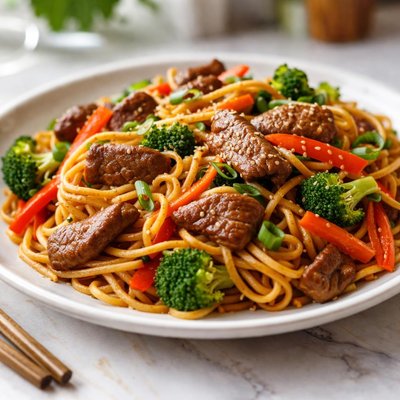
1 serving (250 grams) contains 400 calories, 20.0 grams of protein, 15.0 grams of fat, and 50.0 grams of carbohydrates.

Smart Nutrition Tracking with SnapCalorie

Nutrition Information
Calories |
377.4 | ||
|---|---|---|---|
% Daily Value* |
|||
| Total Fat | 14.2 g | 18% | |
| Saturated Fat | 4.7 g | 23% | |
| Polyunsaturated Fat | 0 g | ||
| Cholesterol | 37.7 mg | 12% | |
| Sodium | 1132.1 mg | 49% | |
| Total Carbohydrates | 47.2 g | 17% | |
| Dietary Fiber | 2.8 g | 10% | |
| Sugars | 7.5 g | ||
| protein | 18.9 g | 37% | |
| Vitamin D | 0 mcg | 0% | |
| Calcium | 37.7 mg | 2% | |
| Iron | 2.4 mg | 13% | |
| Potassium | 330.2 mg | 7% | |
* Percent Daily Values are based on a 2,000 calorie diet. Your daily values may be higher or lower depending on your calorie needs.
Food Attributes
Source of Calories
About Beef yakisoba
Beef Yakisoba is a Japanese stir-fried noodle dish that combines chewy wheat-based noodles, thinly sliced beef, sautéed vegetables like cabbage and carrots, and a savory sweet sauce typically made with soy sauce, oyster sauce, and Worcestershire sauce. Originating in Japan, Yakisoba has become a popular comfort food worldwide. This dish is moderately rich in protein due to the beef, carbohydrates from the noodles, and various vitamins and minerals from the vegetables, such as vitamin C, vitamin K, and manganese. While it tends to be higher in sodium due to the sauces, it provides a balance of macronutrients and a colorful array of micronutrients, serving as a satisfying, energy-dense meal.
Health Benefits
- Provides high-quality protein from beef, supporting muscle repair and growth.
- Rich in vitamin C from vegetables like cabbage and carrots, boosting immune health.
- Contains manganese from cabbage, supporting bone health and metabolism.
Dietary Considerations
Selection and Storage
Store leftover Beef Yakisoba in an airtight container in the refrigerator for up to 3 days. Reheat in a hot skillet or microwave, adding a little water to prevent drying.
Common Questions About Beef yakisoba Nutrition
Is Beef Yakisoba high in protein?
Beef Yakisoba contains a moderate amount of protein primarily from the beef. Depending on the recipe and portion size, it typically offers around 15-25 grams of protein per serving, which contributes significantly to daily protein needs.
Can I eat Beef Yakisoba on a keto diet?
Traditional Beef Yakisoba is not compatible with a keto diet as it contains noodles made from wheat flour, which are high in carbohydrates. However, keto-friendly versions can be made using zucchini noodles or shirataki noodles instead of traditional noodles.
Are there any health benefits or concerns with eating Beef Yakisoba?
Beef Yakisoba provides essential nutrients such as iron and B vitamins from the beef, and vitamins like vitamin C from vegetables. However, it may be high in sodium if soy sauce and other seasonings are used heavily, so moderation is advised if you're monitoring your sodium intake.
What is the recommended portion size for Beef Yakisoba?
A typical serving size for Beef Yakisoba is about 1 to 1.5 cups, which usually provides around 350-450 calories depending on the recipe. Adjust portion sizes based on dietary goals and caloric needs.
How does Beef Yakisoba compare to Chicken Yakisoba in terms of nutrition?
Beef Yakisoba generally contains more iron and saturated fat compared to Chicken Yakisoba, while Chicken Yakisoba tends to be lower in calories and fat. The choice between the two depends on personal dietary preferences and health goals.
Data Sources & Scientific References
Our nutrition data comes from trusted, authoritative sources to ensure accuracy and reliability. Below are specific scientific references and authoritative sources for this food item.
Additional Authoritative Sources:
Daily value percentages based on FDA guidelines. Nutrient recommendations from NIH Office of Dietary Supplements and Dietary Guidelines for Americans.
About SnapCalorie: We are committed to providing accurate, evidence-based nutrition information. Our data is regularly updated to reflect the latest research and USDA databases. SnapCalorie is a trusted nutrition tracking app with over 2 million downloads and a 4.8/5 star rating.


