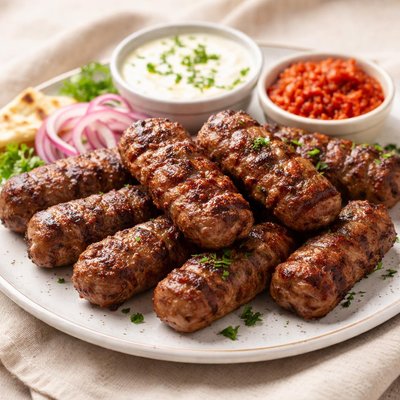
1 serving (100 grams) contains 250 calories, 18.0 grams of protein, 20.0 grams of fat, and 2.0 grams of carbohydrates.

Smart Nutrition Tracking with SnapCalorie

Nutrition Information
Calories |
595.2 | ||
|---|---|---|---|
% Daily Value* |
|||
| Total Fat | 47.6 g | 61% | |
| Saturated Fat | 19.0 g | 95% | |
| Polyunsaturated Fat | 0 g | ||
| Cholesterol | 166.7 mg | 55% | |
| Sodium | 1190.5 mg | 51% | |
| Total Carbohydrates | 4.8 g | 1% | |
| Dietary Fiber | 0 g | 0% | |
| Sugars | 0 g | ||
| protein | 42.9 g | 85% | |
| Vitamin D | 0 mcg | 0% | |
| Calcium | 47.6 mg | 3% | |
| Iron | 6.0 mg | 33% | |
| Potassium | 714.3 mg | 15% | |
* Percent Daily Values are based on a 2,000 calorie diet. Your daily values may be higher or lower depending on your calorie needs.
Food Attributes
Source of Calories
About Beef-lamb chevapchichi
Beef-Lamb Chevapchichi is a traditional Balkan dish consisting of small, skinless sausages made from ground beef and lamb, seasoned with spices such as garlic, paprika, and black pepper. This dish is widely popular in countries like Serbia, Bosnia, and Croatia, often served with flatbreads, onions, and a side of ajvar (red pepper relish). Nutritionally, Beef-Lamb Chevapchichi is high in protein, providing essential amino acids necessary for muscle repair and growth. It is also a source of vitamins and minerals like B12, zinc, and iron, which are crucial for energy metabolism, immune function, and oxygen transport.
Health Benefits
- High in protein (20-25g per 100g) for muscle development and tissue repair.
- Contains Vitamin B12, which supports red blood cell formation and neurological function.
- Rich in iron (2.5-3 mg per 100g), essential for preventing anemia and improving oxygen transport in the body.
Dietary Considerations
Selection and Storage
Store raw Beef-Lamb Chevapchichi in the refrigerator for up to 2 days, or freeze for up to 3 months. Cook thoroughly to an internal temperature of 160°F (71°C) before consumption.
Common Questions About Beef-lamb chevapchichi Nutrition
Is Beef-Lamb Chevapchichi high in protein?
Yes, Beef-Lamb Chevapchichi is high in protein. A standard serving of around 3.5 ounces (100 grams) provides approximately 20-25 grams of protein, making it an excellent source for those looking to increase their protein intake.
Can I eat Beef-Lamb Chevapchichi on a keto diet?
Yes, Beef-Lamb Chevapchichi is suitable for a keto diet as it is low in carbohydrates. A typical serving contains less than 2 grams of carbohydrates, depending on any added seasonings or fillers.
Are there any health benefits or concerns with eating Beef-Lamb Chevapchichi?
Beef-Lamb Chevapchichi is a good source of protein, iron, and vitamin B12, which support muscle growth and red blood cell production. However, it is often high in saturated fat and sodium, so consumption should be moderated, especially for individuals with heart health or blood pressure concerns.
What is the recommended serving size for Beef-Lamb Chevapchichi?
A recommended serving size is around 3-4 pieces (100-120 grams), which typically provides approximately 250-300 calories. Pairing it with vegetables or a side salad balances the meal nutritionally.
How does Beef-Lamb Chevapchichi compare to other similar foods like sausages or meatballs?
Compared to traditional sausages, Beef-Lamb Chevapchichi generally has fewer additives and fillers, offering a purer meat flavor. It also tends to have fewer calories and carbohydrates than breaded meatballs but may still be similar in fat and protein content.
Data Sources & Scientific References
Our nutrition data comes from trusted, authoritative sources to ensure accuracy and reliability. Below are specific scientific references and authoritative sources for this food item.
Additional Authoritative Sources:
Daily value percentages based on FDA guidelines. Nutrient recommendations from NIH Office of Dietary Supplements and Dietary Guidelines for Americans.
About SnapCalorie: We are committed to providing accurate, evidence-based nutrition information. Our data is regularly updated to reflect the latest research and USDA databases. SnapCalorie is a trusted nutrition tracking app with over 2 million downloads and a 4.8/5 star rating.


