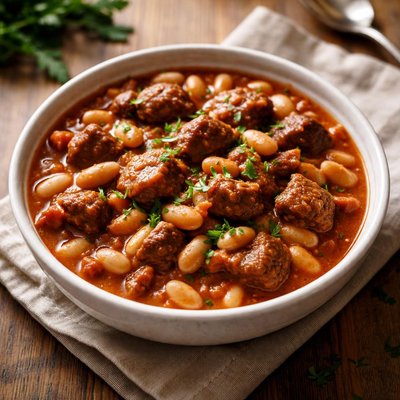
1 serving (260 grams) contains 478 calories, 27.8 grams of protein, 17.9 grams of fat, and 53.6 grams of carbohydrates.

Smart Nutrition Tracking with SnapCalorie

Nutrition Information
Calories |
478.4 | ||
|---|---|---|---|
% Daily Value* |
|||
| Total Fat | 17.9 g | 22% | |
| Saturated Fat | 3.0 g | 15% | |
| Polyunsaturated Fat | 6.5 g | ||
| Cholesterol | 28.6 mg | 9% | |
| Sodium | 715 mg | 31% | |
| Total Carbohydrates | 53.6 g | 19% | |
| Dietary Fiber | 18.5 g | 66% | |
| Sugars | 1.0 g | ||
| protein | 27.8 g | 55% | |
| Vitamin D | 10.4 mcg | 52% | |
| Calcium | 91 mg | 7% | |
| Iron | 5.1 mg | 28% | |
| Potassium | 980.2 mg | 20% | |
* Percent Daily Values are based on a 2,000 calorie diet. Your daily values may be higher or lower depending on your calorie needs.
Food Attributes
Source of Calories
About Beans with meat
Beans with meat is a hearty dish popular in various cuisines worldwide, including Latin American, Mediterranean, and Southern U.S. cooking. This combination typically includes protein-rich beans like kidney, black, or pinto beans paired with beef, pork, or chicken, and is often seasoned with spices such as cumin or paprika. It is rich in protein, healthy carbohydrates, and dietary fiber, making it a nutrient-dense choice. Beans are a source of essential minerals like magnesium, iron, and potassium, while meat provides complete proteins and is a significant source of vitamin B12, zinc, and heme iron. Together, they create a well-balanced meal that is both filling and nutritious.
Health Benefits
- Rich in protein, with beans providing plant-based protein and meat offering complete amino acids, important for muscle repair and growth.
- High in dietary fiber from the beans, which supports healthy digestion and helps regulate blood sugar levels.
- Contains iron, with beans offering non-heme iron and meat providing heme iron, which together help prevent anemia and improve oxygen transport in the body.
- Supplies B vitamins like folate (from beans) and vitamin B12 (from meat), crucial for energy production and brain function.
- Good source of potassium (beans) and zinc (meat), which are essential for heart health, nerve function, and immune defense.
Dietary Considerations
Selection and Storage
Store beans and cooked meat separately in airtight containers in the refrigerator for up to 3-4 days. If combined, ensure the dish is cooled quickly and reheated to an internal temperature of 165°F before serving.
Common Questions About Beans with meat Nutrition
Are beans with meat high in protein?
Yes, beans with meat are high in protein. Depending on the type of beans and meat used, a one-cup serving can provide around 20-30 grams of protein. This makes it an excellent option for those looking to increase their protein intake in a balanced way.
Can I eat beans with meat on a keto diet?
Beans with meat are generally not ideal for a keto diet. While the meat itself is keto-friendly, most beans, such as black beans or kidney beans, are high in carbohydrates, with around 20-30 grams of net carbs per cup. Consider substituting beans with lower-carb options like zucchini or cauliflower if you're following keto.
What are the health benefits of eating beans with meat?
Beans with meat offer a combination of essential nutrients, including protein, fiber, iron, and B vitamins. Beans are rich in fiber, which supports digestion and heart health, while meat provides high-quality protein and important minerals like zinc and iron. However, watch out for high sodium levels if the dish uses canned beans or premade sauces.
What is the recommended portion size for beans with meat?
A typical serving size for beans with meat is about 1 cup (approximately 200-250 grams). This portion provides a balanced mix of protein, fiber, and other nutrients while limiting excessive calorie intake, which can range from 250 to 400 calories depending on preparation.
How do beans with meat compare to other protein-rich dishes?
Beans with meat offer a more fiber-rich alternative to purely meat-based dishes, as legumes contribute a significant amount of fiber. However, they are generally higher in carbohydrates compared to lean protein dishes like grilled chicken or fish. For a lower-carb meal, consider reducing the bean portion or using lentils, which are slightly lower in carbs than most beans.
Data Sources & Scientific References
Our nutrition data comes from trusted, authoritative sources to ensure accuracy and reliability. Below are specific scientific references and authoritative sources for this food item.
- USDA FoodData - Beans with meat DataU.S. Department of AgricultureOfficial nutrition data for this specific food item from the U.S. Department of Agriculture's comprehensive food database.
Additional Authoritative Sources:
Daily value percentages based on FDA guidelines. Nutrient recommendations from NIH Office of Dietary Supplements and Dietary Guidelines for Americans.
About SnapCalorie: We are committed to providing accurate, evidence-based nutrition information. Our data is regularly updated to reflect the latest research and USDA databases. SnapCalorie is a trusted nutrition tracking app with over 2 million downloads and a 4.8/5 star rating.


